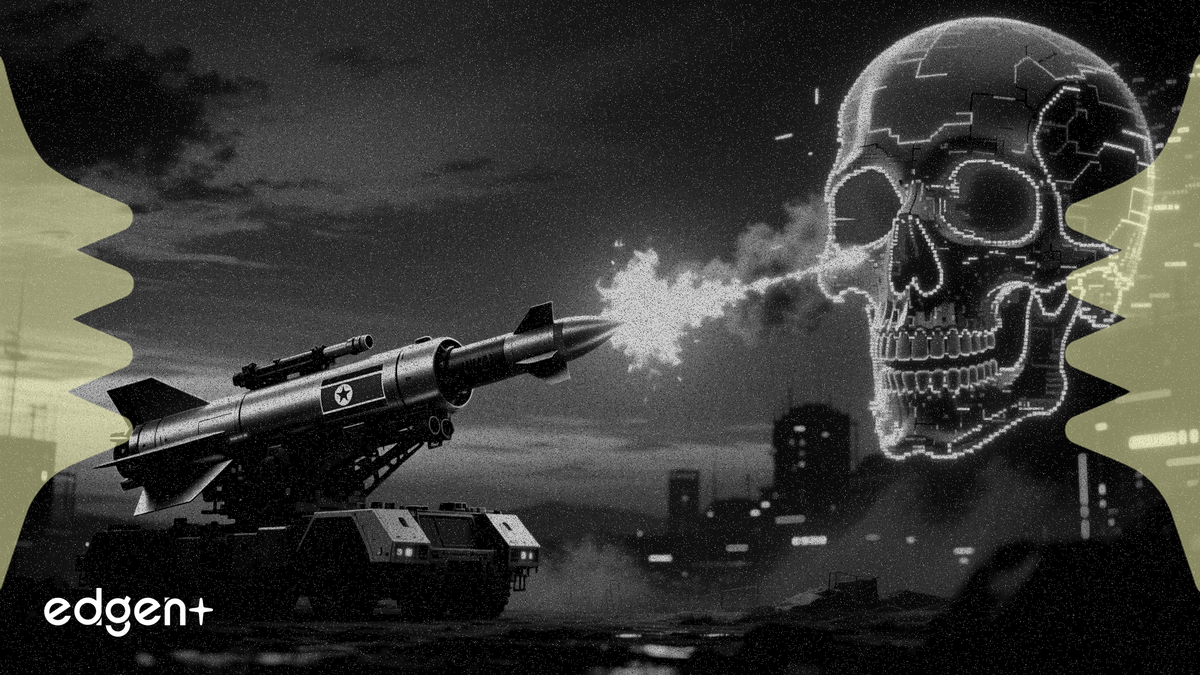
Kim Jong Un supervised tests of three new weapons systems, including AI-guided cruise missiles with a 60-mile range for deployment near the South Korean border.
North Korea tested a mobile missile launcher resembling the US Himars system alongside AI-powered cruise missiles, as Kim Jong Un accelerates a modernization push that includes deploying nuclear-capable weapons near the South Korean border.
"The tactical cruise missiles will be deployed with front-line long-range artillery units for ultraprecision strikes on any target within roughly 60 miles," North Korea's state-run Korean Central News Agency said Wednesday, citing Kim's supervision of the May 26 tests.
The tests featured three systems: a lightweight multi-purpose launcher carrying a mix of ballistic missiles and artillery rockets with autonomous navigation, a multiple tactical cruise missile system using AI-powered guidance, and 240-millimeter guided artillery rockets with expanded range. South Korea's military detected at least one close-range ballistic missile flying about 80 kilometers, or 50 miles, toward its western waters.
The deployments signal a strategic shift in North Korea's conventional forces, which have lagged behind its growing nuclear arsenal. Kim has declared South Korea his country's "most hostile enemy" and ordered frontline units strengthened into "an impregnable fortress," while deepening military ties with Russia through troop deployments and weapons shipments for the war in Ukraine.
The Himars-style launcher, first unveiled at a military parade last year, mirrors the US-made High Mobility Artillery Rocket System that Washington has deployed to Ukraine and the Middle East. Photos from North Korean state media showed a similar configuration and ammunition-loading mechanism, weapons experts said. The system's shoot-and-scoot capability makes it less vulnerable to drone strikes — a lesson Kim's military has absorbed from modern battlefields.
Kim expressed satisfaction with the cruise missile tests in particular, calling for faster efforts to modernize artillery forces so that "no one can match," according to KCNA. The AI-powered guidance system represents a technological leap for North Korea, which previously claimed to have incorporated artificial intelligence into its 600-millimeter multiple launch rocket systems in February and into suicide drones inspected last year.
The last time North Korea unveiled a Himars-style launcher at a military parade was in 2025, preceding a series of weapons tests that pushed the Korean Peninsula to its highest tensions since the collapse of Kim's diplomacy with US President Donald Trump in 2019. Since then, Pyongyang has shifted its foreign policy focus toward Moscow, sending thousands of troops and large shipments of conventional weapons to support Russia's war in Ukraine.
The dual-track development of nuclear-capable cruise missiles and conventional artillery systems gives Kim a broader range of escalation options, from battlefield nuclear strikes to precision conventional attacks. For South Korea and the US alliance, the deployment of AI-guided cruise missiles within 60 miles of the border compresses response times and complicates existing missile defense architectures.
This article is for informational purposes only and does not constitute investment advice.