


The collaboration aims to enhance the performance of Google's open-source AI model on Nvidia's dominant hardware, a move that reinforces Nvidia's central role in the AI ecosystem.
The collaboration aims to enhance the performance of Google's open-source AI model on Nvidia's dominant hardware, a move that reinforces Nvidia's central role in the AI ecosystem.
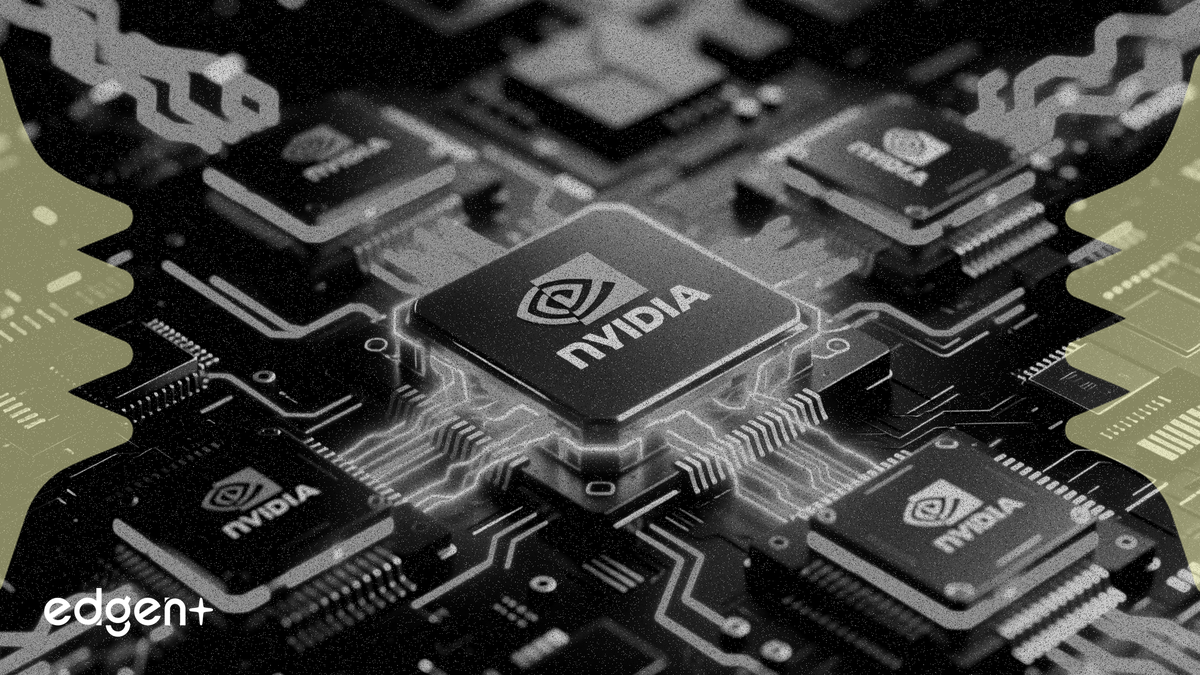
Nvidia and Google are collaborating to optimize the Gemma 4 AI model for Nvidia's GPUs, a strategic partnership announced on April 3rd that ensures the new open-source model runs efficiently on the industry's most prevalent hardware.
"Together with Marvell, we are enabling customers to leverage NVIDIA's AI infrastructure ecosystem and scale to build specialized AI compute," Nvidia CEO Jensen Huang said in a recent statement regarding a similar partnership, highlighting the company's strategy of expanding its ecosystem. While a specific quote on the Gemma deal is not yet public, the strategy is consistent.
The optimization work will focus on ensuring that Gemma 4, Google's latest open-source model, can fully use the capabilities of Nvidia's GPUs. This follows a pattern of Nvidia making strategic investments and partnerships to solidify its market position, including a recent $2 billion investment in chipmaker Marvell Technology to integrate Marvell's custom AI chips with Nvidia's ecosystem.
This collaboration is expected to strengthen Nvidia's market position by ensuring new, major AI models are optimized for its hardware, potentially boosting its stock value. For Google, it enhances the competitiveness of the Gemma model, making the news positive for both companies and the broader AI sector, where hardware-software synergy is critical for performance and adoption.
The partnership between Nvidia (NVDA) and Google (GOOGL) on the Gemma 4 model is the latest example of Nvidia's strategy to remain the central platform for artificial intelligence development. By optimizing Google's new open-source model for its GPUs, Nvidia ensures that its hardware remains the most attractive option for developers and enterprises looking to deploy AI at scale. This move is not just a technical collaboration but a strategic play to fortify its market dominance against the rising tide of custom-built AI chips.
This move mirrors Nvidia's recent $2 billion investment and partnership with Marvell Technology (MRVL). That deal was aimed at integrating Marvell's custom AI chip and networking products into Nvidia's ecosystem, particularly through its NVLink technology. As Nvidia CEO Jensen Huang explained regarding the Marvell deal, the goal is to give customers flexibility while keeping them within Nvidia's architecture. "We're going to extend that, through NVLink and connect it to Marvell. Together, we'll be able to address the customers whether they would like to use all Nvidia gear or if they would like to augment our Nvidia gear with their specialized processors," Huang said. The Marvell deal caused MRVL stock to surge over 11%, demonstrating the "kingmaker" effect of an Nvidia endorsement.
The collaboration with Google on Gemma 4 follows the same logic. While Google develops its own AI accelerators (TPUs), ensuring its open-source models perform optimally on Nvidia's market-leading GPUs is crucial for broad adoption. This prevents the fragmentation of the AI development landscape and reinforces the powerful network effect around Nvidia's CUDA software platform. The strategy is clear: whether a customer buys Nvidia's complete platform or builds their own custom silicon with partners like Marvell, Nvidia's technology, particularly its networking fabric like NVLink and SpectrumX, remains integral to the data center.
For investors, these partnerships are a key reason to be bullish on Nvidia's long-term prospects, even amid recent stock price stagnation. The company is not just selling hardware; it is building a deeply integrated ecosystem of hardware, software, and networking that is difficult for competitors to replicate. By actively partnering with companies developing custom silicon or new AI models, Nvidia is turning potential threats into partners, aiming to capture a larger total addressable market (TAM) in AI data centers. This strategy of using its massive cash pile for strategic investments has also seen Nvidia take stakes in companies like Synopsys, CoreWeave, and optical technology firms Lumentum and Coherent.
Despite a steady stream of positive news, Nvidia's stock has been trading at a forward price-to-earnings ratio of around 20, a valuation not seen in over a decade, according to FactSet data cited by CNBC. This suggests the market may not have fully priced in the long-term earnings growth potential from these strategic ecosystem expansions. The collaboration on Gemma 4, while not involving a direct investment, further solidifies Nvidia's indispensable role in the AI revolution, making a strong case that earnings estimates may prove too low.
This article is for informational purposes only and does not constitute investment advice.