

Nvidia projects roughly $20 billion in demand for its Vera server CPU in 2026 as Arm-based designs displace x86 parts, threatening AMD and Intel's dominance of a market AMD values at $220 billion by 2030.
Nvidia projects roughly $20 billion in demand for its Vera server CPU in 2026 as Arm-based designs displace x86 parts, threatening AMD and Intel's dominance of a market AMD values at $220 billion by 2030.
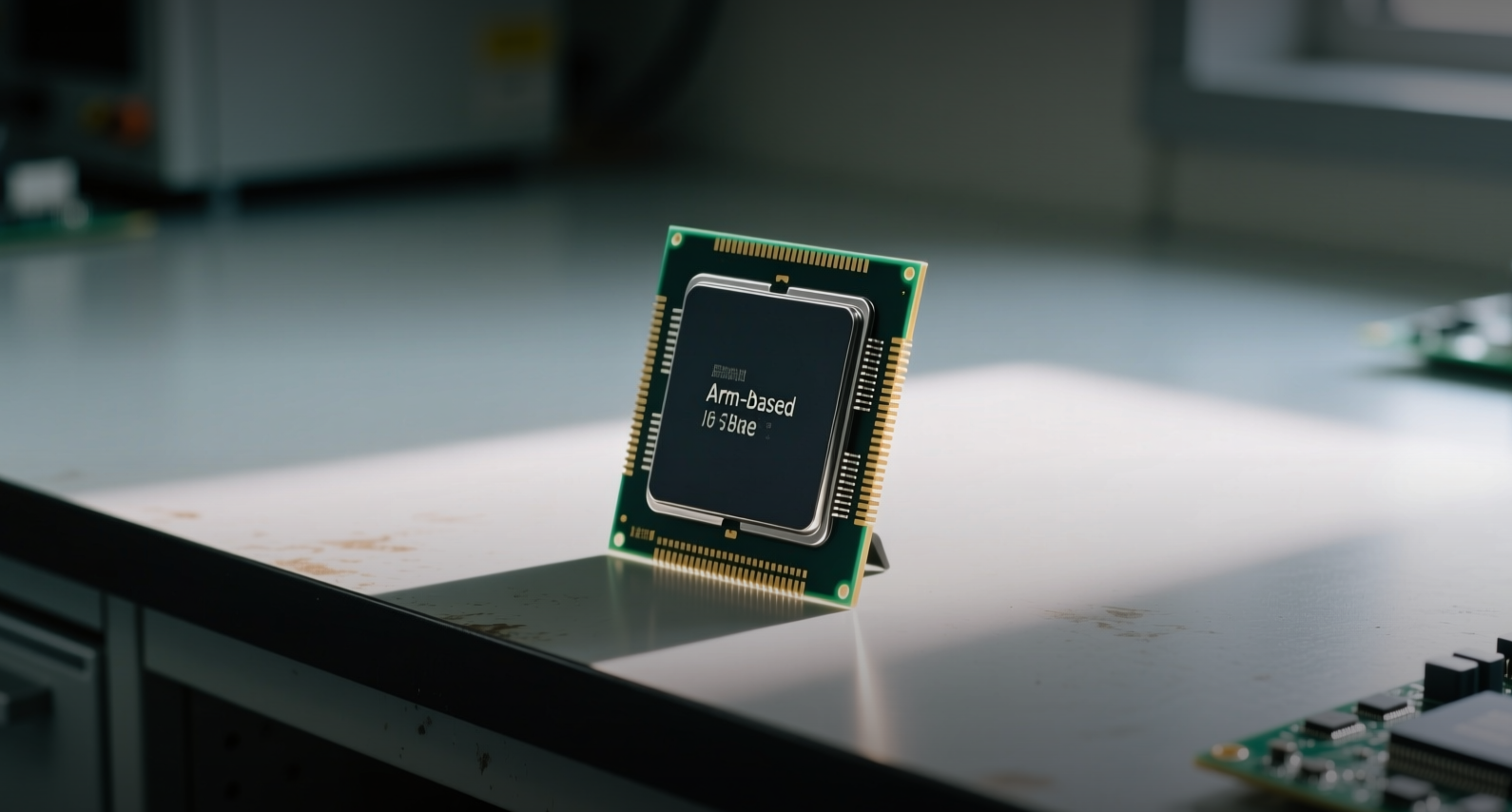
Nvidia's move to sell its Vera processor as a stand-alone product threatens the two-decade x86 stronghold that AMD and Intel hold in data centers, as the chipmaker's Arm-based design wins early commitments from hyperscalers including AWS.
"We expect Vera to be deployed by every major hyperscaler, neocloud, AI lab, and system OEM, with shipments already underway to our lead partners, including OCI, SpaceXAI, and starting this quarter, AWS," Colette Kress, chief financial officer at Nvidia, said on the company's fiscal second-quarter earnings call. "We continue to see demand for approximately $20 billion in total server CPUs."
The Santa Clara, California-based company reported revenue of $96.2 billion for the quarter ended July 26, up 106 percent from a year earlier, with data center sales of $89 billion climbing 117 percent. Nvidia's earlier Grace CPU has generated more than $5 billion in trailing-twelve-month revenue, though it ships inside full server systems; Vera marks the first time Nvidia sells a processor on its own. The chip is built on Arm Holdings' v9.2-A architecture, a departure from the x86 instruction set that AMD and Intel use.
The competitive math is stark. AMD's data center segment, which bundles GPUs and server CPUs, posted $6.7 billion in second-quarter revenue, up 107 percent, while Intel's data center and AI unit reached $6.3 billion, up 59 percent. Neither company breaks out server CPU sales separately, but Nvidia's fiscal 2028 guidance implies its processor revenue will more than double from the 2026 estimate — a growth clip that outpaces both incumbents' data center segments despite Nvidia's far larger base.
The architecture shift is the engine behind Nvidia's advance. Arm-based server CPUs now account for 45 percent of data center market revenue, according to Tom's Hardware, and Counterpoint Research projects they will capture 90 percent of the server CPU market by 2029. The appeal is energy efficiency and faster inference for agentic AI workloads, where x86 parts have lagged. AMD pegs the total server CPU market at $220 billion by 2030.
For AMD and Intel, the threat is twofold: Nvidia enters with a faster Arm part at a moment when hyperscalers are already diversifying away from x86, and it bundles the CPU with its dominant GPU line, giving customers a single-vendor AI stack. AWS, the largest cloud operator, begins taking Vera shipments this quarter, a design win that signals the product has cleared hyperscaler qualification.
Nvidia shares, which trade at a discount to AMD and Intel on forward earnings despite faster growth, have room to re-rate if the Vera ramp holds. The risk for AMD and Intel is concentrated in a high-margin segment that funds their AI ambitions — losing server CPU share would compress the very margins they need to compete on accelerators. The 2026 Vera estimate, if realized, would represent a meaningful slice of a market AMD values at $220 billion by decade's end, and the Arm migration gives Nvidia structural tailwind rather than a one-quarter win.
This article is for informational purposes only and does not constitute investment advice.
