
The AI industry's shift from flat-rate subsidies to token billing has ended with OpenAI preparing to slash prices, resetting the economics of the $200 billion generative AI market.
The AI industry's shift from flat-rate subsidies to token billing has ended with OpenAI preparing to slash prices, resetting the economics of the $200 billion generative AI market.
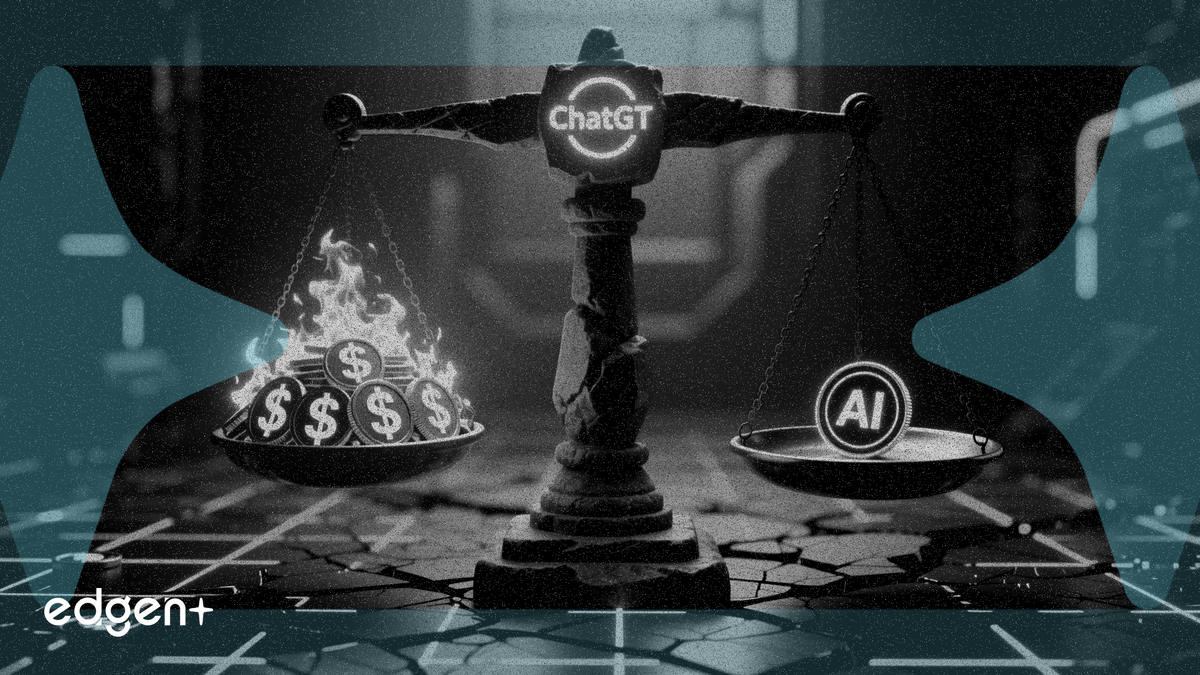
The AI industry's shift from flat-rate subsidies to token billing has ended with OpenAI preparing to slash prices, resetting the economics of the $200 billion generative AI market.
OpenAI is considering drastic cuts to token prices as it seeks to win enterprise customers from Anthropic, a move that would compress margins at both AI labs already losing billions of dollars annually.
"AI usage costs have become a huge issue," OpenAI Chief Executive Sam Altman said at a recent event, adding that the company would "help people get more value for less spend."
The price war comes after a brutal six months for enterprise AI budgets. Between February and June, OpenAI, Anthropic and GitHub each shifted from flat-rate subscriptions to usage-based token billing, exposing costs that had been hidden. Coinbase implemented weekly price caps of $500 to $5,000 per employee. Uber burned through its entire 2026 AI budget by April. Salesforce expects to pay Anthropic roughly $300 million this year.
The price cuts could erode profit margins at both OpenAI and Anthropic, which already lose billions on computing costs. But the deeper risk is that lower prices validate the view that AI models are commoditized — interchangeable products where customers defect to the cheapest option. That dynamic threatens the IPO valuations of both companies and could spill over to infrastructure suppliers including Nvidia, Oracle and CoreWeave.
From Subsidies to Sticker Shock
The billing shift was three years in the making. In early 2023, OpenAI launched ChatGPT Plus at $19.99 a month, setting a flat-rate standard that Microsoft's GitHub Copilot and Google's Gemini Advanced soon followed. To boost adoption, companies subsidized heavy users: Microsoft lost an average of $20 per GitHub Copilot subscriber each month, with some power users costing $80.
By June 2026, that model had collapsed. GitHub switched all plans to token-based billing, turning a $19 monthly subscription into a token allowance that a single autonomous coding session could exhaust. A Deloitte senior software engineer estimated that one highly detailed prompt could now cost more than $100 under the new system. Anthropic's developer documentation shows that a 10-person team using Claude Code could spend more than $75,600 annually on tokens alone.
The return on that spending remains poor. Enterprise data platform Entelligence.AI analyzed 2,444 companies and found that for every $1 spent on AI tokens, only 18 cents generated user-facing value. The rest went to fixing AI-introduced bugs, rework and review friction.
The Price War Calculus
OpenAI's move to cut prices is partly preemptive. The company expects Anthropic to lower its own rates, according to people familiar with the matter, and wants to strike first. Anthropic's revenue has surged after Claude Code went viral among software engineers, and the five-year-old startup surpassed OpenAI's valuation for the first time.
The problem is that both companies' products are highly substitutable. Customers can switch between OpenAI and Anthropic models with minimal friction, meaning price cuts may retain customers temporarily but cannot build lasting competitive advantage. The financial cycle also extends through cloud providers: OpenAI and Anthropic together account for more than half of roughly $2 trillion in future cloud service commitments at Microsoft, Oracle, Google and Amazon, according to The Information. Lower revenue expectations at the AI labs could ripple through those contracts.
Neuroscience and AI researcher Gary Marcus warned that an OpenAI downturn "would likely drag down Nvidia, Oracle, CoreWeave and others."
The Winners May Be Cheaper Alternatives
The biggest beneficiaries of a price war may be neither OpenAI nor Anthropic. Chinese AI models are gaining traction among cost-conscious US enterprises. DeepSeek's API is priced at roughly one-tenth of GPT-5.5 and one-eleventh of Claude Opus 4.7, according to third-party estimates. Enterprise spending platform Ramp reported in June that DeepSeek had become the fastest-growing enterprise software subscription among US companies.
"Companies are now asking whether every task needs a frontier model," said Niranjan Krishnan, head of AI solutions at IT consultancy FPT Americas. "The novelty has worn off, and hard-nosed utility has stepped in."
Coinbase has begun routing basic tasks to cheaper models from DeepSeek and MiniMax. Harness, a software startup, trained engineers to use Claude Code more efficiently, reining in costs that had grown exponentially from October through March.
For investors, the implications are stark. Nvidia trades at roughly 35 times forward earnings, with much of that premium tied to AI model training demand. If enterprise customers shift toward cheaper inference models and smaller labs, the GPU procurement cycle could slow. CoreWeave, which posted $2.08 billion in Q1 revenue but $740 million in net losses, is particularly exposed to the pricing dynamics of the AI labs it serves.
Citadel Securities has proposed a framework of tiered pricing and scarcity-based billing, where frontier models remain expensive for complex tasks while simpler models handle routine work. That structure would preserve revenue for AI labs but cap the total addressable market for premium inference.
This article is for informational purposes only and does not constitute investment advice.
