Shanghai-based optical chip maker Lightelligence Technology Co. (曦智科技) has filed for an initial public offering on the Hong Kong Stock Exchange, seeking to fund growth amid soaring losses and intense pressure from its investors.
The company’s prospectus reveals a high degree of customer concentration, with approximately 80 percent of its revenue originating from its top five clients, a dependency that creates significant business risk.
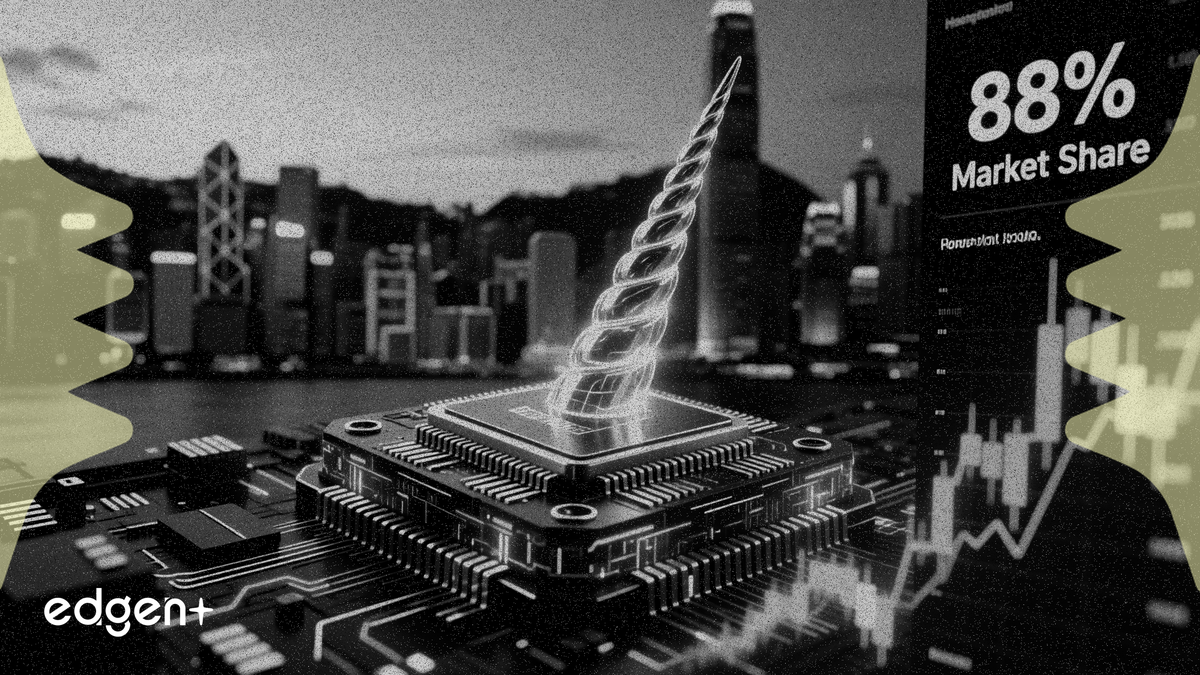
Lightelligence holds a dominant 88.3 percent of China’s market for scale-up optical interconnect solutions as of 2025, according to its filing. The company’s revenue reached ¥106 million ($14.6 million) in 2025, a more than 70 percent increase year-over-year, driven by demand from the artificial intelligence sector. Despite the rapid growth, net loss for the year widened to ¥1.34 billion from ¥275 million in 2023, while gross margin on its core products fell 14 percentage points to 35.1 percent.
The IPO is a race against time for the company, which faces a redemption clause from its early investors, including Tencent and Baidu. If Lightelligence fails to list within 24 months of its application, the redemption rights will be restored, putting its ¥4.92 billion in issued financial instruments at risk.
AI Boom Fuels Demand
The global push for AI capabilities has created a surge in demand for high-speed data transmission, amplifying the physical limitations of traditional electronic chips. Lightelligence’s core products, known as Scale-up optical interconnects, are designed to overcome these bottlenecks in AI data centers by using light to transfer data, enabling faster and more efficient communication between clusters of GPUs.
This demand fueled a 60 percent increase in revenue from its Scale-up products in 2025, reaching ¥76 million. However, the company’s growth lags some domestic peers, such as Yuanjie Technology, which saw revenue increase by 138.5 percent in the same period.
Financial Pressures Mount
While revenue has grown, profitability remains a major challenge. The company attributed its declining gross margin to higher costs associated with increased product integration, testing, and outsourced processing. The reliance on a small number of large customers, such as major internet companies and GPU server manufacturers, also puts pressure on pricing. For its top five customers, the gross margin was only 23.4 percent in 2025.
The IPO’s success will serve as a critical test of investor appetite for high-growth, high-loss hardware companies in the AI supply chain. The company’s first day of trading on the Hong Kong Main Board will be a key indicator of market confidence in its ability to navigate financial pressures and capitalize on the AI-driven demand for optical computing.
This article is for informational purposes only and does not constitute investment advice.