

Applied Optoelectronics rose 8 percent in pre-market trading Monday, extending a sector-wide rally in optical communications stocks fueled by hyperscaler demand for 800G transceivers.
Applied Optoelectronics rose 8 percent in pre-market trading Monday, extending a sector-wide rally in optical communications stocks fueled by hyperscaler demand for 800G transceivers.
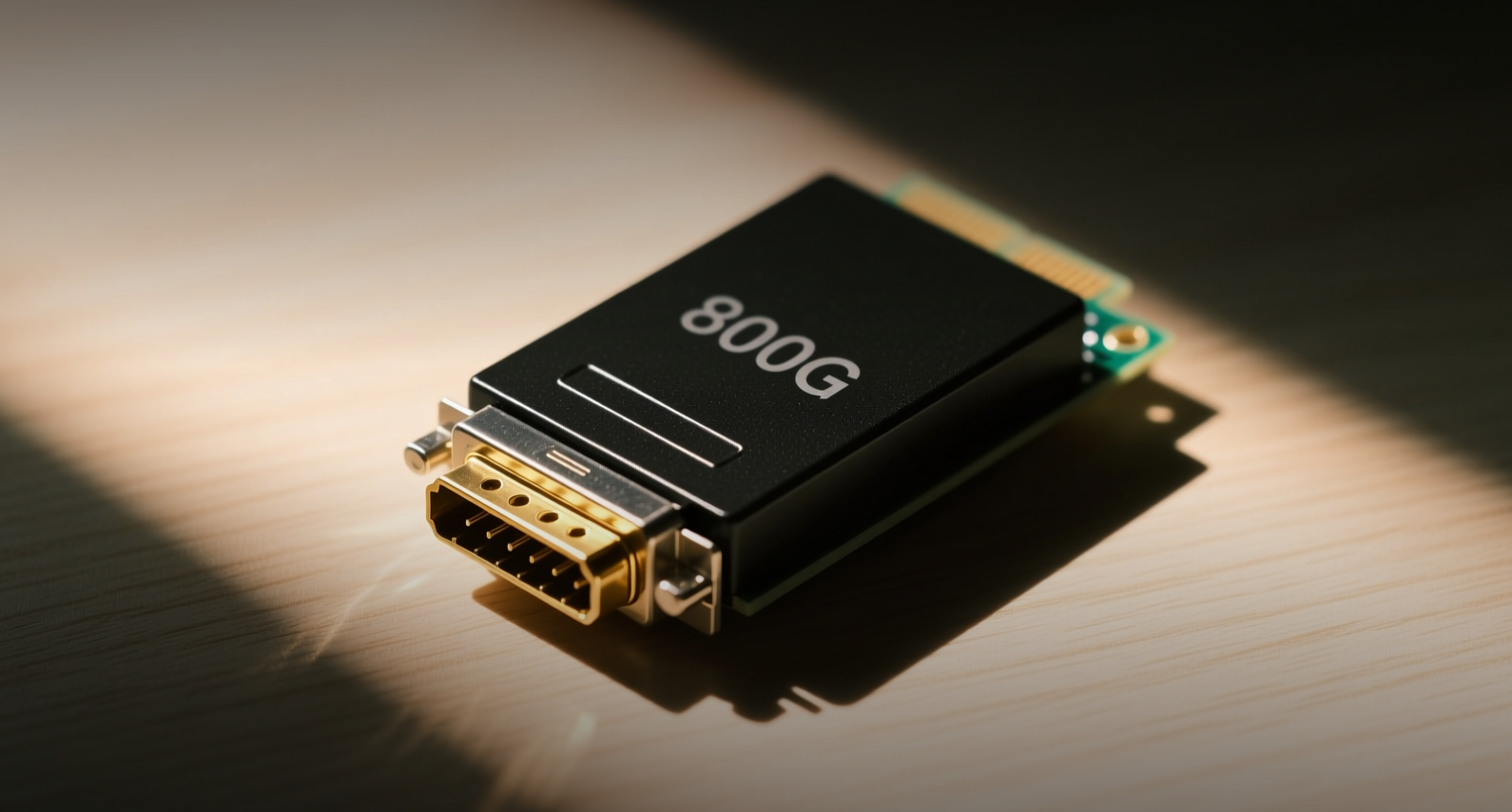
Applied Optoelectronics rose 8 percent in pre-market trading Monday, leading a sector-wide optical communications rally as AI data center demand accelerates. Coherent and Lumentum each gained more than 6 percent, while Corning advanced over 5 percent.
"We anticipate sequential revenue growth throughout this year, with significantly larger growth expected starting in Q3 as additional capacity comes online," Thompson Lin, chief executive officer at Applied Optoelectronics, said.
The pre-market moves extend a rally that saw Coherent jump 12.2 percent to $285 on Friday, while Applied Optoelectronics climbed 13.34 percent to close with a 170.57 percent year-to-date gain. The company's Q1 revenue reached $151.14 million, up 51.4 percent year-over-year, with datacenter revenue more than doubling to $81.40 million on the 800G transceiver ramp. Management guided Q2 revenue to $180 million to $198 million and floated a full-year 2026 path that could exceed $1 billion, versus $455.7 million for all of 2025.
The optics complex has become a key beneficiary of hyperscaler capital spending on AI infrastructure. Morgan Stanley projects AI spending could reach $1.4 trillion by 2028, with data center buildouts already pre-sold to hyperscale customers.
Applied Optoelectronics completed its first volume 800G hyperscale shipment in Q1, a qualification that management said de-risks the product cycle. The company exited Q1 with manufacturing capacity of nearly 100,000 units of 800G transceivers per month and has nearly doubled its Houston-area footprint through real estate acquisitions and leases. In a tariff-sensitive environment where hyperscalers are diversifying away from single-region supply chains, being the premier U.S. producer of AI-focused datacenter optics is a structural advantage. The balance sheet backs the ambition: $449.38 million in cash and shareholders' equity up 257.9 percent year-over-year to $1,105.95 million.
The broader market context remains supportive. The S&P 500 closed at 7,613.20 on Friday, up 0.04 percent, while the Nasdaq 100 gained 0.08 percent to 28,843.10. The optics rally is part of a broader AI infrastructure trade that has lifted semiconductor and networking names throughout 2026, with Lumentum and Coherent also posting triple-digit gains over the past year.
Margin Compression Is the Bear Case
The obvious pushback is margin compression. GAAP gross margin narrowed to 29.1 percent from 30.6 percent as datacenter mix rose, and R&D spending climbed to $25.7 million from $17.8 million year-over-year. Bears argue the company is buying growth. But gross profit still expanded 43.78 percent, and every dollar of R&D and capacity spend today is attached to a hyperscale purchase order. Margins compress on ramps and expand on scale. The Q3 capacity coming online is when that math flips.
What Happens Next
The analyst consensus target for Applied Optoelectronics sits at $150.30, with two Strong Buy, one Buy, three Hold, and zero Sell ratings. The full-chain put/call ratio of 0.26 shows options positioning skewed toward upside. Beta of 3.687 means the stock will move, but the direction is anchored by a doubling datacenter segment, a hyperscale qualification in hand, and $1 billion in achievable annual revenue. The sector's trajectory will continue as long as AI capex accelerates, and that trend is not slowing in 2026.
This article is for informational purposes only and does not constitute investment advice.
