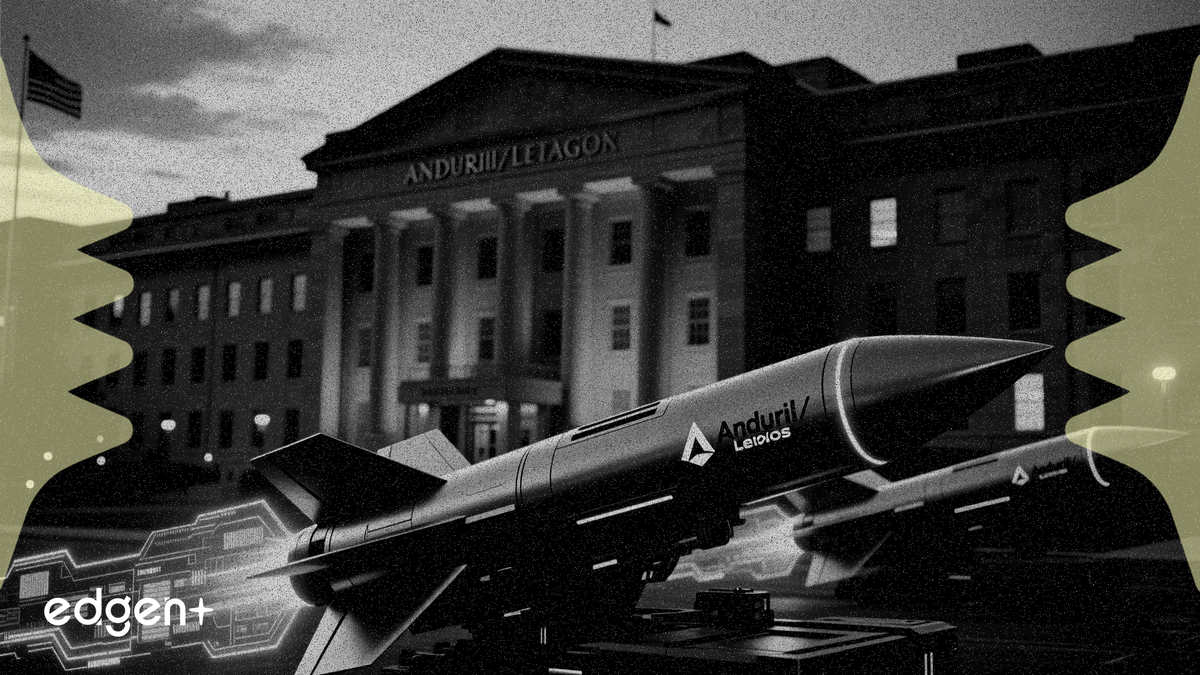
(Bloomberg) -- The Pentagon is moving to overhaul its missile arsenal, awarding contracts for more than 10,000 low-cost cruise and hypersonic missiles from a new crop of defense-tech firms including Anduril Industries and Leidos, a strategic shift away from expensive, slow-to-produce munitions.
"This is about building the arsenal of freedom, but you have to be able to do it at a speed and scale that is relevant," Anduril President Christian Brose said on 'Varney & Co.' on May 15. "The whole point here is to get to a very large number of munitions that are also much more autonomous and capable."
The new program includes deals for Anduril to supply 1,000 of its AI-enabled Barracuda cruise missiles annually, while Leidos is slated to produce 3,000 cruise missiles per year. Hypersonic developer Castelion also secured a contract for at least 500 of its Blackbeard missiles a year, with a goal of 12,000 over five years. The Pentagon plans to source from four vendors for the 10,000-missile containerized cruise missile program starting in 2027.
This new approach front-loads a massive quantitative advantage, aiming for price points that are a fraction of incumbent systems. Anduril is targeting a cost below $150,000 for its missile, compared to the roughly $2 million price tag for a Raytheon-built Tomahawk cruise missile. This shift directly addresses the high costs and limited stockpiles that have become a critical concern for U.S. military planners.
A New Model for Munitions
The contracts represent a major validation for the business model of companies like Anduril, which use venture capital to fund research and development upfront, rather than relying on traditional cost-plus government contracts. This allows them to develop products faster and at lower cost, disrupting the established defense industry.
"We are breaking the traditional defense industry model," Brose said. By investing its own capital, Anduril aims to deliver capabilities that are not only cheaper but also field-ready much faster than the years-long development cycles common for major Pentagon programs. This approach puts pressure on defense giants like Raytheon and Lockheed Martin, whose business models are built around high-cost, high-margin systems.
The 'Arsenal of Freedom' Reimagined
The program's "arsenal of freedom" branding explicitly invokes the mass production of armaments in World War II. The strategic imperative is to build a deep and affordable magazine of standoff weapons for a potential large-scale conflict. The concept of containerized, disposable missile systems allows for wide distribution and deployment from a variety of platforms, increasing complexity for an adversary.
For investors, the awards signal a clear shift in Pentagon spending priorities toward scalable, autonomous, and attritable systems. The success of Anduril, Leidos, and Castelion in securing these large-scale production contracts is likely to increase investor interest in the defense-tech sector, creating new competitive dynamics and pressuring traditional players to adapt or risk losing market share.
This article is for informational purposes only and does not constitute investment advice.