
Federal Reserve Chair Jerome Powell presented a mixed economic picture, noting steady expansion alongside a forecast showing persistent inflation, complicating the path for future monetary policy.
Federal Reserve Chair Jerome Powell presented a mixed economic picture, noting steady expansion alongside a forecast showing persistent inflation, complicating the path for future monetary policy.
Federal Reserve Chair Jerome Powell presented a mixed economic picture, noting steady expansion alongside a forecast showing persistent inflation, complicating the path for future monetary policy.
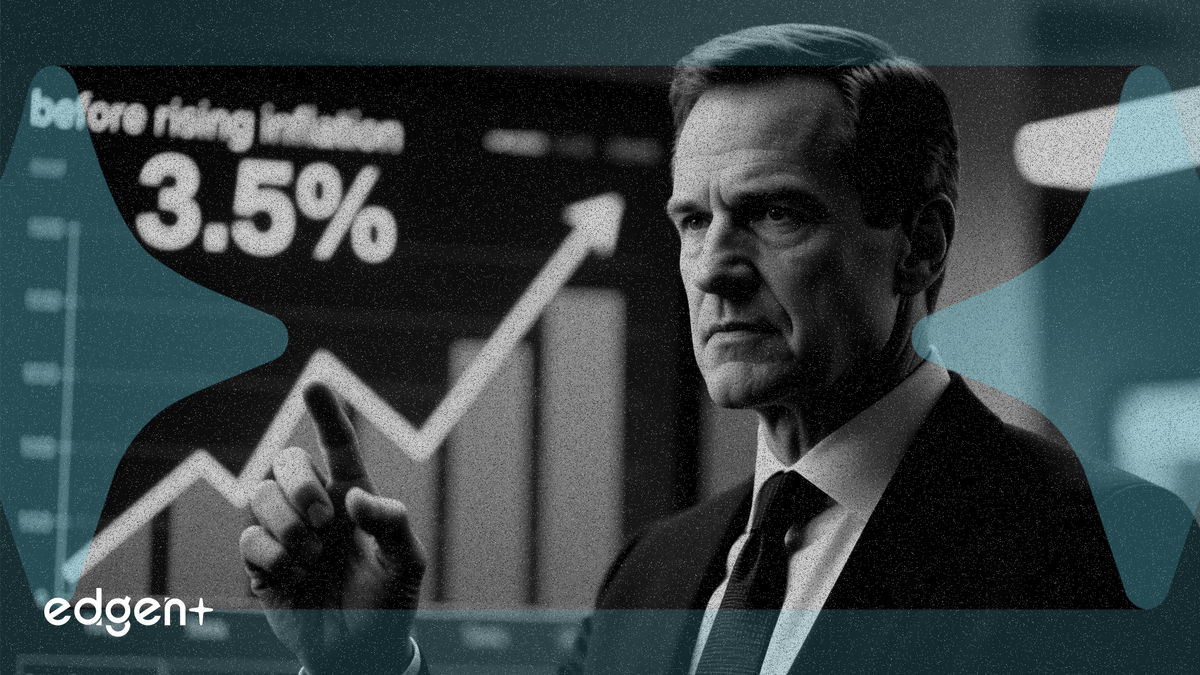
Federal Reserve Chair Jerome Powell said the US economy is expanding steadily but projected March personal consumption expenditures inflation at 3.5 percent, following a policy meeting where the central bank held interest rates steady at a range of 3.5 to 3.75 percent.
“Developments in the Middle East are contributing to a high level of uncertainty about the economic outlook,” the Federal Open Market Committee said in its statement, adding that inflation is "elevated" in part due to the surge in global energy prices.
The April 29 decision came with four dissenting votes, the most since 1992. In reaction, the 10-year Treasury yield rose more than 6 basis points to about 4.415 percent, while Brent crude oil climbed above $118 a barrel.
The higher-than-expected inflation forecast, combined with a divided committee, reinforces market expectations that the Fed will delay any rate cuts. Traders are pricing in an 87 percent chance that rates will remain unchanged for the rest of 2026, according to the CME FedWatch tool. The Fed's next meeting is scheduled for mid-June.
In his opening remarks, Powell detailed a US economy showing signs of both strength and moderation. He noted that consumer spending has been solid and business fixed investment is expanding at a quick pace. However, he also pointed to a clear cooling in labor demand and a housing market that remains weak. Job growth has been "low," Powell said, a slowdown he partly attributed to a decline in immigration. The unemployment rate has held roughly stable at 4.3 percent, with employers adding 178,000 jobs in March.
The central bank's primary concern remains inflation. The Labor Department’s Consumer Price Index jumped to 3.3 percent in March, a sharp increase from 2.4 percent in February, driven by a record 21.2 percent monthly surge in gasoline prices following the onset of the Iran war. While core inflation, which excludes food and energy, held steady at 0.2 percent, the headline number complicates the Fed's calculus.
The decision to hold rates was not unanimous, revealing significant fractures within the FOMC. Eight members voted for the hold, but four dissented. Federal Reserve Governor Stephen Miran pushed for a quarter-point rate cut, continuing his dovish stance from previous meetings.
In a different form of dissent, committee members Beth Hammack, Neel Kashkari, and Lorie Logan supported holding the rate but formally opposed the inclusion of an "easing bias" in the policy statement, a signal they may be leaning more hawkish in the face of persistent inflation. Such a public split has not been seen at the central bank in over 30 years and highlights the challenges in finding consensus.
The meeting took place under a political cloud, likely marking Powell's last as chair. His term is set to expire on May 15. While the meeting was underway, the Senate Banking Committee voted 13-11 along party lines to advance the nomination of Kevin Warsh, President Donald Trump's pick to lead the Fed.
Powell, who recently saw a criminal investigation against him dropped, has said he plans to remain on the Fed’s board of governors. Addressing the succession, Powell congratulated Warsh but noted, “The Federal Reserve has only one chair.” Analysts are now weighing how a Warsh-led Fed might differ, with some pointing to his preference for less frequent communication, which could introduce more market volatility.
This article is for informational purposes only and does not constitute investment advice.

