Rising gasoline costs erased middle-income purchasing power for a second straight month in April.

Rising gasoline costs erased middle-income purchasing power for a second straight month in April.
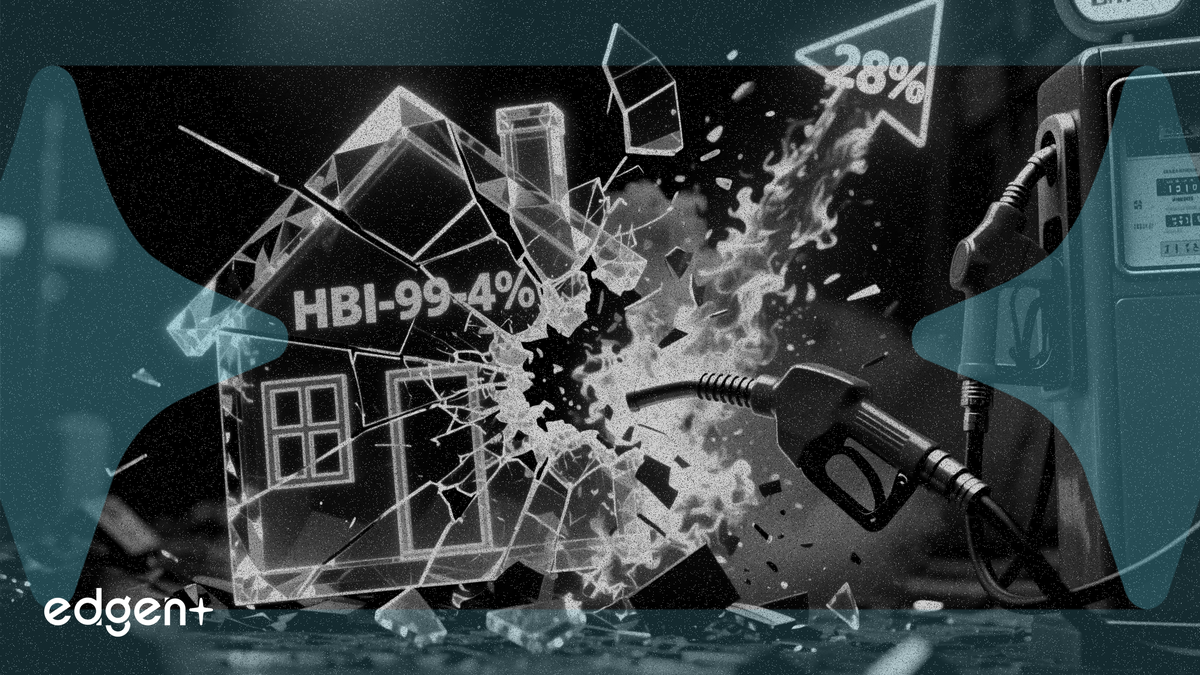
The Primerica Household Budget Index dropped to 99.4% in April, down 1.7 percentage points from March, as gasoline prices surged 11% month-over-month and 28% from a year ago, squeezing the purchasing power of households earning $30,000 to $130,000.
"The cost of everyday necessities is rising faster than headline inflation for middle-income families, and gas is the primary driver," said Amy Crews Cutts, PhD, CBE, chief economic consultant at Primerica and the index's creator. "When gas prices climb this quickly, it forces households to make trade-offs in other spending categories."
The Consumer Price Index rose 3.8% in April from a year earlier, but when adjusted for middle-income consumption patterns, inflation hit 4.4%. The cost of necessity items tracked by the HBI — food, utilities, gas, auto insurance and health care — climbed 5.5% year-over-year, outpacing both headline and middle-income-specific CPI measures. The index, which uses January 2019 as a baseline of 100%, has now fallen below that starting point for the first time since early 2025.
Middle-income households account for more than 55% of the U.S. population and drive a disproportionate share of consumer spending, the engine of roughly two-thirds of GDP. With the HBI below 100%, these families are losing financial ground — their incomes are not keeping pace with the cost of essentials. If gas prices remain elevated through the summer driving season, consumer spending on discretionary categories such as travel, dining and retail could face headwinds in the third quarter.
The 11% monthly jump in gasoline prices marks the largest single-month increase since the index's inception in 2019. National average pump prices have climbed past $4 a gallon in several regions, according to data from the U.S. Energy Information Administration, reflecting higher crude oil costs and seasonal refinery maintenance. The 28% year-over-year increase in gas prices alone accounts for roughly half of the decline in the HBI since April 2025.
The divergence between headline CPI at 3.8% and the middle-income inflation rate of 4.4% underscores a structural issue: lower-income households spend a larger share of their budgets on goods whose prices are rising fastest. Gasoline, food at home and utilities — categories where prices have been stickiest — represent a bigger portion of the consumption basket for families earning $30,000 to $130,000 than for higher-income households. This gap has widened over the past 12 months as energy costs accelerated.
Auto Insurance Adds to the Squeeze
The HBI added auto insurance to its necessity basket in December 2024, reflecting its growing weight in household budgets. Auto insurance premiums have risen at an annual rate exceeding 15% over the past year, according to Bureau of Labor Statistics data, compounding the pressure from higher gas prices. Combined, transportation-related costs — gas plus auto insurance — now consume a larger share of middle-income budgets than at any point since the index began tracking the data.
The last time the HBI fell below 100% was in early 2025, when a similar spike in energy costs coincided with elevated food inflation. That episode lasted three months before easing as oil prices moderated. The current trajectory suggests a longer stretch of below-baseline purchasing power if crude benchmarks hold above $80 a barrel through the third quarter.
The Federal Reserve's preferred inflation gauge, the core PCE deflator, is due for release next week and will offer the next signal on whether price pressures are broadening beyond energy. For middle-income households, the near-term outlook hinges on the labor market: wage growth has averaged 4% to 4.5% over the past year, according to the Atlanta Fed's wage tracker, but that pace is insufficient to offset the 5.5% rise in necessity costs. If the gap persists, consumer credit data in the coming months may show increased reliance on borrowing to cover essential expenses.
This article is for informational purposes only and does not constitute investment advice.