


Rackspace Technology is betting that regulated enterprises will pay a premium for AI infrastructure that comes with a single throat to choke — and AMD is supplying the silicon.
Rackspace Technology is betting that regulated enterprises will pay a premium for AI infrastructure that comes with a single throat to choke — and AMD is supplying the silicon.
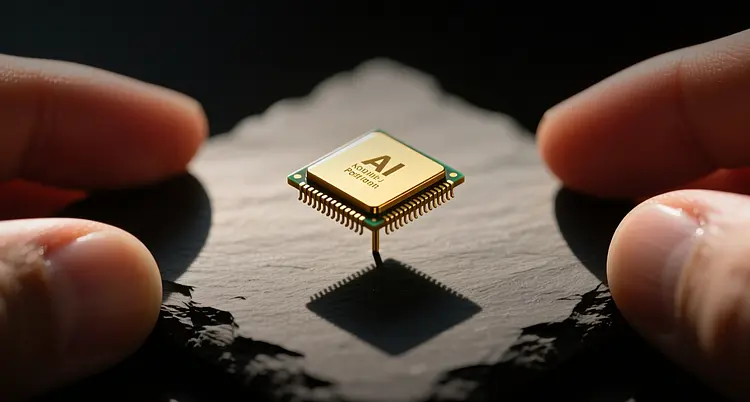
Rackspace Technology is betting that regulated enterprises will pay a premium for AI infrastructure that comes with a single throat to choke — and AMD is supplying the silicon.
Rackspace Technology (NASDAQ:RXT) shares surged 30% on June 16 after the company signed a definitive agreement with Advanced Micro Devices (NASDAQ:AMD) to deploy 30 megawatts of AI computing infrastructure across its global data center network, with phased rollouts beginning in late 2026 and continuing through 2028. The deal formalizes a memorandum of understanding the two companies announced May 7 and establishes AMD as the core chip provider at the silicon layer of Rackspace's governed AI stack.
"Enterprises in regulated industries need AI infrastructure that is governed from the ground up, with one operator accountable for business outcomes, not a collection of vendors each owning a piece," Gajen Kandiah, chief executive officer of Rackspace Technology, said.
The platform will be built around AMD's Instinct MI355X and MI350P graphics processing units alongside EPYC central processing units, integrated into Rackspace's Enterprise AI Cloud architecture. The companies said healthcare organizations have already shown interest in the platform for clinical AI applications and large-scale inference workloads. Rackspace and AMD plan to dedicate joint commercial resources to pursue enterprise customers in finance, healthcare, and sovereign government sectors — industries where compliance requirements have slowed AI adoption relative to less regulated verticals.
The 30 MW deployment, while modest compared with the gigawatt-scale buildouts of hyperscalers such as Microsoft and Amazon, represents a strategic bet on a specific market segment: organizations that cannot or will not run AI workloads on shared public cloud infrastructure. Rackspace's model bundles hardware, managed services, and compliance into a single contract, differentiating it from hyperscalers that sell raw compute and from colocation providers that sell only space and power. The company plans to offer four integrated services on the AMD stack: Enterprise AI Cloud, Enterprise Inference Engine, Inference as a Service, and Bare Metal AMD Instinct solutions.
The deal arrives as Rackspace executes a broader turnaround under Kandiah, who took over in September 2025. The company reported first-quarter 2026 revenue of $678 million, up 2% year over year, with public cloud revenue growing 7% to $443 million while private cloud revenue declined 6% to $235 million. Adjusted EBITDA expanded to $71.2 million from $61.3 million a year earlier, and free cash flow swung to $90.6 million in fiscal 2025, up 227% from the prior year. The company also announced a workforce realignment cutting roughly 15% of global staff, expected to generate $75 million to $85 million in annualized savings that management plans to reinvest in AI engineering and infrastructure.
The balance sheet remains the primary risk. Rackspace carries $3.98 billion in total liabilities against $2.77 billion in assets, with a stockholders' deficit of $1.22 billion. Interest expense reached $26.2 million in the first quarter, and operating cash flow shrank to $5.1 million. The company's 2028 debt maturity wall cannot be covered by free cash flow alone, making the AMD partnership's revenue contribution critical to the refinancing story.
For AMD, the deal provides a channel into regulated enterprise accounts where its Instinct GPUs have less penetration than Nvidia's H100 and B200 products. AMD's data center segment generated a record $5.8 billion in first-quarter revenue, up 57% year over year, and the company holds roughly 41% of the server CPU market. Its forward price-to-earnings multiple of 82.5 times — more than three times the sector average of 24.4 times — reflects investor expectations that Instinct GPU adoption will continue gaining share.
Rackspace shares, which traded below $1 as recently as late 2025, have surged more than 675% year to date. The stock's three analyst ratings average to a Hold, with a mean price target of $4.33 — roughly 42% below the current trading level near $7.53. The gap between the stock price and analyst targets suggests the market is pricing in a successful turnaround that has yet to show up in earnings. Whether the AMD partnership can close that gap will depend on how quickly 30 MW of governed AI compute translates into recurring revenue.
This article is for informational purposes only and does not constitute investment advice.
