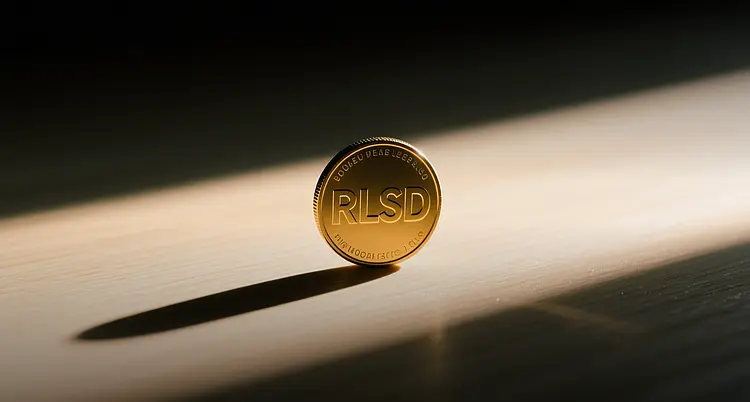
Ripple's dollar stablecoin RLUSD has grown from nothing to $1.65 billion in 18 months, landing listings on three major exchanges and positioning itself as the regulated alternative in a market two giants already own.
The newest step came June 15, when RLUSD went live on Gate with trading pairs against Tether's USDT, Bitcoin, Ethereum, and XRP. It is the third major exchange to add the stablecoin this year, after Binance brought it on in January and OKX followed in April with more than 280 trading pairs and the option to use it as collateral.
"RLUSD's regulator-first design — a New York trust charter and full dollar backing — is what pulls in exchanges and institutions," Sam Daodu, a crypto analyst covering Ripple, wrote in a June 16 analysis. "Europe's MiCA framework now forces exchanges to drop stablecoins that don't meet its standards, and a fully-backed, compliant coin is exactly what fits."
The stablecoin market is worth about $320 billion, and two coins own roughly four-fifths of it — Tether's USDT at around $188 billion and Circle's USDC near $78 billion, according to CoinGecko data. Against that, RLUSD's $1.65 billion is about half a percent of the market. USDT and USDC have years of built-up liquidity, exchange support, and habit behind them — they are the dollars traders reach for without thinking.
Why exchanges keep adding RLUSD
Ripple designed RLUSD under a New York trust charter, fully backed by dollars and cash equivalents, with a level of transparency that makes exchanges and big institutions comfortable holding it. That is why it has picked up institutional users like the trading firm LMAX and the broker Interactive Brokers, not just exchange listings.
The regulatory tailwind is moving in RLUSD's favor. Through 2025 and into 2026, major European platforms restricted or pulled Tether's USDT for their users under MiCA compliance requirements. When the most popular stablecoin gets pulled, exchanges still need a dollar coin to replace it, and RLUSD was built for that gap.
Roughly 82% of RLUSD's supply does not live on Ripple's own XRP Ledger but on Ethereum, where the deep institutional and DeFi money already sits, according to DefiLlama data. That distribution reflects a practical reality: the liquidity and infrastructure RLUSD needs to grow are on Ethereum today, even if Ripple's long-term vision ties the stablecoin to its own ledger.
What RLUSD's growth actually means
RLUSD is not going to catch Tether on size any time soon, and it probably does not need to. Its realistic goal was never to be the coin everyone trades with, but to become the default regulated dollar for banks, institutions, and cross-border settlement — the corner of the market where compliance counts for more than raw size.
If RLUSD keeps showing up in institutional platforms, payment corridors, and regulated venues, that is the sign it is becoming something big. The exchange listings are what get noticed, but they are really just the entry point. A coin like USDT got big by being everywhere traders looked. RLUSD is betting it can get even bigger by being the one coin banks and regulators are willing to touch, and that is a slower build with a higher ceiling if it works.
This article is for informational purposes only and does not constitute investment advice.