
OpenAI CEO Sam Altman testified for four hours that Elon Musk abandoned the AI startup after demanding near-total control, countering Musk’s claims that Altman betrayed the company’s nonprofit mission.
OpenAI CEO Sam Altman testified for four hours that Elon Musk abandoned the AI startup after demanding near-total control, countering Musk’s claims that Altman betrayed the company’s nonprofit mission.
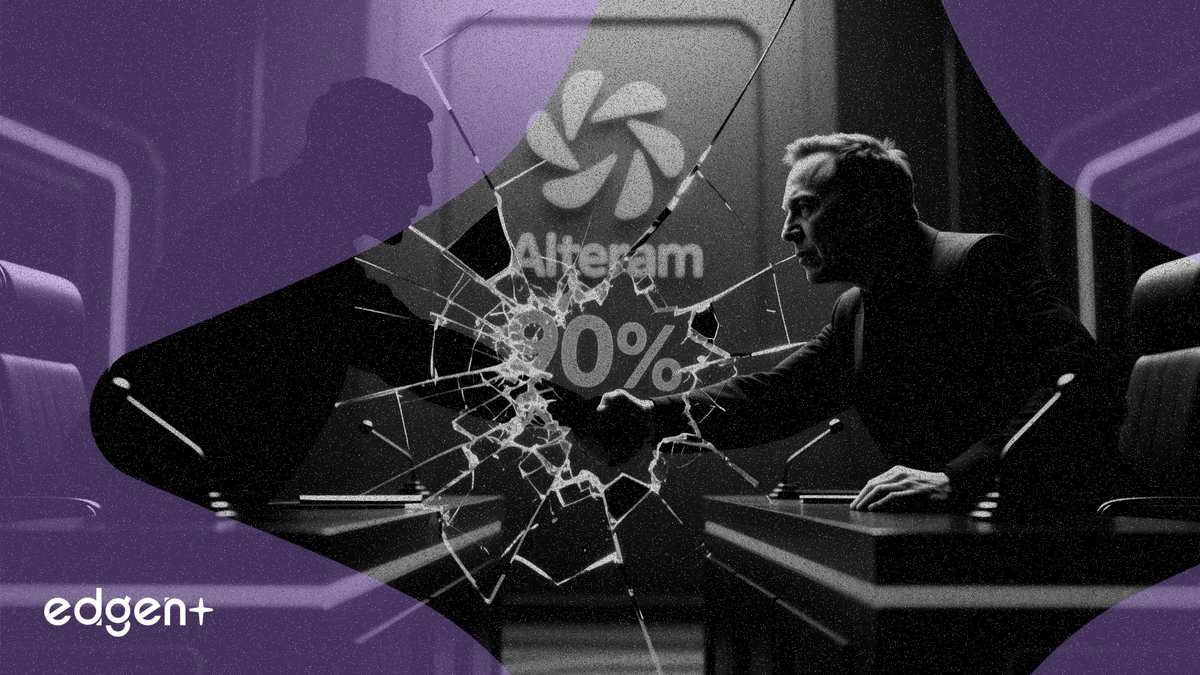
Sam Altman took the stand for four hours Tuesday, arguing that he didn't steal a charity but that his co-founder, Elon Musk, abandoned one. The OpenAI CEO's testimony in a California federal court pushes back against a lawsuit from Musk that could unwind the world's most valuable artificial intelligence company, now valued at over $850 billion.
"We were kind of left for dead," Altman testified, describing the period after Musk departed the company in 2018. The testimony is central to the civil trial where Musk alleges Altman and OpenAI President Greg Brockman betrayed the company's founding mission by creating a for-profit arm with investment from Microsoft.
The core of the dispute traces back to tense 2017 negotiations over OpenAI's future. Altman testified that Musk, an early supporter who donated $38 million, demanded roughly 90 percent of the equity in any for-profit entity. Altman told jurors he was "extremely uncomfortable" with any single person, particularly one whose primary business was a car company, having control over what they hoped would become artificial general intelligence.
Musk is asking the court to force Altman, Brockman, and Microsoft to "disgorge" up to $150 billion to the original nonprofit entity and to unwind the for-profit subsidiary that now controls OpenAI's operations. Such a move could radically reshape the competitive AI landscape, with IPOs reportedly planned for OpenAI, rival Anthropic, and Musk's own xAI, which recently merged with SpaceX in a deal valued at $1.25 trillion.
Musk's lawyers have argued that Altman and Brockman enriched themselves by sidelining the nonprofit's mission. But OpenAI's legal team presented emails showing Musk was aware of and initially supported plans for a for-profit structure to raise the billions needed for large-scale computing resources.
After the negotiations for control collapsed and Musk left the board in 2018, he sent a stark email to the remaining founders. "My probability assessment of OpenAI being relevant to DeepMind/Google without a dramatic change in execution and resources is 0%. Not 1%," Musk wrote that December, adding that the company needed "billions per year immediately or forget it." Altman said that comment was "burned into my memory."
Following Musk's departure, OpenAI established the for-profit subsidiary that attracted billions in investment from Microsoft. Microsoft CEO Satya Nadella, in earlier testimony, quantified the software giant's projected return on its OpenAI investment at $92 billion.
During a sharp cross-examination, Musk's attorney Steven Molo sought to paint Altman as untrustworthy. "Are you completely trustworthy?" Molo asked. Altman, after a pause, answered "yes." Molo brought up past statements from former board members and co-founder Ilya Sutskever, who had previously characterized Altman as exhibiting "a consistent pattern of lying."
Altman also acknowledged that his outside investments, including stakes in Helion, Stripe, and Cerebras Systems, all have business relationships with OpenAI. These potential conflicts of interest are reportedly being reviewed by the U.S. House Committee on Oversight and Government Reform ahead of OpenAI's planned IPO.
The trial, now in its third week, is being overseen by Judge Yvonne Gonzalez Rogers. Closing arguments are expected Thursday, with a verdict from an advisory jury possible as soon as next week.
This article is for informational purposes only and does not constitute investment advice.
