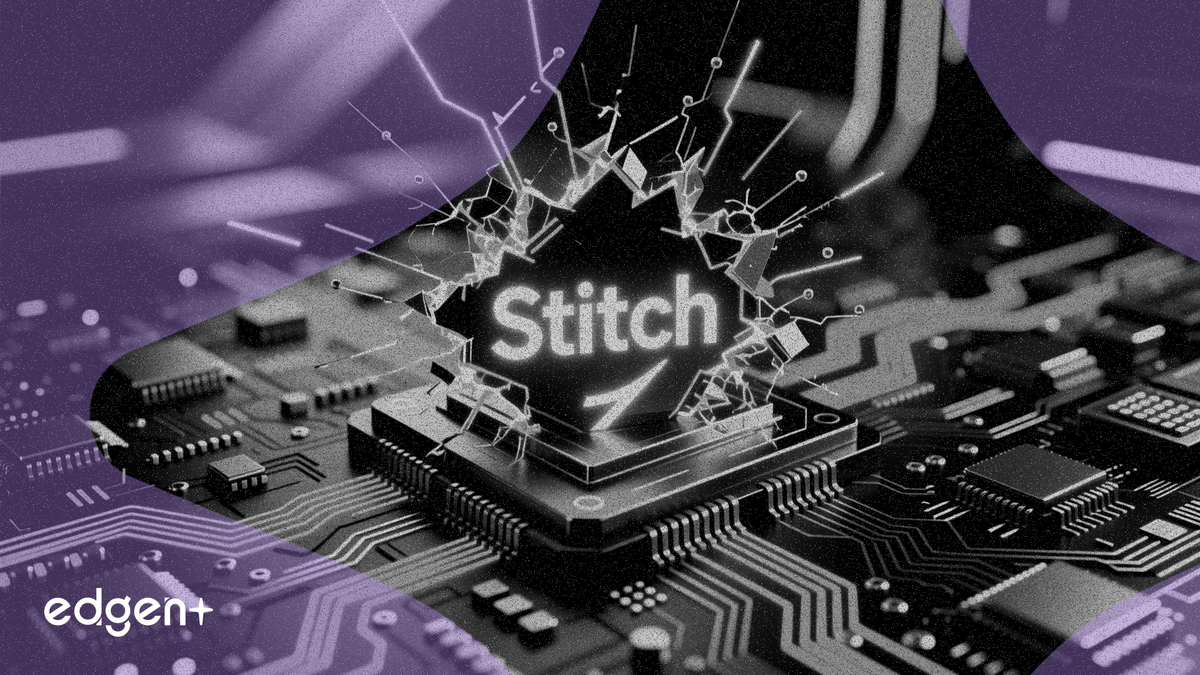
Riyadh-based fintech Stitch raised $25 million in a Series A round led by Andreessen Horowitz, marking the venture capital giant’s first investment in the Gulf Cooperation Council and a bet that the region’s banks must upgrade their decades-old systems to adopt artificial intelligence.
"Financial institutions are sitting on decades of infrastructure debt, and that debt is now the single biggest obstacle to AI adoption," said Alex Rampell, General Partner at Andreessen Horowitz. "What Stitch is building — a modern, unified system of record — is what makes everything else possible."
The funding brings Stitch's total capital raised to $35 million, following a $10 million seed round a year prior. The company, which builds a cloud-native operating system for lending, cards, and payments, processed over $5 billion in transactions in the last six months and saw its customer base grow 10x in 2025.
Stitch is positioning itself as the foundational layer for banks to remain competitive, arguing that the $700 billion spent annually by global banks on technology is wasted without a modern core. The new capital will be used to deepen its presence across the Middle East and North Africa, directly challenging legacy financial software providers like FIS, Santander, and Azentio where its founders previously worked.
The problem Stitch aims to solve is the persistence of fragmented, legacy infrastructure that has defined the financial sector for decades. Despite global financial institutions spending over $1 trillion on digital transformation in the last three years, many core systems remain unchanged, making it slow and risky to launch new products or integrate modern technologies like AI.
"Financial institutions globally run on fragmented, legacy infrastructure that should have been left behind 20 years ago," said Mohamed Oueida, founder and CEO of Stitch. "Now every institution wants to adopt AI, but AI on top of broken infrastructure is a dead end."
Customer Traction
Stitch's platform allows financial institutions to adopt its modules gradually without a complete "rip and replace" of existing systems. This approach has gained traction, with the company reporting a 20x revenue increase in 2025. Its client roster includes prominent regional players like Raya Financing, the lending arm for Hyundai and Peugeot in certain markets, as well as LuLu Exchange, Noqodi, and the restaurant-tech company Foodics.
This article is for informational purposes only and does not constitute investment advice.