
A new wave of AI infrastructure aims to move massive data centers from land to sea, tackling growing power and cooling challenges.
A new wave of AI infrastructure aims to move massive data centers from land to sea, tackling growing power and cooling challenges.
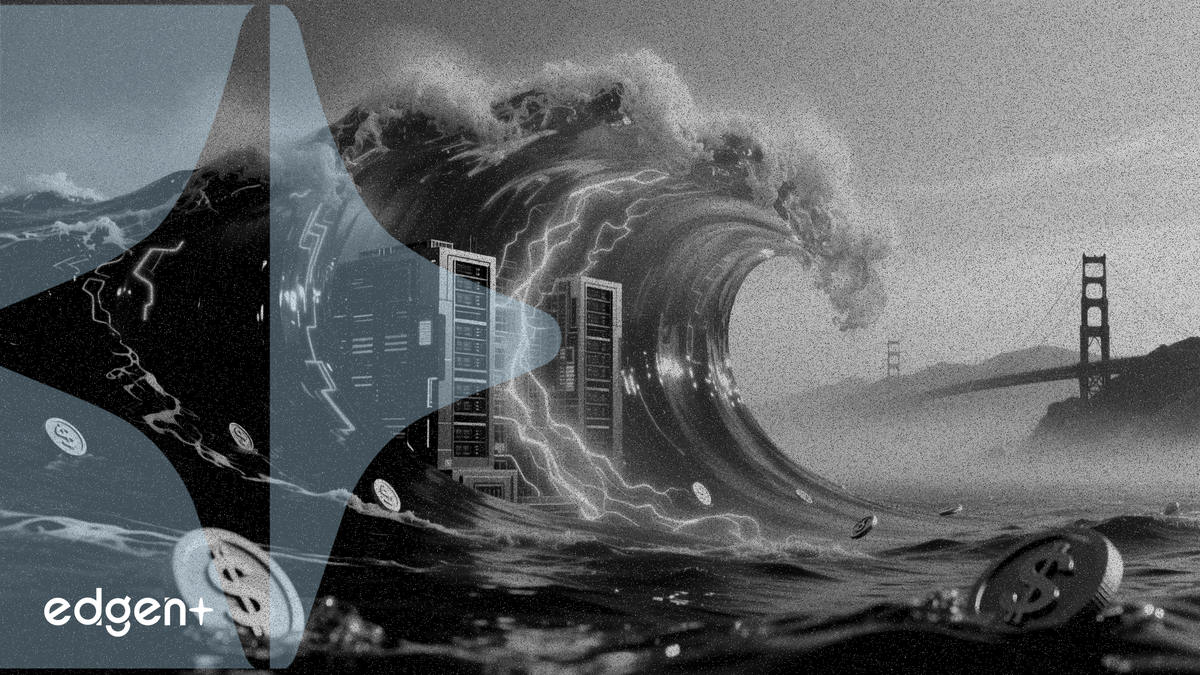
A Silicon Valley startup is betting more than $200 million that the future of artificial intelligence infrastructure lies at sea, developing giant, wave-powered data centers to meet the industry's voracious demand for energy and cooling. Panthalassa, backed by billionaire investor Peter Thiel, is building floating spherical nodes to run AI systems in the middle of the ocean, a move aimed at circumventing the power, land, and water constraints of traditional data centers.
“Panthalassa’s idea transforms an energy transmission problem into a data transmission problem,” University of Pennsylvania computer architect Benjamin Lee told Ars Technica, highlighting the project's novel approach. Instead of piping renewable energy to land, the company generates electricity on-site to directly power AI chips and sends the results back to customers via satellite.
The company's latest prototype, Ocean-3, is an 85-meter-long structure that generates electricity as waves push water through a pressurized chamber to spin turbines. The surrounding ocean provides a massive natural cooling solution for the heat-intensive AI chips, a key advantage over land-based data centers that consume enormous amounts of power and fresh water for cooling. The prototype is scheduled for testing in the northern Pacific later this year.
This venture comes as the AI industry faces a potential bottleneck in infrastructure. Goldman Sachs estimates spending on AI data centers will hit $765 billion in 2026 and could reach $1.6 trillion by 2031. Companies like Dell Technologies, which saw its AI server orders skyrocket, are capitalizing on this boom, but the physical footprint and energy draw of these facilities are facing increasing local resistance and power supply constraints.
Panthalassa's strategy is to decouple data center growth from the terrestrial power grid. By generating their own power from waves and using the ocean as a heatsink, these floating nodes could offer a scalable solution to the AI industry's infrastructure woes. The company aims to eventually deploy thousands of these nodes, each operating autonomously for over a decade in harsh ocean conditions.
The project's ambition is underscored by the immense financial and resource burden of the current data center model. The $765 billion projected spend by 2026 reflects a massive build-out that is already straining regional power grids and water supplies. Panthalassa's success would not only create a new market for marine-based infrastructure but also potentially ease the pressure on land-based resources.
Despite the innovative design, the project faces significant technical and logistical challenges. Satellite internet, the proposed method for data transmission, remains far slower and less reliable than the fiber-optic cables that form the backbone of land-based data centers. This could create latency issues for AI models that require constant, high-speed communication between servers.
Furthermore, the goal of operating thousands of autonomous nodes for over a decade without human maintenance is a monumental engineering task. Ensuring the durability and reliability of these complex systems against the relentless force of the ocean presents a major hurdle that has yet to be proven at scale.
The concept of sea-based data centers is not entirely new, though Panthalassa's vision is arguably the most aggressive. Microsoft experimented with submerged data centers in its Project Natick, deploying a container of servers off the coast of Scotland in 2018 before ultimately shelving the initiative. Chinese companies have also deployed underwater data centers near Hainan Island, and Singapore's Keppel has worked on floating data center projects.
These earlier projects highlight a persistent interest in leveraging the ocean's cooling power. However, Panthalassa's approach of combining power generation and computation in a single, mobile unit represents a significant evolution of the concept, one that has attracted substantial backing from investors looking for alternative solutions to the AI infrastructure boom.
This article is for informational purposes only and does not constitute investment advice.

