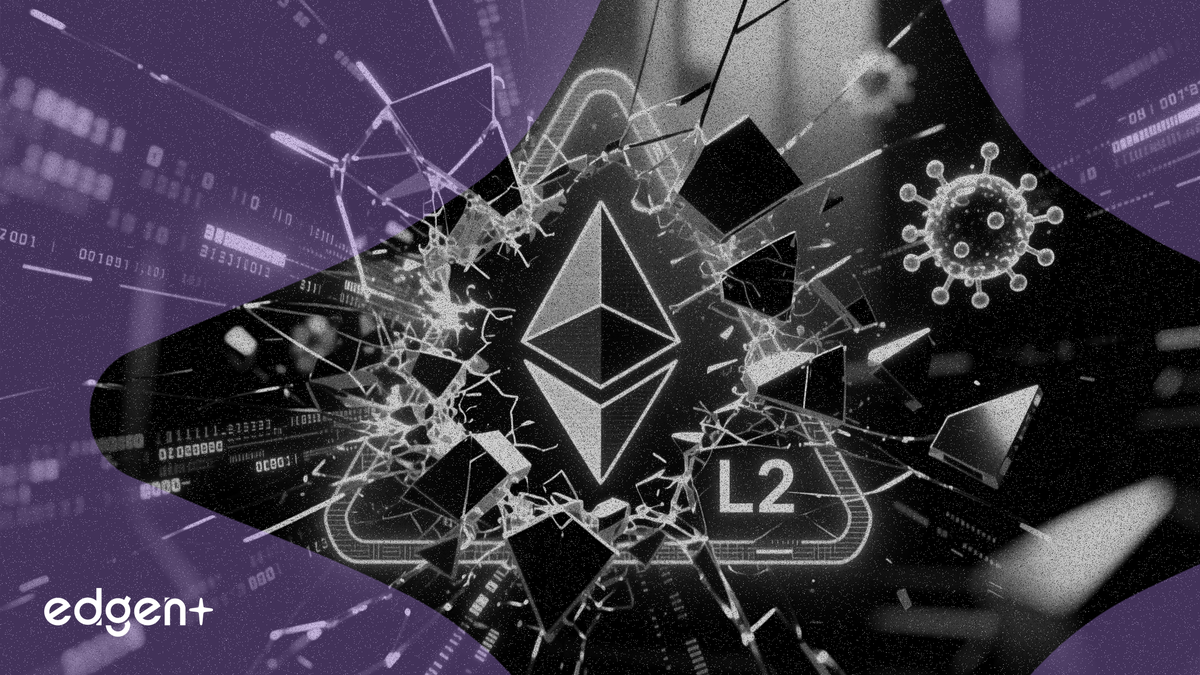

Solana Labs co-founder Anatoly Yakovenko stated on May 2, 2026, that Ethereum Layer 2 ecosystems are not quantum-safe, intensifying the industry debate around the long-term security of current cryptographic systems.
"Abandon hope," Yakovenko wrote in a post on X, directly addressing the preparedness of Ethereum's scaling solutions for the eventual arrival of quantum computing, a technology that threatens to break current encryption standards.
The warning focuses on Layer 2 networks, which process transactions off the main Ethereum chain to improve speed and reduce costs. These systems, crucial to Ethereum's scalability, rely on the same cryptographic assumptions as the main network, which are theoretically vulnerable to quantum attacks. The discussion comes as competing blockchains, such as Sui, are building their platforms with quantum-safe cryptography from the ground up, treating it as a key differentiator.
While practical quantum attacks are not considered an immediate threat, Yakovenko's statement pressures the entire blockchain sector to prioritize and accelerate the development of quantum-resistant cryptography. For Ethereum and its vast L2 ecosystem, this represents a significant future engineering challenge to maintain its position as a leading platform for decentralized finance (DeFi).
A New Front in Blockchain Competition
Yakovenko's pointed critique highlights an emerging competitive dynamic where long-term security and future-proofing are becoming key marketing and development battlegrounds. While Solana's co-founder targeted Ethereum, other platforms are also moving to address the quantum threat.
The Sui blockchain, for example, has integrated a quantum-safe cryptographic architecture directly into its protocol. Kostas, co-founder of Mysten Labs (the developer behind Sui), noted that this design protects against the risk of future quantum computers breaking current encryption, a vulnerability that could affect everything from user wallets to foundational network addresses on older chains like Bitcoin.
The Broader Push for Security
The conversation around quantum threats is part of a larger, more urgent push for enhanced security across the digital asset space, especially as institutional capital flows into the market. The $292 million exploit of Kelp DAO recently exposed significant weak spots in the DeFi ecosystem, forcing a broader industry reckoning with risk management.
Industry leaders argue that before larger pools of capital can safely scale into DeFi, protocols must adopt institutional-grade standards. Bhaji Illuminati, CEO of Centrifuge Labs, said that while traditional finance has had decades to build protections, "DeFi is doing that too, but on a vastly accelerated timeline." This includes building predictable, auditable smart contracts and robust collateral frameworks that can withstand systemic shocks and sophisticated attack vectors.
What's Next for Ethereum
Developers within the Ethereum ecosystem are actively researching post-quantum cryptography. However, retrofitting a live, multi-billion dollar network and its sprawling Layer 2 ecosystem is a far more complex task than building quantum resistance into a new chain from the start.
The debate sparked by Yakovenko serves as a public call to action, forcing developers and investors to consider not just the immediate scaling challenges but also the long-term viability of the cryptographic foundations that secure the entire system. The industry will be watching closely for roadmap updates from major L2 projects like Arbitrum, Optimism, and Polygon on how they plan to address the quantum computing challenge in the years ahead.
This article is for informational purposes only and does not constitute investment advice.