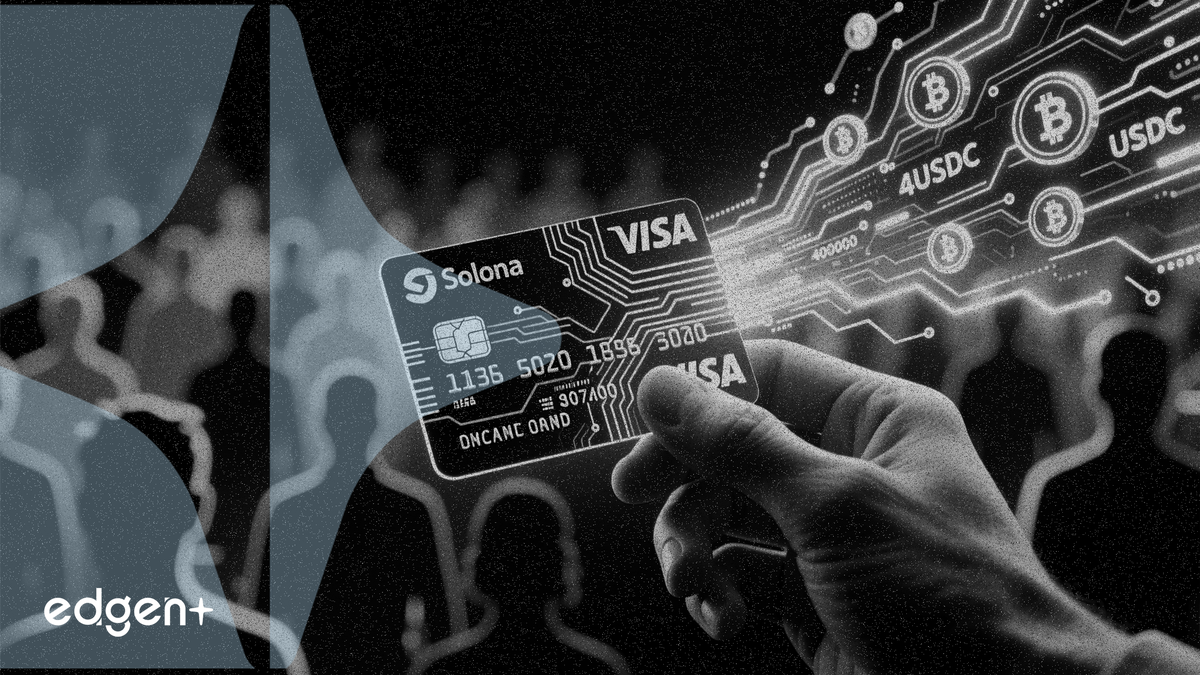


Solayer has launched its Visa-compatible Solayer Pay card, enabling an initial base of 40,000 users across more than 100 countries to spend USDC stablecoins directly from their wallets. The move, announced May 15, aims to bridge the gap between digital assets on the Solana network and real-world merchant payments.
"The goal is to make digital currency usable in the physical world," a Solayer representative said. "By integrating with the Visa network, we are removing a major friction point for users who want to spend their USDC balances as easily as they would with a traditional bank account."
The new card allows users to make both physical and online purchases, as well as withdraw cash from ATMs, using their USDC holdings. The platform, which was first introduced as the Emerald Card, leverages the Solana blockchain, known for its high throughput and low transaction costs. This technical capability is critical for payment applications, a fact underscored by the recent expansion of the Korean won-backed KRWQ stablecoin to the network for its settlement speed.
This launch strengthens Solana’s position as a hub for real-world asset (RWA) activity and decentralized payment systems. It follows the recent debut of Pay.sh by the Solana Foundation and Google Cloud, a gateway designed to facilitate agentic payments on the network. With a total circulating supply of over $33 billion according to CoinGecko data, USDC is a primary asset for such initiatives. Solayer's card provides a direct consumer off-ramp, competing with other crypto payment solutions and advancing the narrative of crypto as a viable medium for daily commerce.
Solana's Growing Payments Stack
Solayer's entry is the latest in a series of developments solidifying Solana's payment credentials. The network's core value proposition for payment-focused protocols is its ability to process a high volume of transactions at a low cost, often fractions of a cent. This contrasts sharply with more expensive alternatives, making micropayments and high-frequency forex-style trades economically viable.
The ecosystem now includes a diverse set of players tackling different layers of the payment flow. MoonPay acts as a key on-ramp for converting fiat to crypto, while infrastructure providers like PayAI and Corbits help services accept on-chain payments. Solayer's card closes the loop, providing a scalable, consumer-facing off-ramp that connects a user's self-custody wallet to millions of Visa-accepting merchants worldwide.
The Competitive Landscape
The push to integrate crypto with legacy payment rails is a competitive field. Platforms like ChangeNOW offer swaps across more than 100 different blockchain networks, also supporting Visa and Mastercard purchases. However, Solayer's approach is more deeply integrated within a single, high-performance blockchain.
By focusing exclusively on Solana and a premier stablecoin like USDC, Solayer is making a strategic bet that a seamless, vertically-integrated experience will attract users. As Solana's on-chain economy grows, driven by initiatives from partners like Google Cloud and an expanding roster of stablecoins, the utility of direct-to-consumer spending tools like the Solayer Pay card is expected to increase significantly. The key test will be whether the user experience proves reliable and cost-effective enough to challenge established fintech and banking habits.
This article is for informational purposes only and does not constitute investment advice.