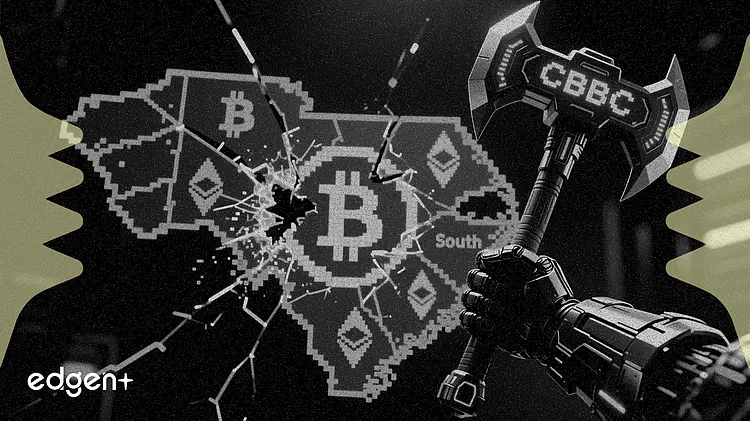
South Carolina enacted Senate Bill 163 on Tuesday, creating a broad legal framework that protects crypto activities and explicitly blocks the use of a central bank digital currency. The bill passed the state's House and Senate with overwhelming support, with votes of 110-1 and 38-1, respectively.
"The law prevents state and local authorities from accepting or requiring payment in a central bank digital currency (CBDC)," according to the bill's text as signed by Governor Henry McMaster. It also bars them from joining any CBDC test program run by the Federal Reserve Board or another federal agency.
The legislation provides clear protections for individuals and businesses to accept digital assets for payments and to use self-hosted wallets. For crypto miners, the law prevents local governments from imposing zoning or noise rules on mining operations in industrial areas that are stricter than those for other businesses. However, mining firms drawing over one megawatt of power must be able to curtail energy use during periods of grid stress.
The move positions South Carolina alongside states like Kentucky, which passed a similar law in March 2025, in creating a crypto-friendly regulatory environment. By providing legal clarity for miners, node operators, and software developers, who are now exempt from certain money transmitter license requirements, the state may attract further investment in the digital asset sector ahead of potential federal action.
Broad Protections for Users and Miners
The new law amends Title 34 of the South Carolina Code of Laws to formally protect the right of individuals and businesses to accept digital assets as payment and to maintain control of their assets through self-hosted or hardware wallets. It also prevents local governments from levying any additional taxes on transactions simply because a digital asset was used as the payment method.
For the energy-intensive crypto mining sector, the bill offers significant zoning protections. Local governments cannot place special restrictions on mining businesses in industrial-zoned areas unless those rules also apply to all other businesses in that zone. While this safeguards miners from targeted regulations, it also includes a grid-safety provision. Mining operations that consume more than one megawatt of power must provide the Public Service Commission with a copy of their power purchase agreement, demonstrating their ability to reduce electricity consumption during times of high demand.
State Rejects Central Bank Digital Currency
A core component of Senate Bill 163 is its firm anti-CBDC stance. The law explicitly prohibits any state or local government entity from accepting or requiring payments in a CBDC. This measure ensures that digital currencies issued by the Federal Reserve cannot be integrated into the state's financial operations.
The prohibition extends to any pilot programs, blocking state agencies from participating in any test of a CBDC. This legislative action reflects a growing debate in the U.S. over the potential for government-issued digital currencies to impact financial privacy and freedom.
Legal Clarity for Developers and Stakers
The bill also provides much-needed clarity for other participants in the crypto ecosystem. It specifies that a money transmitter license is not required for several key activities, including digital asset mining, operating a blockchain node, developing blockchain software, and exchanging one digital asset for another.
Furthermore, the law states that businesses offering staking-as-a-service are not considered to be offering a security under state law. This clarification reduces a significant regulatory burden for such services, although the state's Attorney General retains the power to prosecute any fraudulent activity.
This article is for informational purposes only and does not constitute investment advice.