Key Takeaways:
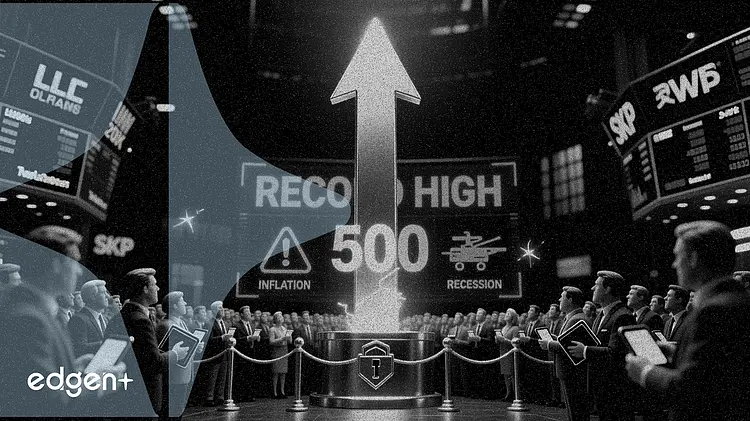
- The S&P 500 hit a new record Wednesday as the spring rally continues
- Retail investors remain on the sidelines despite Wall Street's momentum
- Three risks — Iran tensions, rising rates, and concentrated gains — keep Main Street cautious
Key Takeaways:

Wall Street's spring rally has pushed the S&P 500 to a fresh record, yet retail investors remain on the sidelines.
The S&P 500 hit a new record on Wednesday, extending a spring rally that has defied Iran war risks, as institutional buying outpaced retail participation.
"Stock markets have largely priced out worst-case Iran war scenarios and the direction of travel remains positive, but inflation risks remain in focus," said Lisa Shalett, chief investment officer at Morgan Stanley Wealth Management.
The rally has been concentrated in mega-cap technology names, leaving broader market participation narrow. Consumer confidence has declined as gas prices surge, while household balance sheets remain fragile under the weight of rising long-term rates. The S&P 500's gains have been driven largely by institutional flows, with retail money largely staying on the sidelines.
The divergence between Wall Street's momentum and Main Street's caution creates a two-tier market. If geopolitical tensions escalate, the lack of retail participation could amplify downside, while a late rush by retail investors would signal a potential market top.
The rally's narrow breadth has drawn comparisons to previous market peaks. Gains have been concentrated in a handful of mega-cap technology stocks, with the equal-weight S&P 500 trailing the market-cap weighted index by a wide margin this spring. Energy and defensive sectors have lagged as investors rotate into growth names, betting that the Federal Reserve will cut rates later this year.
Treasury yields have risen as inflation expectations tick higher, with the 10-year yield climbing on the back of sticky price data and elevated energy costs. The dollar has strengthened, adding pressure on emerging-market equities and commodities priced in the greenback.
For retail investors, the calculus is more personal. Soaring gas prices have squeezed household budgets, while consumer confidence has sunk to levels that historically precede market pullbacks. The wealth effect from rising equity prices has yet to translate into broad-based retail buying, a pattern that strategists say could persist until inflation shows clearer signs of easing.
This article is for informational purposes only and does not constitute investment advice.