
With the S&P 500's valuation metrics reaching levels not seen since past market peaks, history suggests investors should proceed with caution and discipline.
With the S&P 500's valuation metrics reaching levels not seen since past market peaks, history suggests investors should proceed with caution and discipline.
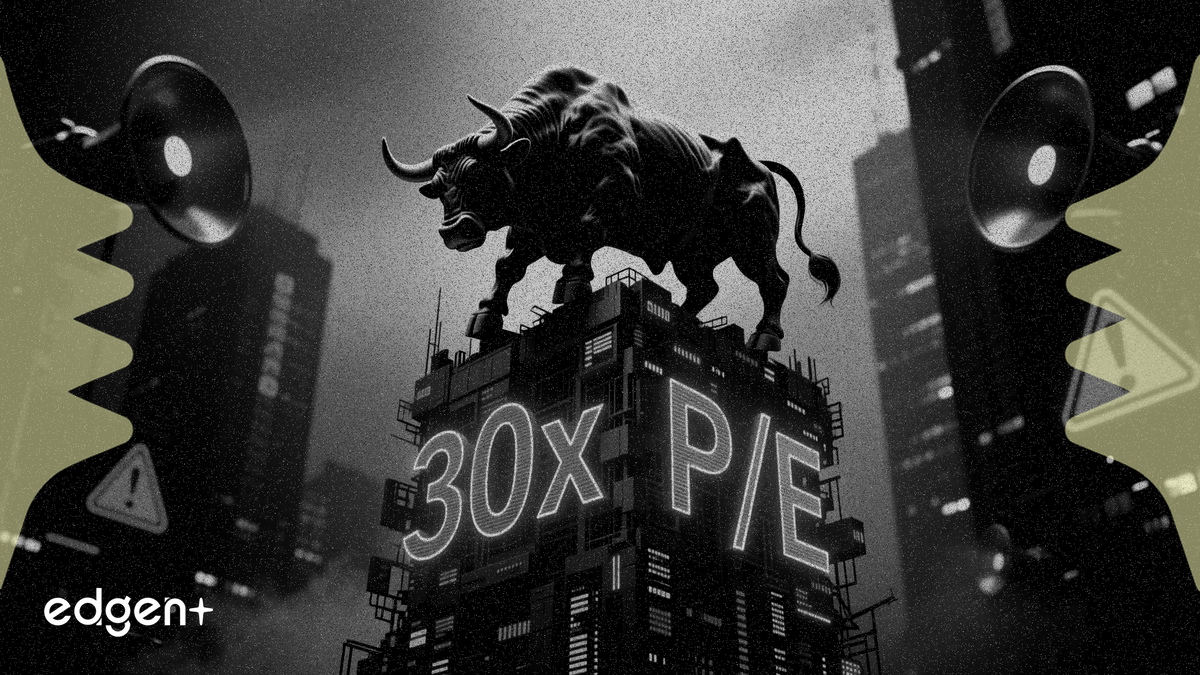
The S&P 500 index has surpassed a price-to-earnings ratio of 30, a threshold breached only three other times in the last century before significant market downturns. This comes as the index's forward P/E ratio of 20.9 already sits above its five- and 10-year averages, reflecting stretched investor optimism primarily fueled by the artificial intelligence boom.
"The stock market is a device to transfer money from the 'impatient' to the 'patient,'" legendary investor Warren Buffett once said, a reminder that long-term perspective is critical when market valuations become extended.
The current environment shows multiple signs of froth. The cyclically adjusted price-to-earnings (CAPE) ratio, which smooths earnings over 10 years, has climbed to nearly 40.9, a level reminiscent of the dot-com bubble peak of 44. This is happening while the U.S. 10-year Treasury yield remains elevated and the Federal Reserve holds its benchmark rate, creating a challenging environment for equities.
These elevated valuations reflect overzealous expectations for growth, particularly in AI-related stocks, rather than conservative pricing. While a correction isn't guaranteed, history shows that when such high expectations meet economic friction, the market's adjustments can be harsh, creating a precarious situation for unprepared investors.
The current market's high valuation evokes memories of two recent bubbles. During the dot-com era of the late 1990s, the S&P 500's forward P/E climbed above 24 as investors piled into speculative internet stocks. When earnings failed to materialize as promised, the index fell as much as 47% over the subsequent years.
Similarly, in 2020, a combination of low interest rates and fiscal stimulus pushed the forward P/E into the mid-20s. However, when inflation proved persistent and central banks pivoted to aggressive rate hikes, the S&P 500 endured a double-digit drawdown in 2022. In all three historical instances where the S&P 500's P/E ratio surpassed 30—the 1999 dot-com bubble, the 2007 financial crisis, and the 2020 flash crash—a significant market decline followed within a year.
Navigating a potentially frothy market does not require panic selling, but it does demand discipline. The first step is to separate hype from reality. The AI narrative is powerful, fueling massive rallies in companies like Sandisk, which has soared 3,710% in a year. However, a compelling theme doesn't guarantee every related company deserves a premium valuation. A diversified portfolio with reasonably valued companies provides a buffer.
Second, maintaining liquidity is crucial. Holding cash or short-duration Treasury bills provides the flexibility to buy quality assets opportunistically if the market dips. Smart investors identify businesses with proven track records of free cash flow generation and prudent capital allocation that can weather valuation resets.
Finally, it is wise to apply short-term skepticism while maintaining a long-term horizon. Strategies like dollar-cost averaging, periodic portfolio rebalancing, and trimming positions when multiples become excessively extended are sound practices. Investors who ignore valuation discipline are often the ones left holding the bag when the market corrects.
This article is for informational purposes only and does not constitute investment advice.

