
Wall Street is reclassifying SpaceX from an aerospace company to an artificial intelligence firm, a shift that could expand its valuation multiple by 40% or more.
Wall Street is reclassifying SpaceX from an aerospace company to an artificial intelligence firm, a shift that could expand its valuation multiple by 40% or more.
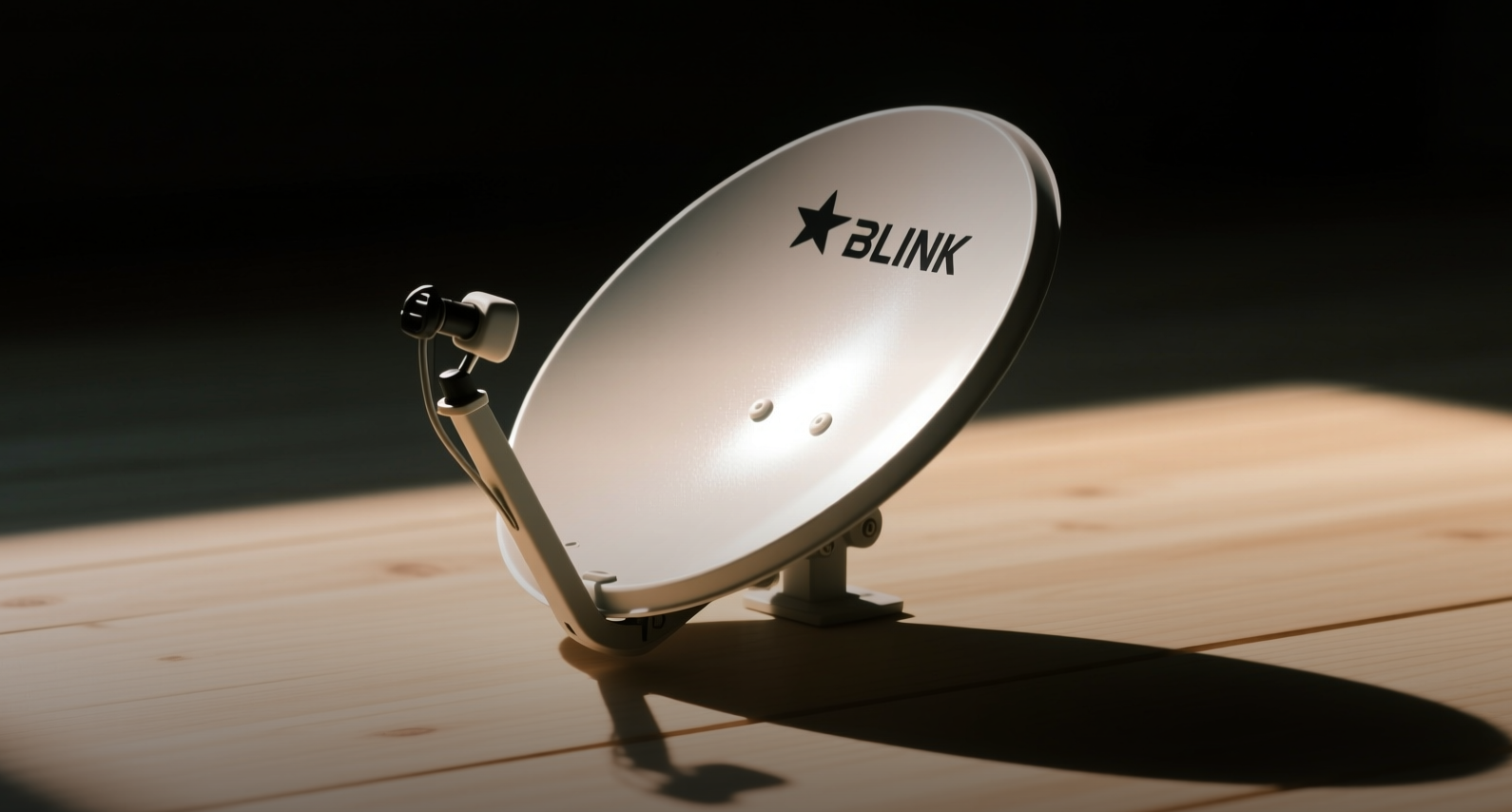
Five weeks after its record $75 billion IPO, SpaceX is being reclassified by analysts from a rocket company to an AI company, a narrative shift that could add $400 billion or more to its $1.75 trillion market capitalization.
"SpaceX's connectivity business alone could be worth $400 billion to $600 billion if valued as an AI infrastructure platform," Morningstar analysts said in a note following the June 12 listing. The firm's bear-case fair value estimate for the entire company sits at $600 billion to $800 billion.
SpaceX reported $18.7 billion in 2025 revenue, with Starlink contributing $11.4 billion at a 63% EBITDA margin on 10.3 million subscribers across 164 countries. The xAI division generated $3.2 billion in revenue but incurred a $6.4 billion operating loss, consuming 61% of the group's $12.7 billion in capital expenditures. The company posted a net loss of $4.9 billion for the year.
The reclassification matters because AI companies trade at 8x to 12x revenue, while aerospace contractors trade at 2x to 4x. At 94x trailing revenue, SpaceX already prices in AI-level multiples for its Starlink business. The open question is whether xAI and Starship can justify the remaining $1.1 trillion to $1.35 trillion of the current valuation.
Starlink's AI Infrastructure Is the Anchor
Each of Starlink's 10.3 million terminals functions as a node in a distributed compute network capable of running AI inference workloads at the edge. The government and defense tier, with undisclosed pricing, represents the highest-margin segment and is the primary driver of the 63% EBITDA margin. SpaceX is in talks on a multibillion-dollar defense contract, according to reports, which would further support the AI infrastructure thesis. Starshield, the military-grade version of Starlink, already serves classified government customers.
xAI's $6.4 Billion Loss Is the Risk
The AI division, which includes xAI, Grok, X, and AI data centers, is the biggest drag on profitability. SpaceX spent $12.7 billion on AI-related capital expenditures in 2025, with 76% of total group capex going to AI in the first quarter of 2026. The $6.4 billion operating loss means the division must demonstrate a path to profitability before the market fully prices in the AI narrative. First public earnings are expected in November 2026, which will provide the first verified financial breakdown of the three segments.
SpaceX shares, trading at $124 as of mid-July, are down 45% from their post-IPO high of $225.64. The 4% float and MSCI inclusion on June 13 created mechanical demand that initially pushed the stock higher, but profit-taking and concerns about xAI's losses have driven the pullback. If the AI reclassification gains traction, the stock could re-rate toward the $175 to $200 range. If xAI continues burning cash without a clear monetization path, the bear case of $600 billion to $800 billion — roughly $46 to $62 per share — becomes the floor.
This article is for informational purposes only and does not constitute investment advice.
