

Key Takeaways:
- Sen. Elizabeth Warren asked the SEC to delay SpaceX's $75B IPO
- The company plans to debut Friday at a $1.77 trillion valuation
- Musk controls 85% of shareholder voting power, raising governance concerns
Key Takeaways:
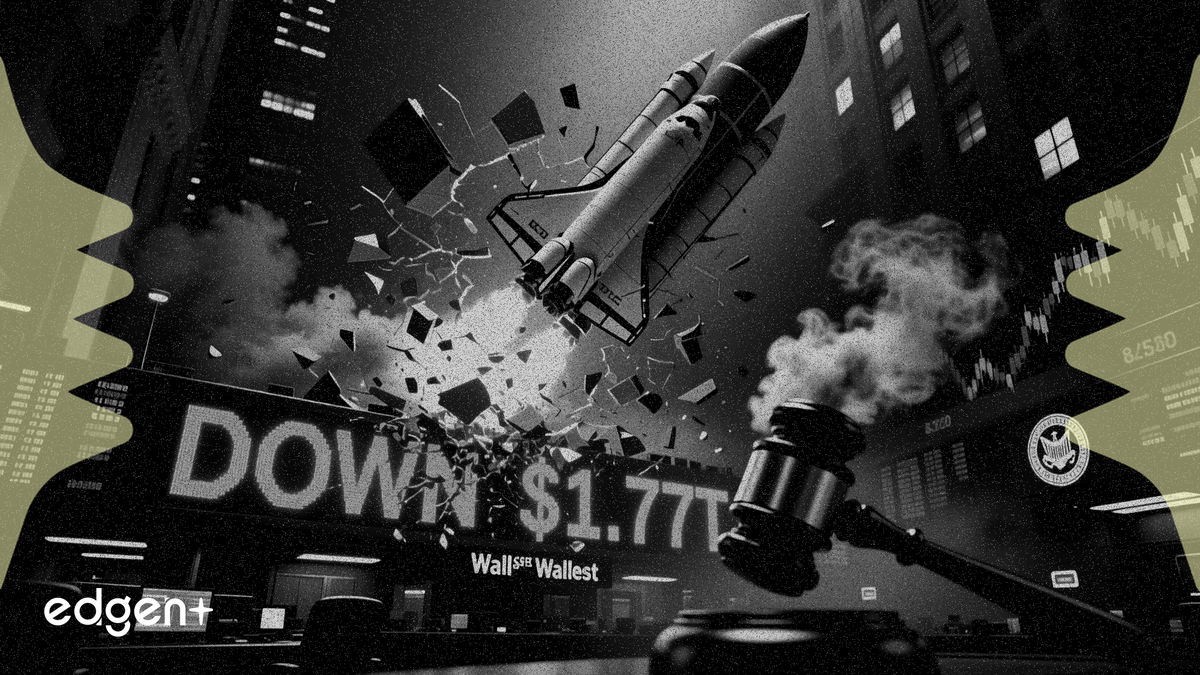
Sen. Elizabeth Warren urged the Securities and Exchange Commission to delay SpaceX's initial public offering, the largest in US history, citing governance risks and a valuation she called "nonsensical" as the company prepares to raise $75 billion at a $1.77 trillion valuation.
"The massive size of the SpaceX IPO alone, under normal circumstances, would justify careful SEC review and attention to investor needs," Warren wrote in a 12-page letter to SEC Chair Paul Atkins dated June 9. "But these are not normal circumstances: a number of additional factors exacerbate concerns and require action by the SEC to meet its investor protection and market integrity mandates by delaying the IPO."
SpaceX plans to sell 555.6 million shares at $135 each, with trading on the Nasdaq under the ticker SPCX set to begin Friday. The offering has drawn $250 billion in investor demand, nearly four times the shares available, according to Reuters. The company reported a net loss of $4.28 billion through its latest quarter after losing $4.94 billion in 2025, with Starlink contributing $4.69 billion in quarterly revenue — 69% of the total.
The core of Warren's argument centers on SpaceX's governance structure. Chief Executive Officer Elon Musk controls 85% of shareholder voting power through supervoting shares, a concentration that critics say leaves public investors with no meaningful recourse. The company also requires mandatory arbitration, barring shareholders from pursuing claims in court. "The SpaceX IPO will flip this model on its head, with shareholders providing billions of dollars in new capital with no accountability measures for Mr. Musk or company leadership," Warren wrote.
Warren also raised concerns that index funds could be forced to hold SpaceX shares automatically, exposing passive investors to the company's risks. The S&P 500's profitability rules currently exclude SpaceX after its $4.28 billion quarterly loss, but the senator argued that recent rule changes at major index providers could accelerate inclusion. She asked the SEC to investigate whether financial entities involved in the IPO are adequately protecting investors.
The request faces long odds. The SEC has already cleared SpaceX's registration statement, and Atkins, a Trump appointee confirmed on a party-line vote, has said one of his goals is "to Make IPOs Great Again." A spokesperson for the SEC confirmed receipt of Warren's letter but declined further comment.
Some analysts have questioned the valuation. Morningstar projected SpaceX would trade at $63 per share, roughly half the offer price, arguing Starlink revenue could reach $129 billion — far below the $1.6 trillion the company projected from its broadband and mobile businesses. "Big Short" investor Michael Burry wrote there was "nothing" in the filing to suggest SpaceX is worth $1 trillion, "let alone $2 trillion."
Musk, who holds a 42% stake in SpaceX, is expected to become the world's first trillionaire if shares trade at the projected $135, with Forbes estimating his combined holdings at $688 billion. SpaceX President Gwynne Shotwell holds roughly 12 million shares valued at $1.2 billion, while Chief Financial Officer Bret Johnson's $700 million stake could make him a billionaire at the debut price.
A final IPO price is set for Thursday. Retail investors can access allocated shares through Charles Schwab, Fidelity, Robinhood, SoFi Technologies and Morgan Stanley's E*Trade.
This article is for informational purposes only and does not constitute investment advice.
