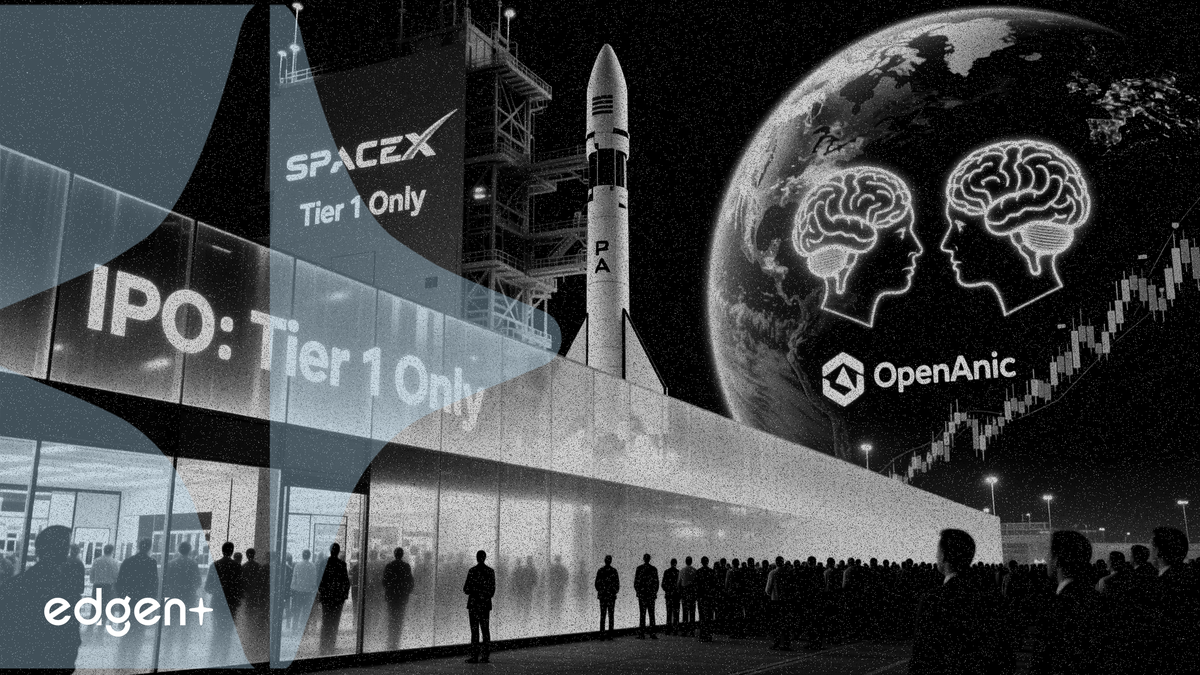
SpaceX IPO underwriters imposed a two-tier anti-flipping structure that penalizes retail investors more harshly than institutional funds, with violators risking exclusion from future hot listings including OpenAI and Anthropic.
"Restricting retail flipping preserves the aftermarket for long-term holders, but the two-tier approach raises fairness questions about access to the most sought-after IPOs," said Tom Brennan, IPO and M&A analyst at Edgen.
The terms, disclosed in the IPO prospectus filed Monday, apply shorter lock-up periods and lower penalty thresholds for institutional investors compared with individual participants. Retail investors who sell shares within the first 30 days face restrictions on participating in future offerings from the same underwriters, including the anticipated IPOs of OpenAI and Anthropic — both of which have filed confidential paperwork and are expected to seek valuations exceeding $1 trillion.
The two-tier structure underscores the extraordinary demand surrounding the SpaceX listing, which is expected to be one of the largest IPOs in US history. Underwriters are using the penalty mechanism to discourage flipping — the practice of selling newly issued shares for a quick profit — while preserving the ability of large funds to exit positions more freely. The approach mirrors a broader trend in which IPO allocations have increasingly favored institutional investors, who typically hold shares longer and provide price stability in the weeks after listing.
The threat of losing access to future marquee IPOs adds a powerful compliance incentive. OpenAI, the developer of ChatGPT, and Anthropic, the AI safety lab behind the Claude model family, are both preparing public listings that bankers expect to rank among the largest technology IPOs of the decade. Anthropic's confidential filing in late May valued the company at more than $1 trillion, while OpenAI has held preliminary discussions with underwriters about a potential listing in 2027.
The SpaceX IPO terms arrive as the broader IPO market shows signs of revival after a two-year drought. The Renaissance IPO Index has gained 18 percent this year, outpacing the S&P 500's 9 percent advance, as companies from cybersecurity to artificial intelligence rush to take advantage of improved market conditions. The last time IPO terms included such explicit two-tier flipping restrictions was during the 2021 SPAC boom, when retail participation surged to record levels before the market collapsed.
For retail investors, the calculus is straightforward: flipping SpaceX shares for a quick gain could mean forfeiting access to the next wave of AI mega-listings. With OpenAI and Anthropic expected to draw even more demand than SpaceX, the cost of non-compliance may far exceed any short-term profit.
This article is for informational purposes only and does not constitute investment advice.