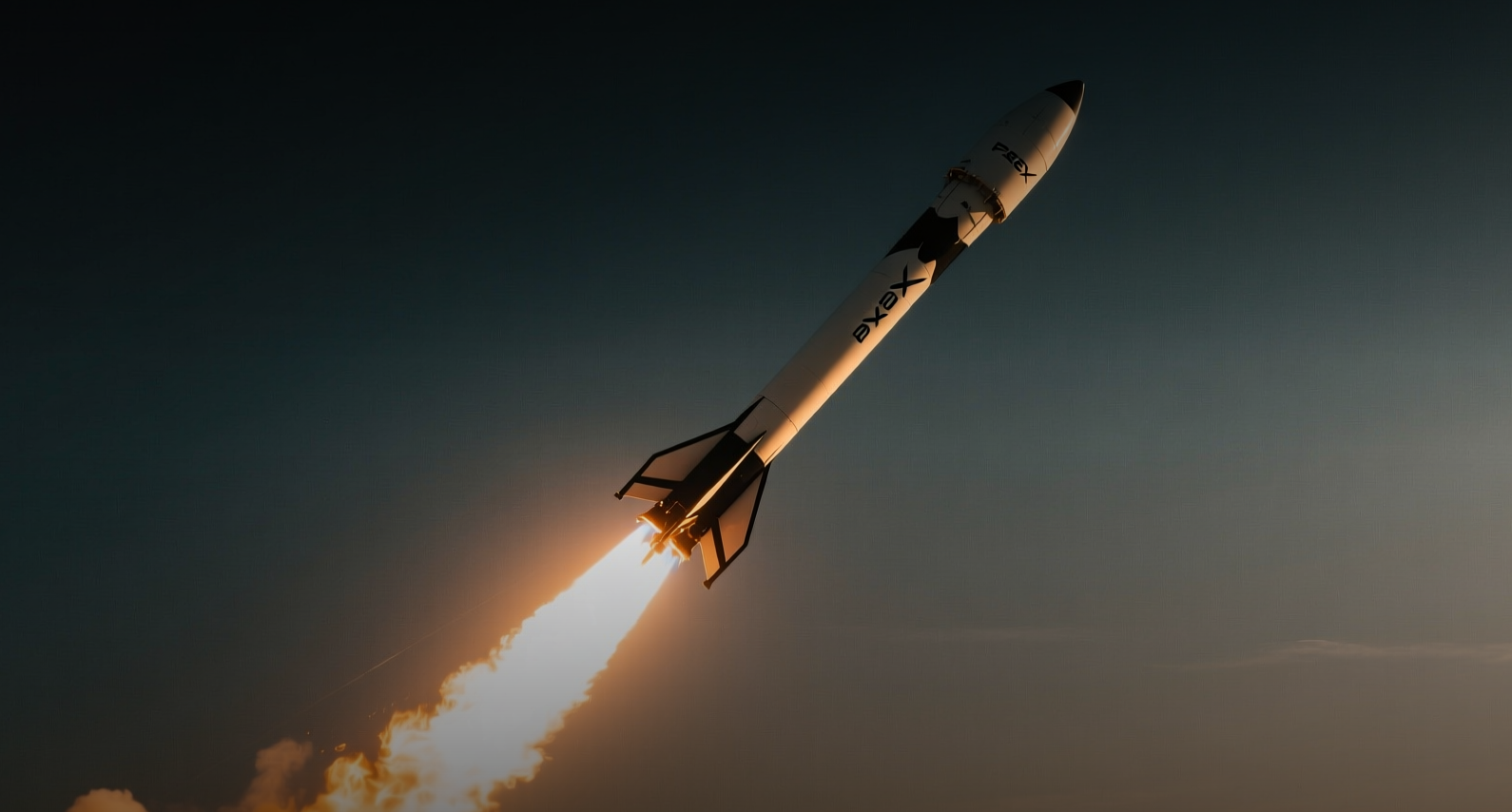
SpaceX insiders face no standard lock-up, with staggered unlocks releasing billions of dollars in shares over the next year.
SpaceX's unprecedented IPO lock-up structure, which replaces the standard 180-day freeze with staggered unlocks starting this month, threatens to flood the market with shares from a company where only 4% of equity currently trades.
"The lock-up schedule creates a persistent overhang that most IPO investors have never had to price in," said Tom Brennan, IPO and M&A analyst at Edgen. "Every unlock tranche is a potential liquidity event for a stock already trading at more than 100 times revenue."
SpaceX sold 555.6 million shares in its June IPO, representing roughly 4% of the company, at a valuation that pushed its market capitalization past $2.1 trillion and made it the sixth-largest US company. The $75 billion capital raise drew orders exceeding $250 billion, with some analysts attributing the pre-IPO selloff in Magnificent Seven stocks to investors raising cash for the allocation. The stock opened at $150 per share and surged 19.34% on its first day to close at $161.11 on June 12.
The $75 billion IPO — the largest in history — drew demand that forced investors to liquidate positions in mega-cap tech stocks to build liquidity. But with only a thin 4.2% public float and the stock trading at over 100 times 2025 revenue of $18.6 billion, the gradual release of insider shares could test whether demand can absorb the supply without depressing the stock price.
Staggered Unlocks Create a Year-Long Overhang
Elon Musk owns about 42% of the company through more than 4.8 billion shares and stock options but is bound by an extended 366-day lock-up expiring in June 2027. Other insiders face a schedule that begins unlocking this month. Investors can sell up to 20% of their stock after SpaceX's second-quarter earnings report, its first as a public company. Another 28% unlocks after the third-quarter report, with additional releases possible depending on the stock's trading performance.
Shares will also unlock in 7% increments on days 70, 90, 105, 120 and 135 after the IPO, regardless of price. Any remaining shares, excluding Musk's extended lock-up, become free at the traditional 180-day mark. This means the public float could expand from its current 4.2% to a much larger percentage within six months, potentially pressuring the stock if new buyers do not emerge.
Index Funds Provide a Demand Backstop, But at a Cost
The supply risk is partially offset by forced buying from index funds. Nasdaq-100 changed its rules to fast-track SPCX entry just 15 trading days after the IPO, abolishing its 10% minimum float requirement. FTSE Russell kept its 5% minimum float rule but created a 12-month lock-up exemption for mega-IPOs. CRSP, whose indexes underpin Vanguard's massive ETF suite, introduced an absolute-dollar-float test that allowed SPCX to enter despite its thin public float.
As of June 30, 148 ETFs held SPCX exposure, led by the Baron First Principles ETF (RONB) at a 30.84% weighting and the VanEck Space ETF (WARP) at 20.48%. The Invesco Nasdaq QQQ ETF and other Nasdaq-100 trackers will add the stock as the index expands temporarily beyond its 100-constituent limit. These forced buyers provide a demand floor, but the sheer volume of shares set to unlock over the next year could overwhelm even the most aggressive index-driven accumulation.
The last time a mega-cap IPO faced this degree of float constraint was the 2004 Google offering, which sold just 7% of its shares to the public. Google's stock rose 18% on its first day and went on to gain more than 500% over the next five years. But SpaceX's valuation — at more than 100 times revenue versus Google's roughly 50 times at its IPO — leaves far less room for error if sentiment shifts.
This article is for informational purposes only and does not constitute investment advice.