

Elon Musk is moving to forge his own silicon, with plans for a Texas chip plant that could eventually cost over $100 billion.
Elon Musk is moving to forge his own silicon, with plans for a Texas chip plant that could eventually cost over $100 billion.
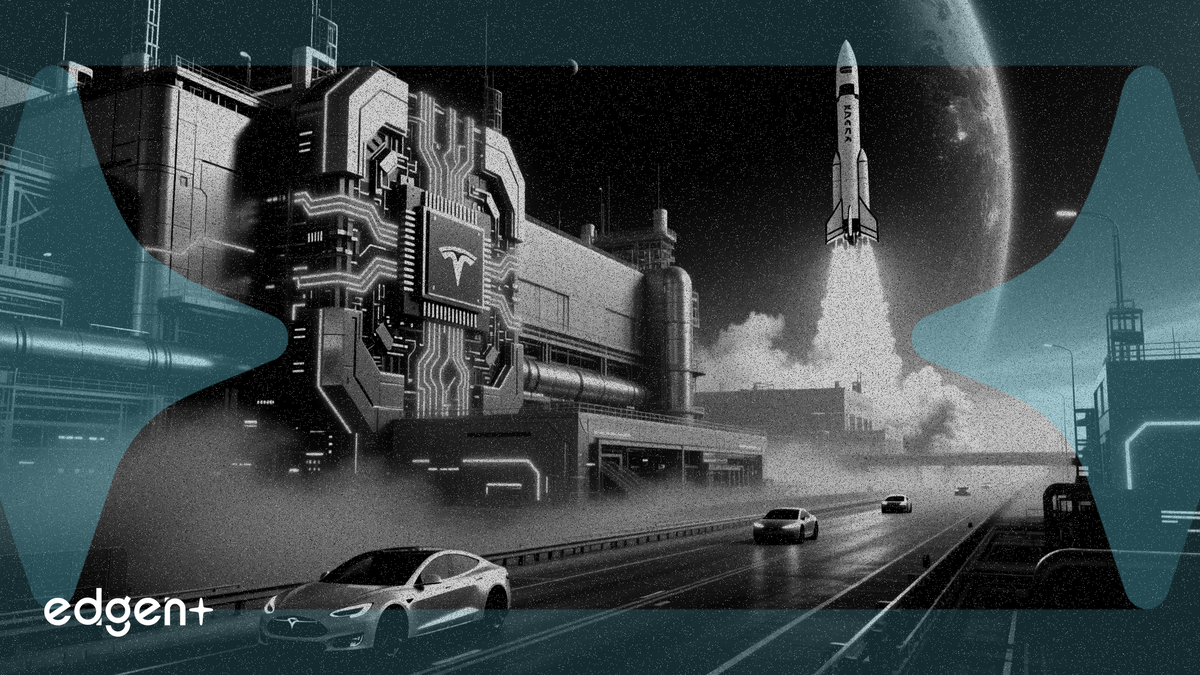
Elon Musk is moving to forge his own silicon, with plans for a Texas chip plant that could eventually cost over $100 billion.
SpaceX plans to invest an initial $55 billion in a massive semiconductor and advanced computing complex in Grimes County, Texas, a move that aims to secure a domestic supply of high-powered chips for its and Tesla Inc.'s growing artificial intelligence and aerospace needs.
"Terafab would represent a transformative investment in domestic semiconductor manufacturing capacity," according to a public notice for a June 3 meeting where Grimes County officials will consider a property tax abatement for the project.
The project, dubbed "Terafab," could see its total investment swell to $119 billion if all phases are completed, according to the filing. The facility is designed to produce chips for AI, robotics, and data centers, eventually supporting 100 to 200 gigawatts of computing power on Earth and a terawatt in space.
The move marks a significant vertical integration push for Elon Musk's companies, aiming to reduce reliance on Asian chip giants like Taiwan Semiconductor Manufacturing Co. and Samsung for the powerful GPUs needed for Tesla's self-driving cars and SpaceX's satellite constellations. It puts Musk on a direct collision course with established semiconductor players like Nvidia Corp. and Intel Corp.
Tesla already designs some of its own AI chips, such as the D1 processor for its Dojo supercomputer, but it relies on third-party foundries like TSMC and Samsung for the capital-intensive manufacturing. The Terafab project signals a strategic shift to bring this critical production step in-house, insulating Musk's ventures from geopolitical risks and supply chain bottlenecks that have plagued the industry.
The scale of the ambition is immense. The initial $55 billion investment alone dwarfs the capital expenditures of many established chipmakers. The project has reportedly secured a partnership with Intel, which is expected to provide its 14A process technology. This suggests a hybrid approach, possibly using Intel's technology as a launchpad while building out proprietary capabilities. Reports also indicate that SpaceX has contacted key equipment suppliers, including Applied Materials, Lam Research, and Tokyo Electron, signaling serious intent to equip a leading-edge fabrication plant.
While vertical integration offers control, it also comes with immense risk. Semiconductor manufacturing is a notoriously difficult and low-margin business compared to chip design. Companies like Nvidia have thrived on a fabless model, focusing on design and outsourcing production to specialists like TSMC. Musk is betting that the combined demand from Tesla's autonomous driving and humanoid robot projects, along with SpaceX's Starlink and deep space ambitions, is large enough to justify the massive outlay and operational complexity.
Successfully manufacturing cutting-edge chips is a steep technical climb. As researchers at TU Wien recently highlighted, the industry faces challenges at the nanoscale, where microscopic gaps between chip materials and insulators can bottleneck performance. Overcoming these physical limits requires deep institutional knowledge. While Musk has a track record of disrupting manufacturing in cars and rockets, building a globally competitive semiconductor foundry from scratch may be his most audacious challenge yet. The success or failure of Terafab will have significant implications for the competitive landscape, potentially reshaping the supply chains for everything from electric vehicles to space exploration.
This article is for informational purposes only and does not constitute investment advice.

