
SpaceX's Starfall reentry vehicle gives the company a working orbital cargo return capability that no competitor has yet demonstrated.
SpaceX's Starfall reentry vehicle gives the company a working orbital cargo return capability that no competitor has yet demonstrated.
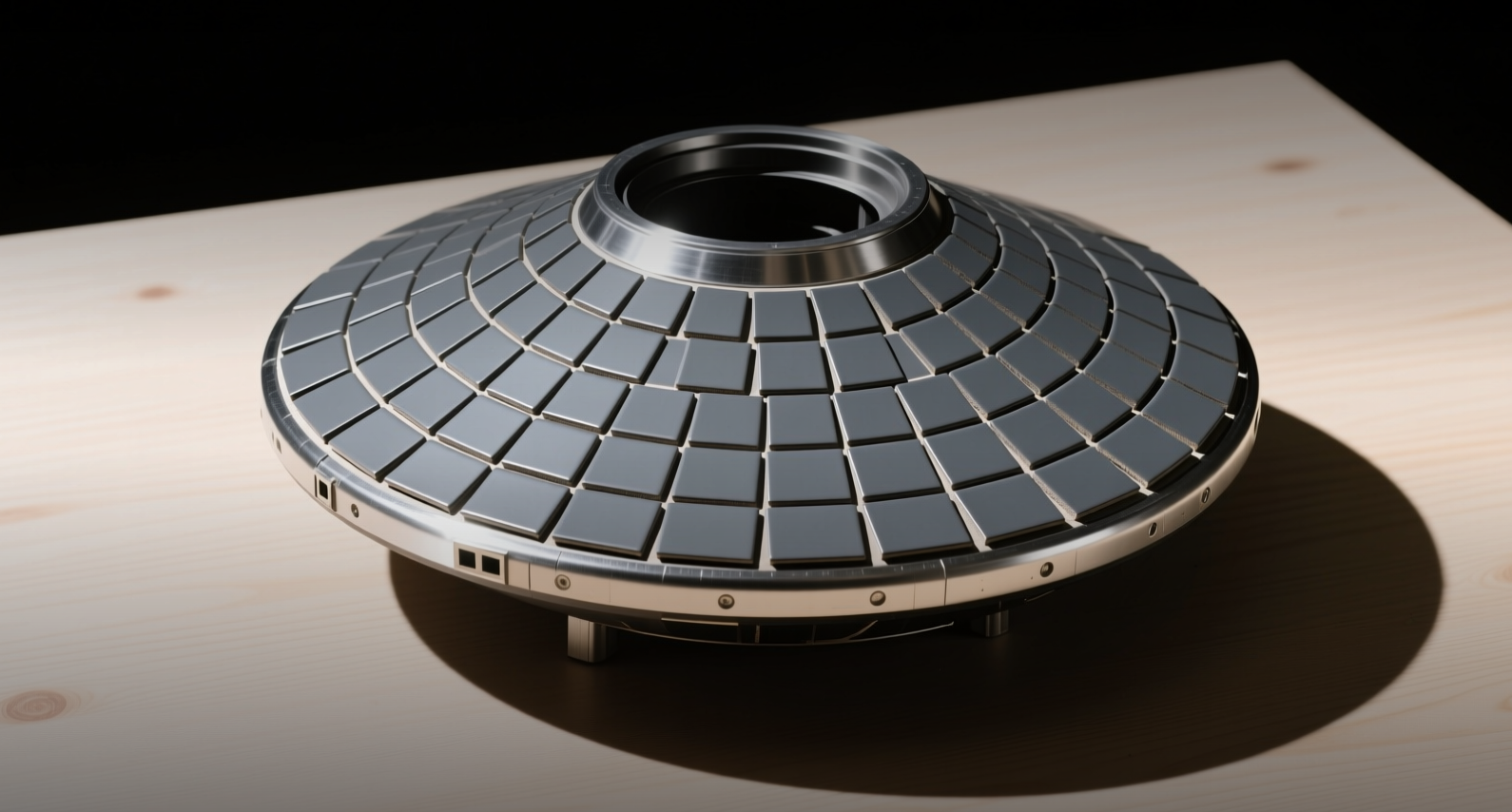
SpaceX's Starfall reentry vehicle gives the company a working orbital cargo return capability that no competitor has yet demonstrated.
SpaceX on June 23 launched Starfall, a disc-shaped reentry pod capable of returning 1 metric ton of cargo from low-Earth orbit, giving the company a working vehicle for Pentagon point-to-point delivery and commercial space manufacturing before any rival has flown a competing system.
"The purpose of Starfall is to support the transport and delivery of goods through space," the Federal Aviation Administration wrote in its environmental assessment of the vehicle, which SpaceX developed under a veil of secrecy.
The vehicle measures 10.2 feet wide and 2.5 feet tall, weighs about 4,600 pounds empty and can carry up to 2,200 pounds of cargo. It relies on its launch vehicle — a Falcon 9 today, potentially Starship later — to guide it back toward the atmosphere, then uses compressed nitrogen gas to orient its heat shield before parachuting into the Pacific Ocean. SpaceX intends to recover the vehicle and its parachutes for reuse.
The demonstration puts SpaceX ahead of Rocket Lab, which targets a 2026 reentry test on its unflown Neutron rocket, and Blue Origin, which is earlier in development. Inversion Space received a $71 million contract for its Arc reentry vehicle, still in development. SpaceX flew a working vehicle on Tuesday.
Two Markets Emerge From Starfall's Design
The first is military logistics. The Air Force Research Laboratory awarded SpaceX a $102 million contract in 2022 to demonstrate point-to-point cargo delivery using Starship — the ability to deliver a C-17 Globemaster's worth of supplies anywhere on the planet in under 90 minutes. Starfall, smaller and deployable on the existing Falcon 9, is a complementary tool for lighter deliveries that do not require Starship's footprint or a prepared landing site. The Pentagon's REGAL program — Rocket Experimentation for Global Agile Logistics — has framed point-to-point space cargo as a pathway to becoming a program of record, meaning recurring annual defense budget allocations rather than one-time research grants.
The second market is commercial in-space manufacturing. Varda Space Industries signed a partnership with United Therapeutics in May 2026 to manufacture drugs in microgravity, targeting small-molecule crystallization processes that Earth's gravity renders structurally imperfect. Varda CEO Will Bruey said at the 2026 Upfront Summit that a launch capable of processing space-manufactured drugs and returning them to Earth now costs about $2.2 million — a figure that makes pharmaceutical microgravity viable at commercial scale for the first time. Starfall, with its 1-metric-ton payload capacity and reusable design, is positioned as the return infrastructure for that supply chain.
What This Means for Investors
Starfall's commercial potential is real, but the timelines are long and the revenue is not yet material on SpaceX's financials. The company's near-term revenue story is Starlink, which generated $4.42 billion in operating income in 2025 and remains the only profitable segment. Even in an optimistic scenario where SpaceX wins military contracts and becomes the backbone of orbital pharmaceutical manufacturing, Starfall adds revenue on a multiyear timeline.
For investors looking at SpaceX in a week when the stock has already fallen nearly 30% from its peak because of valuation and float concerns, Starfall is the kind of development that supports the long-term thesis without changing the short-term math. The question that was true before the test and remains true after it is whether the current price — which sits 53% above Morningstar's base-case intrinsic value — gives investors enough room for execution risk on programs that have not yet generated meaningful revenue.
This article is for informational purposes only and does not constitute investment advice.
