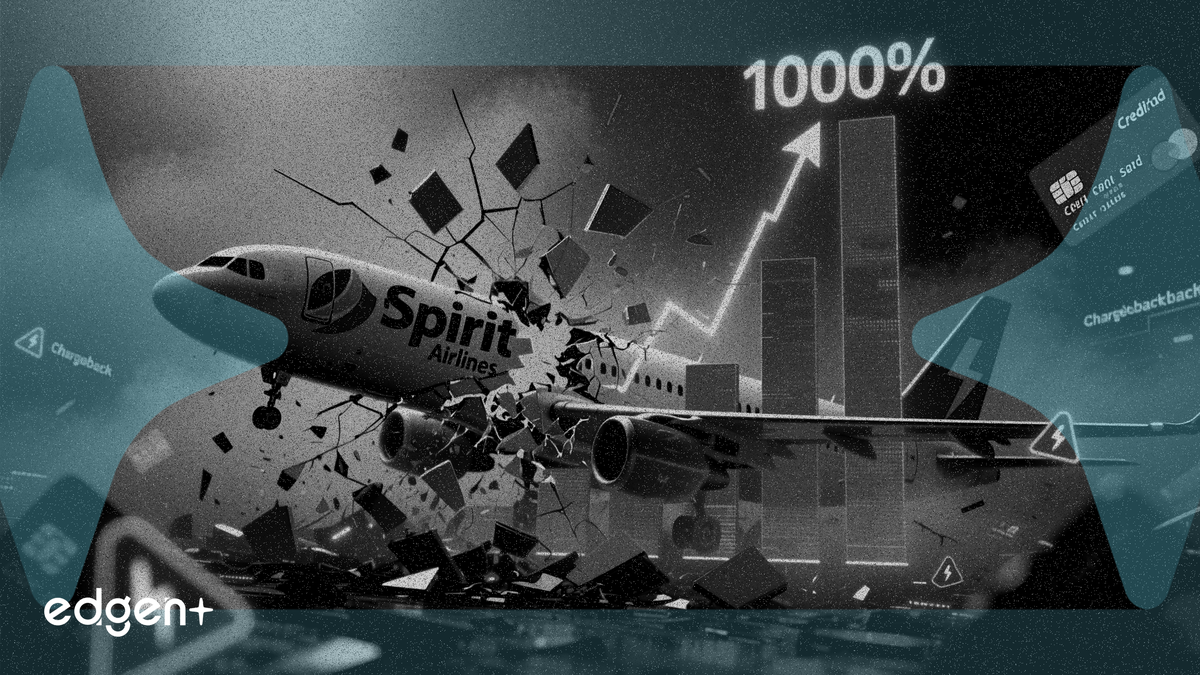
The collapse of Spirit Airlines has unleashed an operational tidal wave on US card issuers, with new data revealing a 1,000 percent week-over-week surge in chargeback claims tied to the defunct carrier. The findings, from dispute technology firm Quavo, quantify the immediate financial fallout for banks and credit unions now managing the failure of a major merchant.
Quavo, which processes disputes for over 60 financial institutions, registered the spike in the 72 hours following Spirit's May 2 operational shutdown. "A single issuer sees its own Spirit exposure and thinks it has a handle on the situation," said Ron Rybicki, VP of Data and Analytics at Quavo. "What it doesn't see is whether its volume is in line with peers... That cross-issuer intelligence is what turns a reactive posture into a strategic one."
The firm forecasts a sustained elevation in services-not-rendered claims over the next 60 to 90 days, with a second wave expected from cardholders who received unusable travel vouchers or points instead of cash refunds. The sudden volume of claims, which look identical at intake, also creates cover for a rise in opportunistic first-party abuse, compounding the compliance and financial load on institutions obligated to provide provisional credit under Reg E and Reg Z.
For the financial industry, the event underscores that merchant insolvency is a recurring and costly risk category that directly impacts payment processors and their banking clients. The difference between managing the event strategically and reactively is "measured in millions of dollars and thousands of cardholder relationships," Rybicki said. Quavo advises issuers to immediately segment Spirit-related claims and tighten intake scripts to verify any prior refunds, a process that is difficult for institutions that lack a networked, cross-issuer view of dispute activity.
Spirit Airlines, which carried approximately 50,000 passengers on its final day of operations, filed for bankruptcy protection after a sudden rise in jet fuel costs derailed a last-minute effort to secure financing. The shutdown left roughly 17,000 employees jobless and thousands of travelers stranded. In response, competing carriers including United, Delta, and JetBlue have offered capped rescue fares to affected customers.
While travelers who booked with a credit card are advised to seek a chargeback, the operational burden falls on their financial institution. The Spirit failure serves as a live case study in the value of networked risk management for the payments industry, highlighting a vulnerability that extends far beyond the airline sector to any large consumer-facing business.
This article is for informational purposes only and does not constitute investment advice.