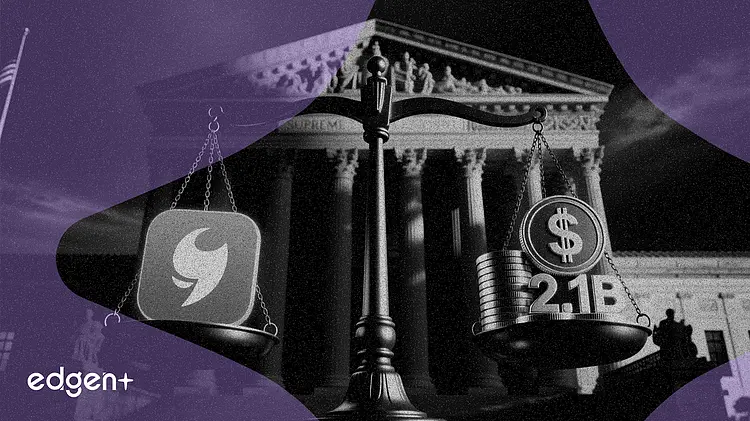
The Supreme Court's request for White House input brings Robinhood's IPO disclosures under the highest level of legal scrutiny.
The U.S. Supreme Court asked the Trump administration for its views on whether to hear Robinhood Markets Inc.'s bid to dismiss a lawsuit accusing the fintech of misleading investors in its 2021 initial public offering.
"Robinhood's offering documents provided extensive warnings about potential business risks, including the possibility that elevated trading volumes tied to meme stocks and Dogecoin could decline," the company said in its petition, arguing the lawsuit should be dismissed.
The lawsuit, filed under the Securities Act of 1933, alleges Robinhood failed to disclose that its revenue growth was heavily dependent on retail speculation in GameStop Corp. and Dogecoin — activity that had already begun cooling before the company went public in July 2021. The plaintiffs argue the stock's subsequent decline caused shareholder losses. Robinhood's IPO raised about $2.1 billion, pricing at $38 per share.
A Supreme Court decision to take up the case could set a precedent for IPO disclosure liability, potentially reshaping how companies address risk factors tied to transient trading trends in their offering documents. If the court declines to hear the appeal, the lawsuit would proceed in lower courts, exposing Robinhood to potential damages.
IPO Disclosure Standards in Focus
The case tests whether companies must specifically flag reliance on social-media-driven trading patterns as a material risk factor. The plaintiffs contend Robinhood's dependence on meme-stock and crypto trading volumes was a core revenue driver that warranted explicit disclosure, not just generic warnings about market volatility.
The Securities Act of 1933 places the burden on issuers to ensure offering documents contain no material omissions. A ruling against Robinhood could broaden what constitutes a material risk, particularly for companies whose revenue is tied to platform-driven retail trading. The last time the Supreme Court weighed securities disclosure standards in a major IPO case was in 2018's Cyan v. Beaver County Employees Retirement Fund, which addressed state-court jurisdiction over Securities Act claims.
Market and Legal Implications
Robinhood shares have faced pressure from the ongoing litigation, with the lawsuit creating uncertainty around potential liability. The company's stock traded at about $38 in its July 2021 IPO and has since experienced significant volatility tied to both its business performance and legal overhang. If the Supreme Court declines to hear the appeal, the case would return to the U.S. Court of Appeals for the Third Circuit, where a ruling against Robinhood could expose the company to class-action damages.
The solicitor general's brief, once filed, will signal the administration's position on securities litigation standards. The Supreme Court typically grants certiorari in roughly 1 percent to 2 percent of the roughly 7,000 petitions it receives annually, making the White House's recommendation a potentially influential factor in whether the justices take up the case. A decision on whether to grant certiorari is expected later this year.
This article is for informational purposes only and does not constitute investment advice.