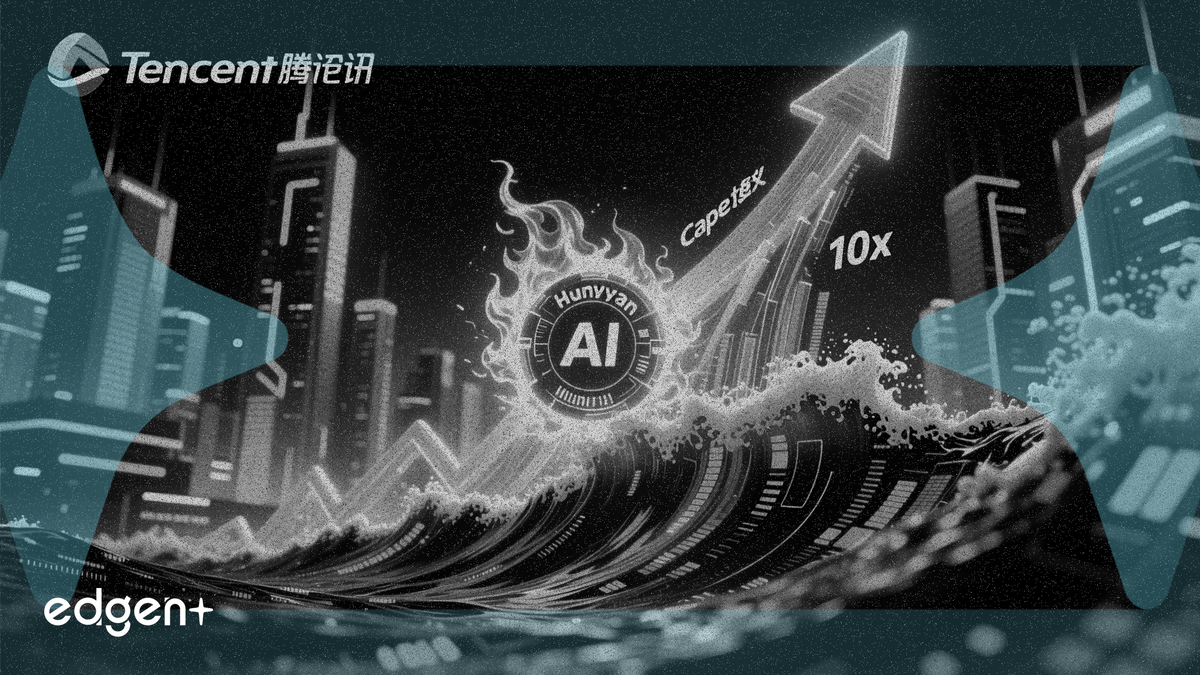
Tencent Holdings Ltd. se está preparando para un aumento significativo en el gasto de capital en chips de inteligencia artificial en la segunda mitad de 2026, lo que indica que su nuevo modelo Hunyuan 3.0 se está convirtiendo en un motor de crecimiento central e intensificando la carrera armamentista de IA en China.
"Los modelos de IA y los servicios de aplicaciones se están convirtiendo en un nuevo motor de crecimiento para la empresa", afirmó la dirección durante la sesión informativa de resultados del primer trimestre de 2026, señalando que la demanda de productos internos y clientes externos está aumentando exponencialmente.
El aumento de la inversión planificada sigue a un incremento de más de diez veces en el consumo de tokens para la serie de modelos Hunyuan desde que se lanzó su última versión en abril. El capex operativo en el primer trimestre ya saltó un 84% intertrimestral, una tendencia que la dirección confirmó que se acelerará a medida que aumente el suministro nacional de chips de IA. El modelo Hy3preview se convirtió en el modelo más utilizado en la plataforma OpenRouter tras su debut.
Esta aceleración del gasto marca un momento crucial para Tencent, indicando que está dispuesta a sacrificar la rentabilidad a corto plazo para asegurar una posición de liderazgo en el competitivo sector de la IA en China frente a rivales como Alibaba Group Holding Ltd. y Baidu Inc. La empresa financiará el capex, junto con la recompra sostenida de acciones, acelerando la venta de su amplia cartera de inversiones, asegurando que sus 56.700 millones de RMB en flujo de caja libre trimestral se utilicen para el crecimiento.
La adopción de Hunyuan impulsa la inversión
Desde su lanzamiento oficial en abril de 2026, Hunyuan 3.0 de Tencent ha tenido una rápida adopción. El modelo ahora está conectado a 131 de los propios productos de Tencent, desde su superaplicación WeChat hasta sus franquicias de juegos. Esta integración interna proporciona una base de usuarios masiva y nativa que impulsa el crecimiento exponencial en las llamadas de tokens, la unidad de medida para el uso de modelos de IA.
El éxito de la compañía con Hunyuan es una parte clave de su estrategia para diversificar las fuentes de ingresos. Si bien el juego sigue siendo un centro de beneficios principal, el crecimiento explosivo en los servicios de IA proporciona una nueva vía de alto potencial. Esto coloca a Tencent en competencia directa con otros gigantes tecnológicos chinos, como Alibaba con su modelo Qwen y Baidu con su modelo Ernie, todos compitiendo por el dominio en el naciente mercado de aplicaciones de IA generativa.
Implicaciones financieras
El pico de capex planificado es una consecuencia directa de este enfoque en la IA. La dirección señaló que a medida que aumente el suministro de chips de IA diseñados en China a lo largo del año, su gasto dará un "salto cualitativo" en la segunda mitad. El aumento secuencial del 84% en el capex operativo del primer trimestre confirma que este nuevo ciclo de inversión ha comenzado.
Para financiar este impulso de la IA sin descarrilar los rendimientos de los accionistas, Tencent se apoya en su sólida posición financiera. La empresa generó 56.700 millones de RMB en flujo de caja libre en el primer trimestre, un aumento del 20% interanual. Terminó el periodo con reservas de efectivo de aproximadamente 146.900 millones de RMB. La dirección declaró explícitamente que aceleraría la venta de activos de su cartera de inversiones para reponer el efectivo utilizado tanto para el capex relacionado con la IA como para su programa de recompra de acciones en curso, que ascendió a unos 7.900 millones de RMB en el primer trimestre.
Este artículo es solo para fines informativos y no constituye asesoramiento de inversión.