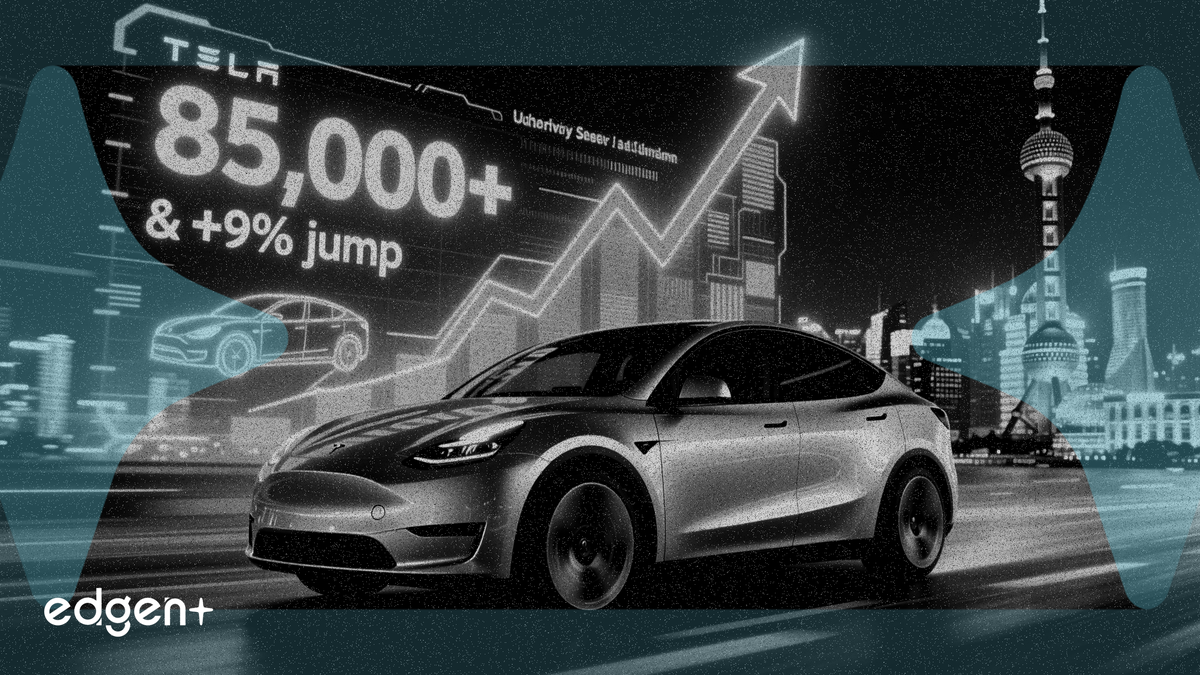
Tesla Inc. (TSLA) saw its China wholesale sales jump 8.7% year-over-year to 85,670 vehicles in March, a strong showing that outpaced some local rivals and provides a tailwind ahead of its crucial first-quarter delivery report.
The data, released by the China Passenger Car Association (CPCA) on Tuesday, confirms a significant rebound from February's seasonal lows, a trend seen across the industry following the Lunar New Year holiday.
The 85,670 figure is a marked improvement from 78,800 vehicles sold in March 2025. The performance contrasts with domestic leader BYD Co. (BYDDF), which, despite a 57% month-over-month surge, saw its March sales fall 30% from a year earlier. Other rivals posted strong gains, with Nio Inc. (NIO) delivering 35,486 vehicles (+136% YoY) and Li Auto Inc. (LI) delivering 41,053 units (+12% YoY).
The strong China number is critical for Tesla as investors await its global Q1 delivery figures, with consensus estimates around 365,645 cars. The key question is whether Tesla can reclaim its title as the world's top seller of battery-electric vehicles (BEVs) from BYD, which sold 310,389 BEVs in the first quarter, a two-year low for the Chinese automaker.
The March sales data from the CPCA offers the first concrete look at Tesla's performance in its second-largest market. The year-over-year growth suggests resilient demand for its Model 3 and Model Y vehicles, even as it faces a wave of new competition from local players, including smartphone giant Xiaomi, which reported over 20,000 deliveries of its new SU7 sedan in March.
While Tesla's stock has declined about 15% year-to-date, the positive China data helped lift shares 2.6% in the previous session. The broader electric vehicle market is benefiting from tailwinds like rising gasoline prices, which increase the appeal of EVs for consumers.
Analysts are now focused on Tesla's full first-quarter report. A delivery number above the consensus of 365,645 would be a significant win for the company, potentially easing concerns about slowing growth and margin pressure from the ongoing price war in China.
This article is for informational purposes only and does not constitute investment advice.