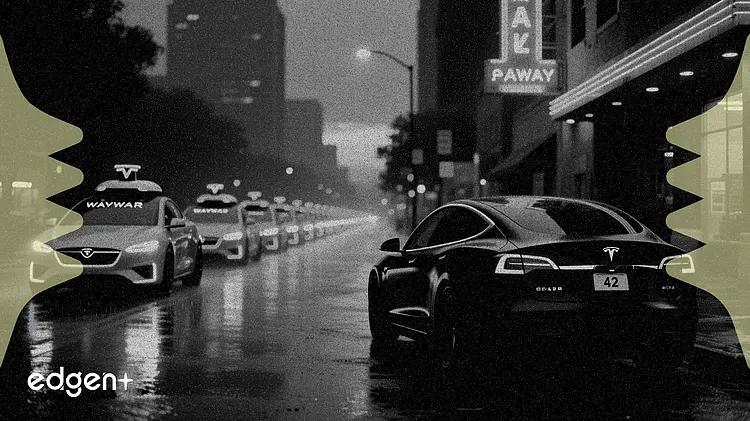
Tesla has registered just 42 autonomous vehicles for its Robotaxi service in Texas, less than one-thirteenth the size of Waymo's fleet in the state, according to new state filings that reveal the wide gap between the two companies' driverless ambitions.
Texas DMV filings published May 28 show Tesla operates 42 driverless vehicles in its Robotaxi service, compared with 577 for Waymo — a 13-to-1 disparity that underscores Alphabet's lead in commercial autonomous ridehail.
"The registration data provides the first public benchmark of where each company stands in Texas under the new regulatory framework," the Texas Department of Motor Vehicles said in a statement accompanying the database launch.
Tesla launched its Robotaxi service in Austin in June 2025 but has not disclosed how it self-certified any of its fleet as Level 4 — a designation the company has historically reserved for its driver-assistance systems, which it classifies as Level 2. Waymo, by contrast, has long operated its fleet under Level 4 certification and now runs close to 4,000 robotaxis across the US. Smaller player AV Ride registered 317 automated vehicles in Texas, while Amazon's Zoox had 35.
The data lands as Elon Musk bets Tesla's future on autonomous driving to offset slowing EV sales and intensifying competition. But with 42 vehicles in its home state after nearly a year of operation, Tesla's robotaxi rollout remains nascent compared with Waymo, which is adding thousands of new Ojai vehicles — built by China's Geely at lower cost — and targeting 1 million weekly trips by year-end.
Tesla's Austin fleet recorded 17 known incidents between July 2025 and April 2026, two involving minor injuries and one requiring hospitalization, according to filings with the National Highway Traffic Safety Administration. Those incidents occurred while human safety supervisors were on board, raising questions about the system's readiness for fully driverless operation at scale.
The company has applied for driverless testing permits in Arizona, Nevada and Florida but has yet to begin paid autonomous rides in any of those states.
Waymo's Expanding Lead
Waymo, which received a $16 billion cash infusion from Alphabet and other backers in February, has driven more than 20 million autonomous rides across multiple US markets. Its new Ojai vehicle, built in partnership with Geely's Zeekr brand, uses fewer sensors than the previous Jaguar I-PACE fleet and costs significantly less to manufacture, according to Ryan Powell, Waymo's head of design. The company plans to have thousands of Ojai vehicles on the road by the end of 2026.
The new Texas regulatory framework, which went into effect May 28, requires all operators of driverless vehicles to self-certify that their AVs meet Level 4 standards under SAE guidelines — generally meaning the vehicle can operate on typical roads without a human driver on board. The law gives Texas greater oversight of commercial autonomous vehicle operations, a shift that could affect expansion timelines and compliance costs for all players.
For Tesla, the numbers challenge the narrative that its Robotaxi service is on a rapid growth trajectory. TSLA shares have been supported by Musk's vision of a network of millions of autonomous vehicles generating high-margin revenue, but the Texas data suggests commercial deployment remains in its earliest stages. Waymo's parent Alphabet, meanwhile, continues to invest heavily in autonomous mobility, with the Ojai vehicle representing a path to lower unit economics and faster fleet expansion. The gap in Texas — a state where both companies operate under the same regulatory conditions — provides the clearest comparison yet of where each stands in the race to commercialize driverless ridehail.
This article is for informational purposes only and does not constitute investment advice.