

Tether's $120 million Uruguay Bitcoin mining project collapsed after a dispute with state utility UTE over electricity supply.
Tether's $120 million Uruguay Bitcoin mining project collapsed after a dispute with state utility UTE over electricity supply.
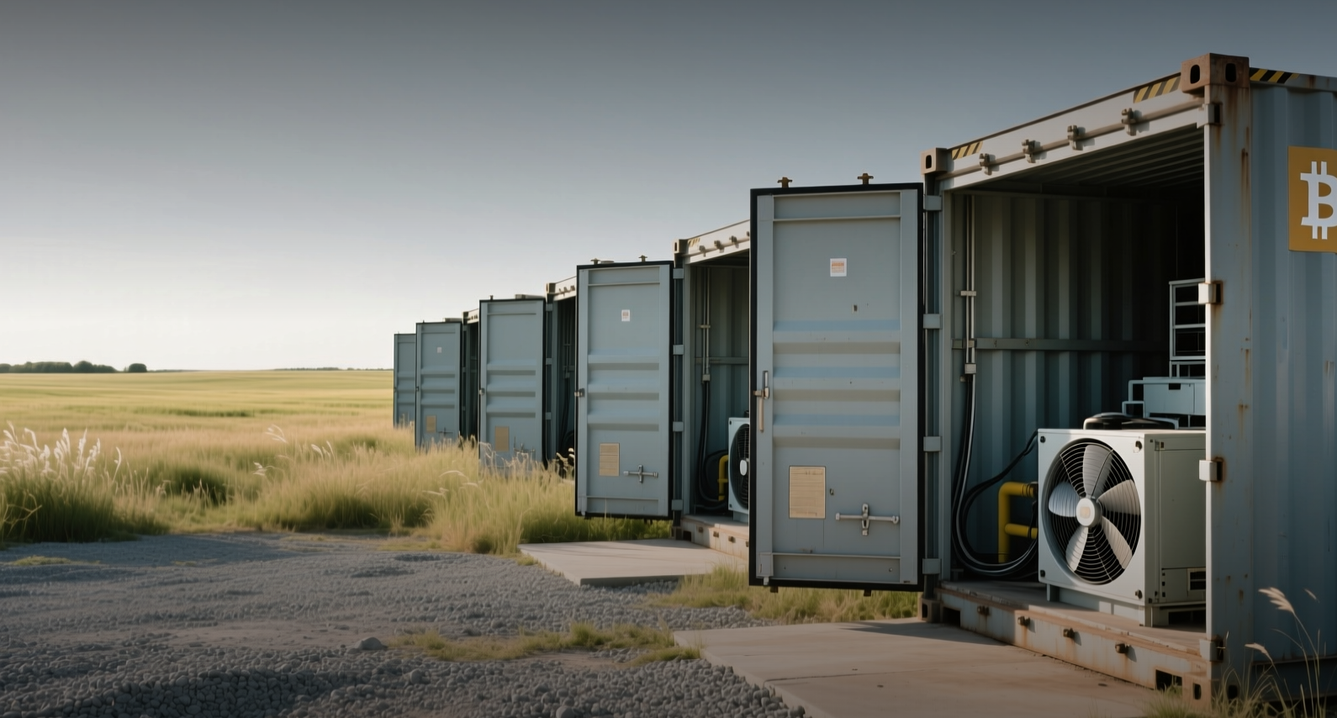
Tether abandoned two Bitcoin mining sites in Uruguay's Florida department after a disagreement with state utility UTE over electricity allocations, ending a project estimated to have cost around $120 million, Reuters reported.
"Uruguay isn't viable for mining — that's the reality," Nicolas Ribeiro, a crypto mining specialist, said.
The project, announced in May 2023 as Tether's first major mining venture in South America, was intended as a testing ground before expansion into Brazil, Paraguay and Argentina. A former contractor told Reuters that Tether spent roughly $60 million on each of the two sites. The dispute centered on how much power Tether's local entity Microfin could draw from UTE — Tether interpreted a contract clause as a minimum allocation that could be increased, while UTE viewed it as a maximum. As demand at the mining facilities rose, the sites sometimes lacked enough electricity to operate for days at a time.
The collapse shows how the economics of Bitcoin mining — turning cheap energy into crypto profits — may no longer add up after crypto prices dropped and energy prices rose. Tether has continued investing in mining elsewhere, including a renewable energy agreement with Adecoagro in Brazil, and has invested more than $2 billion in energy production and mining, CEO Paolo Ardoino said at an industry conference last year.
The disagreement had begun by November 2024, according to an internal UTE briefing reviewed by Reuters. Uruguay's new left-leaning government took office in March 2025 and appointed new directors at UTE, after which the utility adopted a firmer position on renegotiating the electricity agreement, one former contractor told Reuters.
Two months later, Microfin stopped paying electricity bills. The company informed UTE in June 2025 that it intended to terminate its contracts. UTE's board approved a memorandum of understanding and revised contract documents, but Tether representatives did not attend the scheduled signing. With the agreement unsigned and bills outstanding, UTE disconnected electricity to the facilities on July 25. Earlier reporting put the unpaid balance at roughly $5 million. Microfin settled the outstanding debt in December, UTE told Reuters.
Tether told Uruguay's labor authorities on November 25 that it would cease operations and laid off 30 of its 38 employees. More than $100 million had already been spent at the time, while another $50 million had been earmarked for infrastructure expected to pass to UTE and Uruguay's National Interconnected System.
The Uruguay shutdown occurred during a difficult period for Bitcoin miners. The April 2024 halving cut the block subsidy paid to miners in half, forcing operators to rely on more efficient machines, cheaper electricity, or alternative uses for their power and data center infrastructure.
By mid-2026, hashprice — a measure of miner revenue per unit of computing power — had fallen into the high-$20 range per petahash per day, while older machines faced estimated breakeven levels of about $35, according to research published in July. Public mining companies sold more than 32,000 BTC during the first quarter of 2026 as financial pressure increased.
Some operators have increasingly allocated power and facilities to artificial intelligence and high-performance computing. A June analysis found that public Bitcoin miners had secured more than $70 billion in AI and HPC contracts, while a tracked basket of mining shares had risen more than 50% in 2026 despite Bitcoin falling about 17% over the measured period.
Tether has continued investing in mining infrastructure despite the Uruguay withdrawal. In June, it sold 627,000 shares in Bitdeer for about $12.7 million but retained a 19.7% stake in the Bitcoin mining and AI infrastructure firm. The company released MiningOS as open-source software in February 2026 and followed with an open-source Mining Development Kit in April.
Those investments are funded partly through profits from Tether's stablecoin business. The company controls about $183 billion worth of stablecoins, and its assets have made it one of the world's largest holders of U.S. government debt. Tether reported $1.04 billion in net profit for the first quarter of 2026, with total assets of $191.77 billion and liabilities of $183.54 billion, according to its quarterly attestation.
This article is for informational purposes only and does not constitute investment advice.
