Cato Institute senior fellow Marian L. Tupy argues in a Wall Street Journal op-ed published Tuesday that expansive federal discretionary power — not individual misconduct — is the structural cause of corruption, citing Trump-era episodes including a $1 billion crypto windfall, a $16 million lawsuit settlement and an $8 billion merger approval as evidence that "tribute arrives on its own" when government controls economic outcomes.
"When the government holds that much influence, officials need not even demand tribute," Tupy wrote. "Tribute arrives on its own." The op-ed draws on public-choice theory from Nobel laureates James Buchanan and Gordon Tullock, whose 1962 book "The Calculus of Consent" argued that politicians and bureaucrats respond to incentives just as merchants do, and from Friedrich Hayek, who warned in "The Road to Serfdom" that positions of discretionary power select for those who relish wielding it.
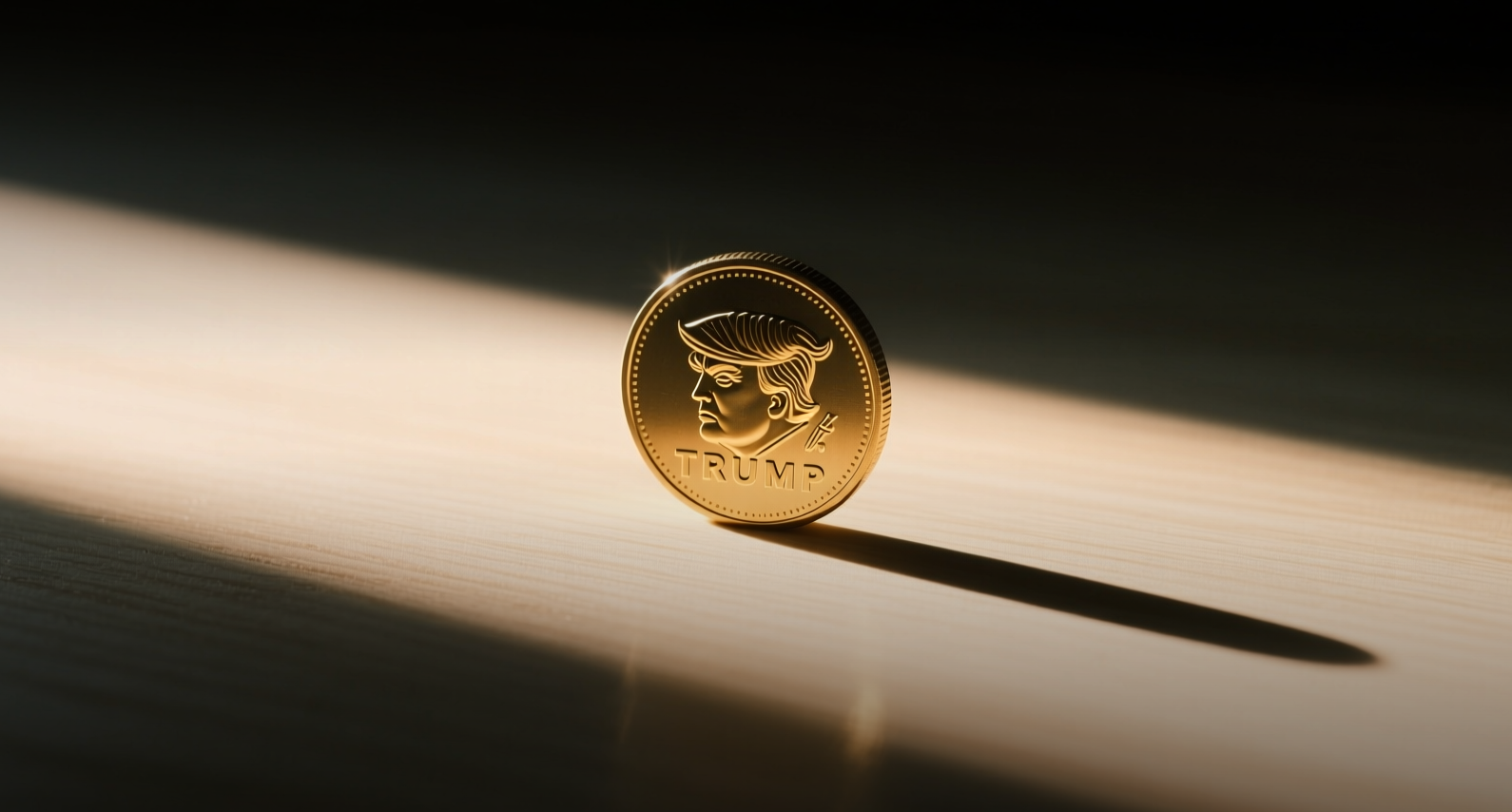
Tupy cited three specific episodes. Three days before his 2025 inauguration, Donald Trump launched a cryptocurrency called $TRUMP. In May, he dined with 220 of its largest holders, some of whom bought the coin expressly to secure invitations. In October, Trump pardoned Changpeng Zhao, the Binance co-founder convicted of violating money-laundering laws; Binance had assigned a team to develop a stablecoin for World Liberty Financial, a crypto venture tied to the Trump family. The undertakings netted Trump an estimated $1 billion in crypto gains, while most token buyers lost money, Tupy wrote. Separately, Paramount Global agreed to pay Trump $16 million — with some payments directed to his future presidential library — to settle a lawsuit the company had called meritless; within weeks, the government approved its $8 billion merger with Skydance Media.
The op-ed arrives as the Senate has taken an unusually public stance against executive clemency for financial criminals. On Wednesday, the chamber passed S. Res. 772 by unanimous consent, declaring that FTX founder Sam Bankman-Fried should "under no circumstances" receive a pardon or commutation of his 25-year sentence. Senators Cynthia Lummis (R-WY) and Rubén Gallego (D-AZ) introduced the measure on June 17. Trump has already pardoned Zhao, BitMEX co-founders Arthur Hayes, Ben Delo and Samuel Reed, and Silk Road creator Ross Ulbricht — a pattern Tupy argues is not a feature of one presidency but a predictable outcome of a government that commands the fate of every major enterprise.
The structural argument
Tupy's central claim is that Democrats misdiagnose the problem by attributing corruption to Trump personally while proposing to expand the very tools that enable it. "A party proposing to multiply the levers of economic power is proposing to multiply the buyers lining up to pull them," he wrote. A tariff waiver can mean billions for one company and bankruptcy for its rival; an antitrust filing can erase a decade of shareholder value in an afternoon; a procurement decision can build a company and a regulatory finding can bury one.
The federal government's discretionary economic power has grown dramatically over recent decades. The U.S. federal budget totaled $7.5 trillion in fiscal 2025, according to the Congressional Budget Office, up from $3.5 trillion in fiscal 2010. Regulatory agencies issued more than 3,000 final rules in 2024, per the Federal Register. Tupy argues that as the scope of government expands, the return on a lobbyist exceeds the return on an engineer — and that no amount of personnel screening can prevent corruption when the applicant pool is "already sorted by appetite."
"The Founders foresaw figures like Mr. Trump," Tupy wrote. "They did not foresee a government of the current scope and size. The way to end the sale of government favors is to close the store."
What comes next
The op-ed injects a structural critique into a debate that has largely focused on individual ethics. Trump has continued to wield pardon power aggressively: his administration granted clemency to former Honduran president Juan Orlando Hernández, who was serving 45 years for drug trafficking, and to former New York Mayor Rudy Giuliani, among others. The White House has defended each pardon as correcting prosecutorial overreach by the Biden administration.
Tupy's proposed remedy — a government "confined to courts, defense and a handful of public goods — too small to be worth bribing" — aligns with libertarian thought but has little support in either major party. The op-ed concludes that until one party embraces limited government as a corruption-prevention mechanism, "the outrage will remain what it is today: sincere and useless."
This article is for informational purposes only and does not constitute investment advice.