

UiPath's agentic AI technology has moved from pilot projects into production deployments, marking a shift in enterprise automation.
UiPath's agentic AI technology has moved from pilot projects into production deployments, marking a shift in enterprise automation.
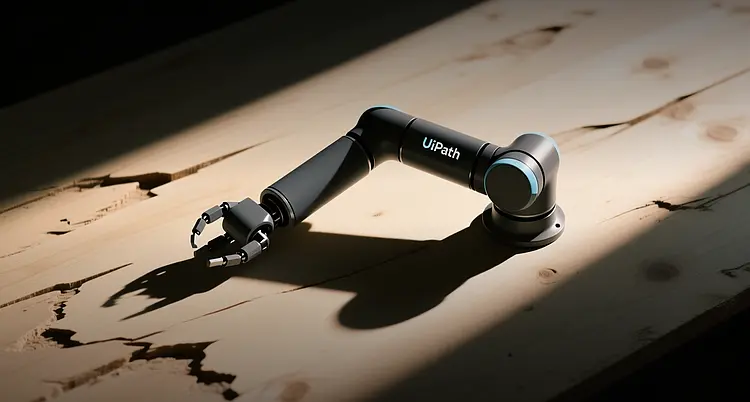
UiPath's agentic AI is moving from pilot projects into production deployments, strengthening demand for its automation platform as enterprises shift from testing to operational use of autonomous agents. The transition reflects a broader industry move from AI copilots that assist with individual tasks toward agents that can execute multi-step workflows with limited human prompting.
"Agentic AI represents a shift from passive AI tools toward autonomous systems that can initiate decisions, perform tasks, and drive outcomes," according to Dell and NVIDIA's joint analysis of enterprise AI adoption. UiPath's platform is among the first enterprise automation tools to make this leap from experimental to production-grade deployments.
The company's agentic AI capabilities allow its platform to plan steps, use approved tools, and complete defined tasks without requiring continuous human input. Unlike first-generation automation that followed fixed rules, UiPath's agents can interpret context, adapt to variations in workflow, and route exceptions to human reviewers when judgment is needed. This represents a departure from traditional robotic process automation, which required rigid, pre-defined sequences.
Three trends driving the shift
The move to production reflects three converging trends in enterprise AI. First, companies are moving beyond the pilot phase after a year of testing agentic AI tools, with early adopters in IT support, sales operations, and customer service reporting measurable efficiency gains. Second, the infrastructure to support autonomous agents has matured, with secure runtime environments and governed data access now available through platforms like Dell AI Factory with NVIDIA. Third, enterprises are recognizing that agentic AI requires different governance than traditional automation, including identity-based permissions, audit trails, and human review checkpoints for high-risk actions.
For UiPath, the timing is critical. The enterprise automation market faces intensifying competition from cloud providers and AI-native startups. Microsoft's Copilot suite and emerging agent frameworks from Salesforce and ServiceNow are all targeting the same enterprise workflow automation opportunity. UiPath's ability to demonstrate production-ready agentic AI — rather than just pilot projects — could determine whether it maintains its position as the leading independent automation platform.
The shift to production deployments also carries implications for enterprise infrastructure. Autonomous agents consume more compute tokens than copilots because they reason through multi-step tasks, call tools, retrieve context, and retry actions before completing a workflow. That increases the cost per task and places new demands on the underlying AI infrastructure, including secure runtime environments, governed data access, and observability tools to track agent actions. Dell and NVIDIA have both emphasized cost per token as a key metric for AI factory economics as agentic workflows expand.
UiPath shares have benefited from the growing enthusiasm around agentic AI, though the company faces pressure to convert that interest into measurable revenue growth. The move from pilots to production suggests customers are moving beyond evaluation and committing to deployment, which could accelerate UiPath's subscription revenue and expansion within existing accounts. The company's next quarterly results will provide the first concrete data on whether production deployments are translating into higher average contract values and renewal rates.
This article is for informational purposes only and does not constitute investment advice.
