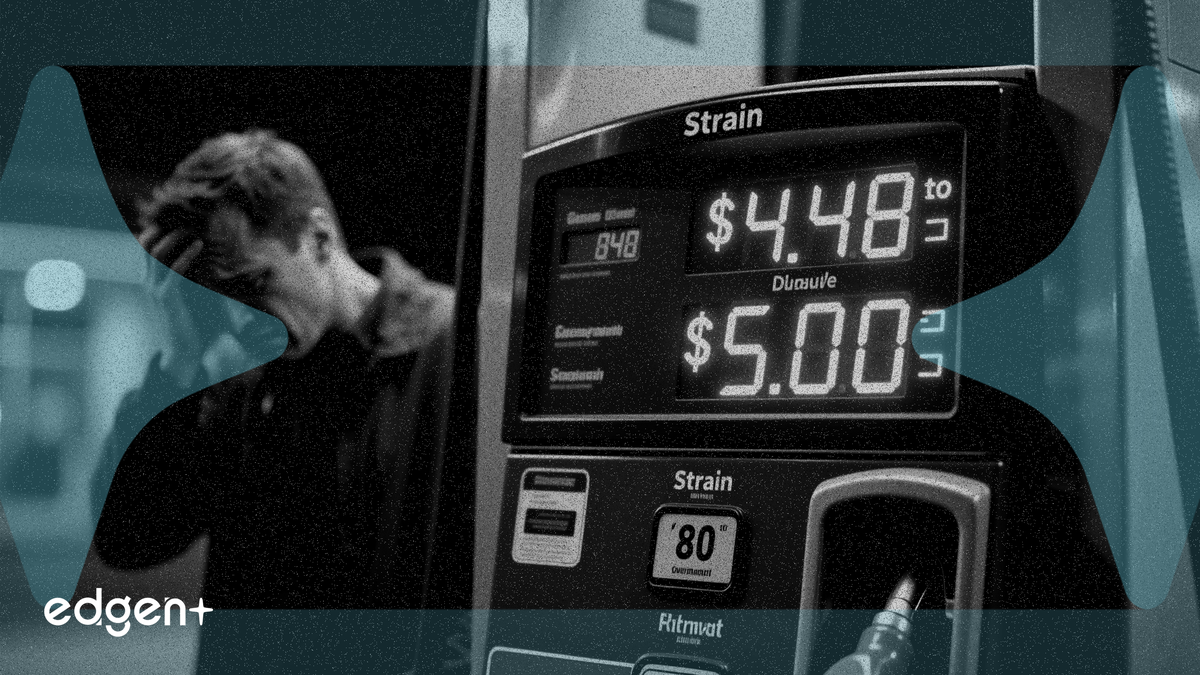
Gasoline prices in the U.S. climbed to a national average of $4.48 per gallon for regular unleaded, the highest since July 2022, as the conflict in the Middle East and tight supplies continue to pressure the market.
"Crude oil prices have again spiked above $100 per barrel as most ship traffic remains stalled in the Strait of Hormuz," said Marie Dodds, public affairs director for AAA Oregon/Idaho. "This means pump prices will remain elevated."
The current average is up 31 cents from last week and now sits just over 50 cents shy of the all-time high of $5.01 reached in June 2022. The price surge is widespread, with all 50 states seeing an increase this week. The West Coast continues to post the highest prices, with California’s average at $6.13, followed by Washington at $5.71 and Oregon at $5.30, according to data from AAA.
The rapid increase is creating political and economic headwinds, adding to inflationary pressures and straining consumer budgets ahead of the summer driving season. The sustained high prices present a challenge for the Trump administration, which has linked a drop in pump prices to the conclusion of the war with Iran.
Regional Hot Spots and Refinery Woes
While West Coast prices are the highest in the nation, the most dramatic week-over-week increases occurred in the Great Lakes region due to a series of refinery outages. Indiana saw prices jump 79 cents a gallon, while Ohio and Michigan saw increases of 75 cents and 64 cents, respectively.
Fuel analyst Patrick De Haan of GasBuddy noted that while some relief is expected in the Great Lakes as refineries come back online, the overall situation remains fragile. Any new disruption to the flow of oil through the Strait of Hormuz, a chokepoint for roughly 20 percent of the world's oil, could quickly erase any localized price drops.
Low Inventories Magnify Price Risks
Underpinning the high prices is a critically low level of gasoline inventories, which are at their lowest point for this time of year since 2014. Morgan Stanley analysts have warned that stockpiles could shrink further and potentially touch historic seasonal lows during the peak summer driving months.
This tight supply means that any disruption, whether from a refinery outage or a geopolitical event, has an outsized impact on price. According to De Haan, the $5 per gallon mark is a key psychological threshold for consumers that has historically triggered a significant reduction in demand. However, he noted that overall U.S. consumption has remained strong so far, suggesting the market has not yet reached a point of self-correction and that further upside risk to prices remains.
This article is for informational purposes only and does not constitute investment advice.