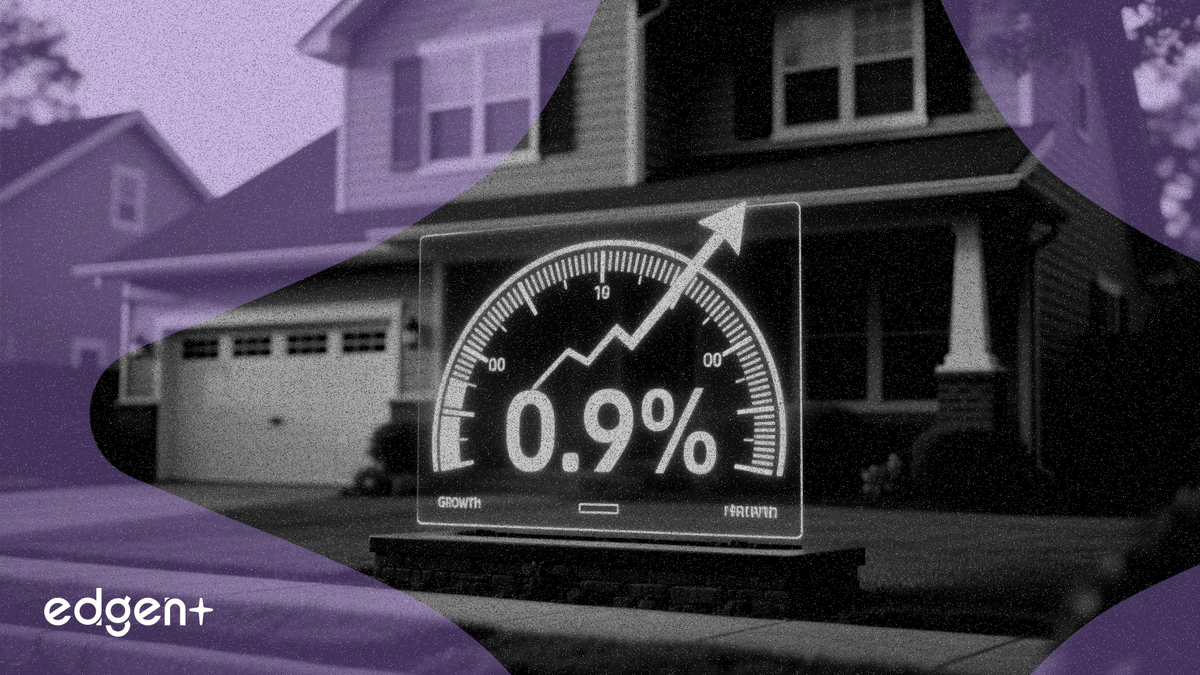
US home price growth unexpectedly slowed in February, a fresh sign that elevated mortgage rates are weighing on the housing market’s recovery. The S&P CoreLogic Case-Shiller index for 20 major metropolitan areas rose 0.9 percent from a year ago, a deceleration from the 1.2 percent gain in January and below the 1.3 percent increase economists had forecast.
"Mortgage rates near 6 percent continue to weigh on affordability and transaction activity, holding nominal price growth below inflation," Nicholas Godec, S&P Dow Jones Indices’ head of fixed income tradables & commodities, said in a statement. The data underscores a market struggling to find equilibrium as borrowing costs keep prospective buyers on the sidelines, even as inventory remains tight.
Nationally, prices increased 0.7 percent from the prior year, also a slowdown from January’s 0.8 percent gain. The cooling price growth reflects a broader challenge for the real estate sector, where the Federal Reserve's monetary policy has a direct impact on consumer behavior. While homebuilder LGI Homes, Inc. (NASDAQ: LGIH) reported a 2.9 percent increase in its average sales price for the first quarter of 2026, the broader market is experiencing a significant moderation.
The slowdown sets a cautious tone for the spring selling season, which typically sees a surge in activity. With the Federal Open Market Committee meeting this week, market participants will be closely watching for any signals on the future path of interest rates, which remain the primary lever for housing affordability.
Regional Divergence
The national data masks significant regional disparities. More recent data from March shows a clear split, with some markets continuing to heat up while others are rapidly cooling.
Listing prices per square foot in Providence, Rhode Island, jumped nearly 10 percent in March compared to the previous year, according to Realtor.com data. Allentown, Pennsylvania, and Rochester, New York, also saw strong gains of 9 percent and 8.2 percent, respectively, highlighting resilient demand in more affordable northeastern markets.
In contrast, markets that saw explosive growth during the pandemic are now experiencing a reversal. Austin, Texas, saw the largest drop, with median listing prices per square foot falling 7.1 percent. Other Sun Belt markets like Cape Coral, Florida, and Memphis, Tennessee, also registered significant declines of 6.9 percent and 6.3 percent, respectively.
This divergence illustrates how local supply and demand dynamics are becoming more pronounced. Markets with a relative abundance of inventory or those that became overvalued are now the most vulnerable to price corrections in a higher-rate environment.
This article is for informational purposes only and does not constitute investment advice.