

The S&P 500's CAPE ratio has climbed to 41.6, a level exceeded only once in 140 years — during the dot-com bubble of 1999.
The S&P 500's CAPE ratio has climbed to 41.6, a level exceeded only once in 140 years — during the dot-com bubble of 1999.
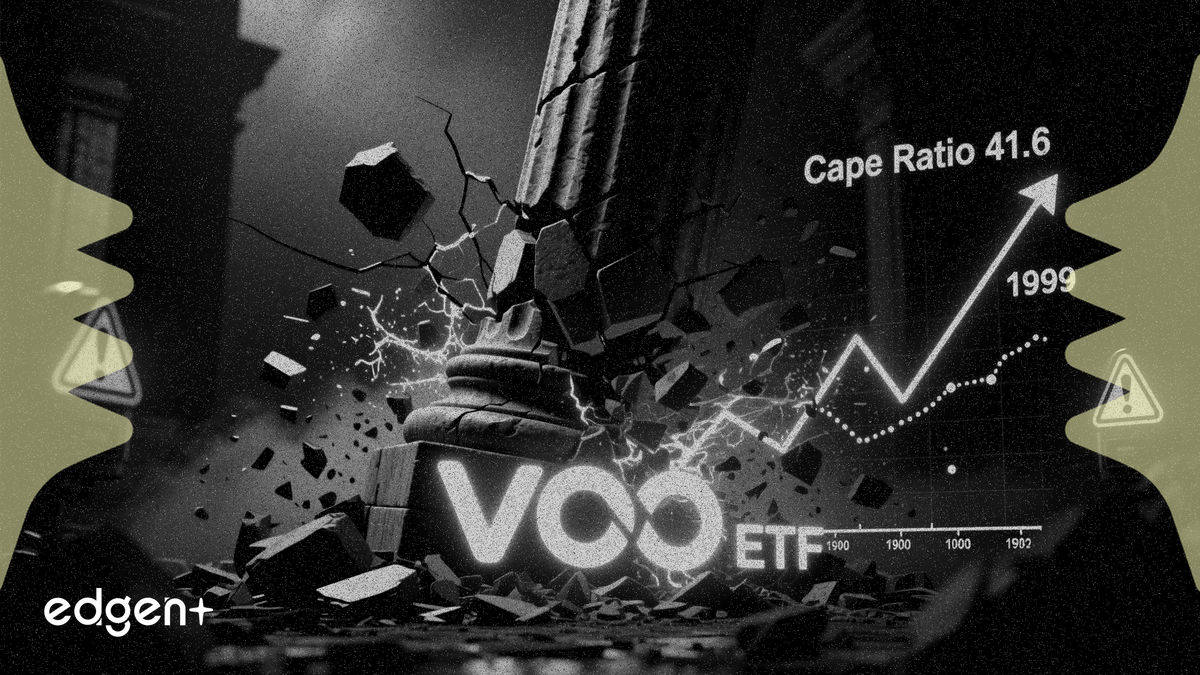
The S&P 500's CAPE ratio hit 41.6 in May, the second-highest in 140 years, as the Vanguard S&P 500 ETF trades near all-time highs.
"Valuations at these levels have historically preceded below-average returns over the following decade," said Leo Nelissen, investing group leader at Seeking Alpha. "The concentration in Big Tech makes this rally more vulnerable than the headline index suggests."
The S&P 500 has gained 7.7% year to date, driven by AI-related stocks that now account for roughly 40% of the index's market capitalization. Technology and communication services have been the top-performing sectors, while healthcare and real estate have lagged. The Vanguard S&P 500 ETF closed at $681.95 on June 12, near its record high, with the index at 7,431.46.
The elevated CAPE ratio raises the stakes for the second half of 2026. With inflation at 4.2% — a three-year high — and the Federal Reserve potentially raising rates, the cost of financing the $1.5 trillion in new debt expected for AI capital expenditures could rise sharply, threatening the earnings growth that has supported the rally.
Breadth Narrows as AI Dominates
Beneath the headline index, market breadth has narrowed considerably. The top 10 S&P 500 companies now represent roughly 40% of the index's market capitalization, with AI-infrastructure beneficiaries contributing about half of the index's earnings growth this year. Google, Amazon, Microsoft and Meta alone plan to allocate $725 billion to capital expenditures in 2026, up 77% from $410 billion last year, according to Yahoo Finance. Memory chip makers such as SanDisk and Western Digital have been among the top performers, with triple-digit product price increases driven by demand exceeding supply.
Small-cap stocks, as measured by the Russell 2000, have lagged significantly, underperforming the S&P 500 by more than 10 percentage points this year. The S&P 500's forward price-to-earnings multiple of 32 times earnings remains historically expensive, leaving little room for error if earnings growth slows. Over the past 20 years, the index has delivered a total return of 785% with reinvested dividends, compared with gold's spot price gain of 655%.
Cross-Asset Pressures Build
The macroeconomic backdrop has added to the uncertainty. The Iran conflict pushed Brent crude to $114 a barrel on May 4, a 66% increase from pre-war levels, contributing to the highest inflation reading in three years. The Consumer Price Index rose 4.2% in May from a year earlier, accelerating from 3.8% in April and keeping pressure on the Federal Reserve to raise its benchmark interest rate.
Gold, the traditional hedge against inflation, has retreated about 24% from its record high of $5,589 per troy ounce in January, as rising real yields have diminished the appeal of non-yielding assets. The S&P 500's CAPE ratio first crossed the 40 threshold on Jan. 6, when it stood at 40.58, and has continued climbing as AI enthusiasm drove multiple expansion in the largest companies.
Wall Street strategists expect the S&P 500 to rise another 5% by year-end, according to consensus targets compiled by Societe Generale. But strategists have underestimated S&P 500 returns in 13 of the past 16 years, missing year-end targets by about 10% on average, per Tradesmith. The upcoming earnings season, the trajectory of inflation and the resolution of the Iran conflict will determine whether the S&P 500 can sustain its valuation or whether the CAPE ratio's historical signal proves prescient once again.
This article is for informational purposes only and does not constitute investment advice.
