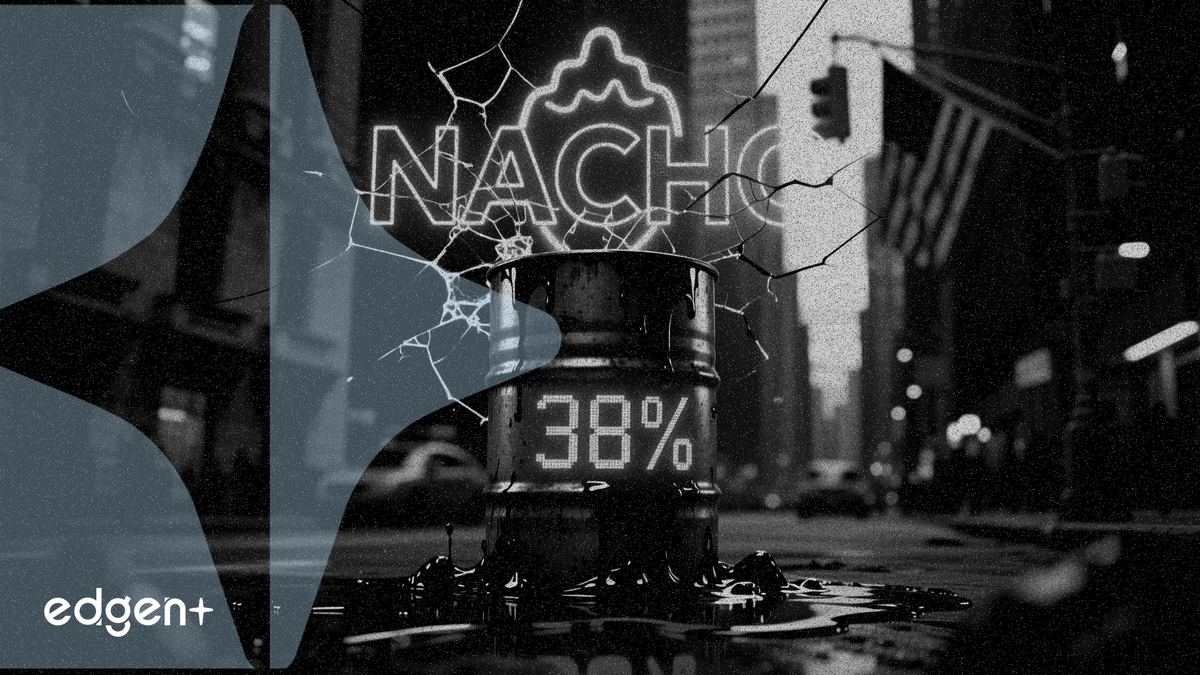
Traders are shelving the dip-buying playbook for oil, embracing a new acronym that prices in a prolonged disruption to one of the world’s most critical energy chokepoints.
A new acronym is circulating on Wall Street that captures the market’s growing skepticism of a resolution to the Strait of Hormuz crisis: NACHO. The phrase, short for “Not A Chance Hormuz Opens,” reflects a structural shift in positioning as investors bet on a prolonged oil shock that has already sent Brent crude prices more than 38 percent higher since the conflict began.
"It's essentially the market losing hope in the chance of a quick fix," eToro market analyst Zavier Wong said. "For most of this crisis, every ceasefire headline triggered a sharp selloff in oil, and traders kept pricing in a resolution that never came. NACHO is an acknowledgment that higher oil isn't a temporary shock to trade around, it's the current market environment."
The trade is reflected across multiple asset classes. While Brent crude has tapered from its late-April high of $126, it continues to trade above $100 a barrel. War premiums for Hormuz transits, which surged to around 2.5 percent of a vessel's hull value from 0.1 percent pre-war, remain roughly eight times their previous levels, according to data from eToro. Meanwhile, rates markets have begun pricing in a more persistent inflation shock, with a notable flattening of most yield curves.
The standoff over the 21-mile-wide strait, which handles a fifth of the world’s oil trade, has effectively turned into a structural macro risk. A prolonged closure threatens to trigger a persistent inflation shock and increases the probability of a global downturn, impacting everything from the 1,550 vessels currently stranded in the Persian Gulf to the price of food for millions.
From 'TACO' to 'NACHO'
The NACHO trade marks a psychological shift from the previous "TACO" (Trump Always Chickens Out) narrative that dominated earlier geopolitical standoffs. Repeated but ultimately empty remarks from President Donald Trump about reopening the key shipping route have failed to produce a resolution, leading traders to abandon hope for a quick fix. The U.S. and Iran exchanged fire as recently as last Thursday, with both sides accusing the other of initiating the hostilities, further straining a fragile ceasefire. The conflicting signals have led investors to pivot from trading temporary volatility to positioning for a lasting stalemate.
The Insurance Canary
"I think the signal isn't just the oil prices, but the insurance market as well," Wong noted. "Insurers price risk for a living, and they're obviously not treating this as a near-term resolution story."
The fact that insurance premiums remain so elevated despite a slight pullback from their peak indicates that the firms underwriting the risk of passage see a long-term, deeply entrenched problem. This pricing acts as a clearer barometer of institutional belief than the more volatile spot price of oil, reflecting a conviction that the geopolitical risk premium is now a semi-permanent feature of the market.
Diverging Markets
While oil, shipping, and rates markets are flashing red, broader risk assets have remained surprisingly sanguine. Analysts at State Street Global Advisors noted that the TACO and NACHO trades are "playing out simultaneously," as high energy prices have not stopped the S&P 500 from rebounding to fresh all-time highs.
Still, some strategists see the writing on the wall. "The clearest signal has come from rates markets where the front end has repriced sharply higher," said Vasileios Gkionakis, senior economist and strategist at Aviva Investors. He warned that a prolonged closure of the Strait would likely trigger "a more persistent inflation shock" while also increasing the probability of a global downturn. This divergence suggests that while equity investors remain optimistic, bond markets are taking the NACHO thesis far more seriously.
The blockade is already having a significant global impact beyond financial markets. The U.S. military reports that 1,550 vessels and 22,500 mariners are stranded in the Persian Gulf. The U.N. World Food Program has warned that the disruption to fuel and fertilizer shipments could push food prices higher for 45 million people, primarily in Asia and Africa. While some analysts believe economic pressure will eventually force a resolution, the core message of the NACHO trade is that the path ahead will be messy and the crisis's impact on the global economy may be far more structural than previously anticipated.
This article is for informational purposes only and does not constitute investment advice.