
Fed Chair Kevin Warsh's first Jackson Hole address arrives as bond market stress and Treasury intervention raise the stakes for central bank communication.
Fed Chair Kevin Warsh's first Jackson Hole address arrives as bond market stress and Treasury intervention raise the stakes for central bank communication.
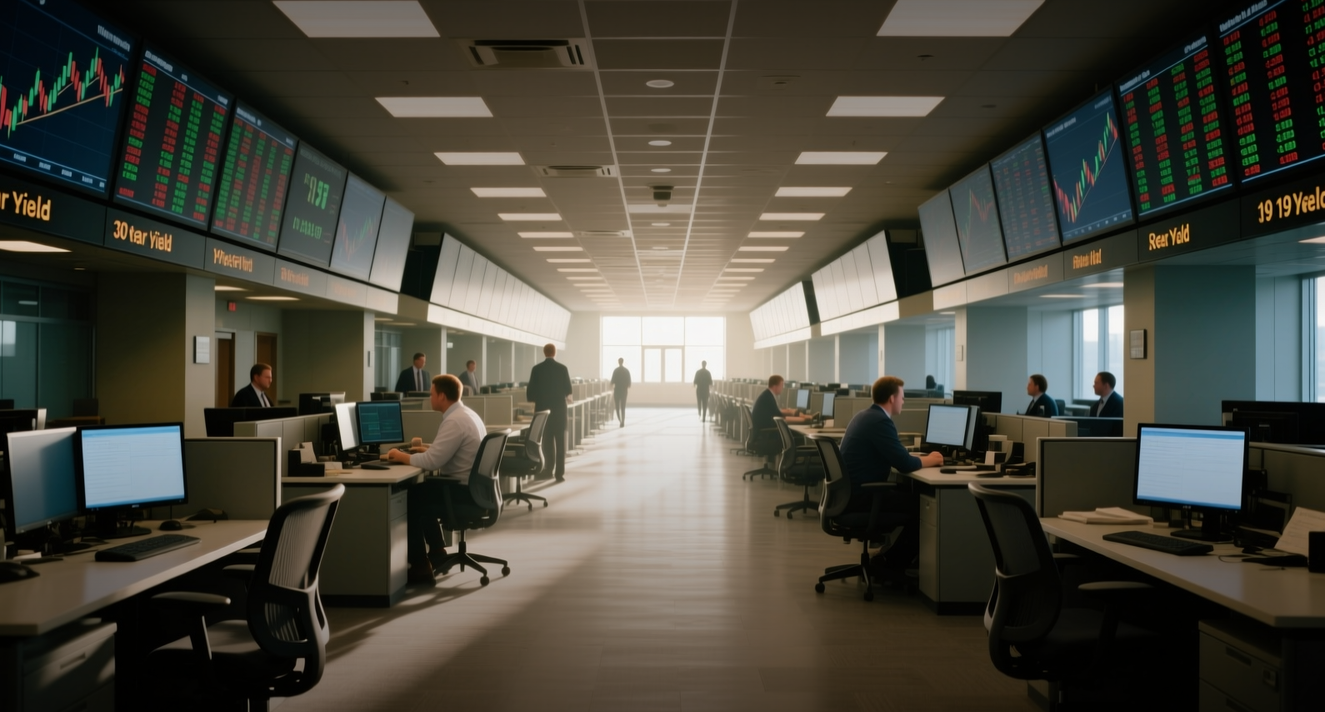
Fed Chair Kevin Warsh's first Jackson Hole address arrives as bond market stress and Treasury intervention raise the stakes for central bank communication.
Fed Chair Kevin Warsh's debut Jackson Hole speech Friday arrives with the 30-year Treasury yield at 5.17 percent, a 19-year high, after Treasury Secretary Scott Bessent doubled long-dated debt buybacks to at least $4 billion.
"The bond market and the FOMC have clearly decided to wake up to account for higher inflation and what promises to become a secular, multi-year uptrend in interest rates," Adam Posen, president of the Peterson Institute for International Economics, said.
The 30-year yield traded at 5.173 percent as of Wednesday morning, while the benchmark 10-year yield hovered near 4.64 percent. The personal consumption expenditures price index — the Fed's preferred inflation gauge — rose 3.7 percent year-over-year in July, above the 2 percent target for more than five years. The dollar has fallen over the past month against major currencies, adding to import price pressures.
With the next FOMC meetings scheduled for September and December, Warsh's remarks could determine whether markets price additional rate hikes or accept the Fed's current stance. Bank of America strategists warned that if Warsh focuses solely on structural themes like productivity and demographics, the long end of the Treasury curve could rise to 5.5 percent or higher.
Warsh has said he wants to wait for recommendations from five task forces established at the start of his tenure this spring before detailing his policy plans. Asked after the July 28-29 FOMC meeting about his Jackson Hole speech, he told reporters he had not decided yet but wanted to "frame the big questions," noting a tendency to get "caught up in the myopic."
That reluctance has drawn scrutiny. Krishna Guha, vice chairman of Evercore ISI and a former top New York Fed official, said Warsh has tried to make the case that the Fed should stand back and let the market form an unguided yield curve while hinting that long-end tightening might be preferable to short-end tightening. "It is hard to make that case when investors see Bessent as trying to manage the long end," Guha said.
The Treasury's decision to at least double its maximum buyback size to $4 billion from Sept. 9 came after the 30-year yield surged to a 19-year high, with some analysts interpreting the move as an effort to lower government borrowing costs. The intervention has raised questions about whether government financing choices could start to influence short-term interest rates — in theory not the Fed's concern unless Treasury financing stumbles.
Maurice Obstfeld, a former IMF chief economist and economics professor at UC Berkeley, said Warsh is "clearly finding his feet and operating in a very charged environment" given upcoming U.S. midterm elections and volatile bond markets. "Markets are wondering what's the Fed going to do to address inflation that's persistently above target," he said. "There's certainly the possibility that inflation pressures lead to the need for steeper rate increases down the road."
Democrats on the Senate Banking Committee have asked Warsh to provide details on his communications with President Donald Trump, following a Wall Street Journal report that the two men have been holding regular calls. While Trump has so far withheld criticism of Warsh for not cutting rates, the Fed chief's reluctance to discuss policy has left open questions about whether he is holding back on rate hikes to avoid angering the president.
In the minutes of the July 28-29 meeting, some FOMC colleagues worried that waiting to hike rates would require steeper and costlier increases in borrowing costs later, while others worried that the longer inflation remains above 2 percent, the more likely the public is to lose faith in the Fed's commitment to its target.
Morgan Stanley economists said they do not expect Warsh to provide anything that would clarify his thinking on the near-term outlook, while Stifel expects a "dovish Jackson Hole message" that would steepen the yield curve and weaken the dollar. Bank of America FX strategists said the dollar is "on edge" ahead of the speech, vulnerable to an extended sell-off if Warsh disappoints markets.
Benjamin D. Jones, global head of research at Invesco, said he will be listening for how Warsh balances growth against inflation, whether he acknowledges the rise in term premia, and whether he thinks financial innovation is changing the transmission of monetary policy. "A dovish speech helps the front end of the curve but risks the long end and inflation expectations moving higher," Jones said. "Regardless of his comments, I think the path of least resistance is for higher U.S. yields."
The last time a Fed chair used the Jackson Hole venue to reset market expectations was when Jerome Powell delivered a succinct pledge to fight inflation that helped cement expectations for a series of swift rate hikes. Warsh's speech this week will be watched for whether he can deliver similar clarity — or whether bond market anxiety deepens.
This article is for informational purposes only and does not constitute investment advice.
