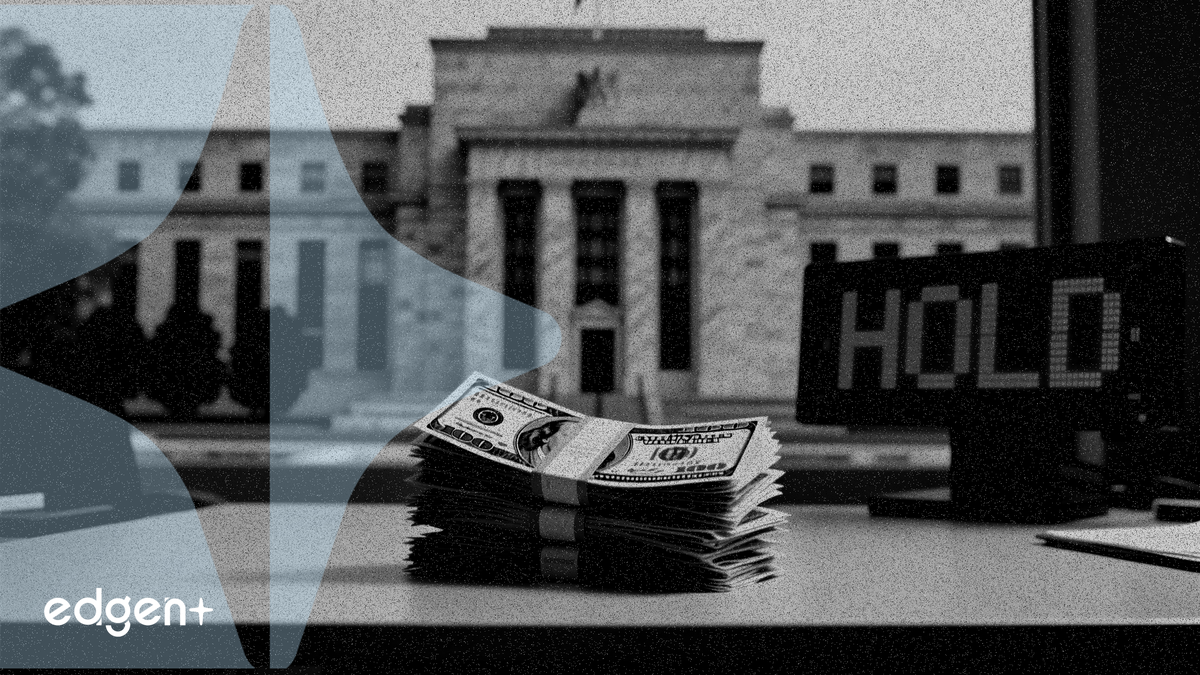
Economists are beginning to entertain a scenario where the U.S. Federal Reserve makes no further changes to interest rates, a significant shift that would keep the benchmark federal funds rate in its current 5.25% to 5.50% range indefinitely. This potential for a prolonged hold comes as inflation remains persistent and the bond market shows increasing anxiety, with the 30-year Treasury yield recently touching just under 5 percent.
"Fees are the only part of fund investing where the outcome is certain," said Amanda Kish, a Certified Financial Planner, in a recent Motley Fool podcast. "Performance might surprise you... but those fees, those expenses come out every single year, rain or shine."
The prospect of stable rates suggests returns on cash and short-term bonds will likely stabilize, offering a silver lining for savers who have been benefiting from higher yields. However, it spells continued pain for borrowers, as seen in the auto loan market where default rates in March hit their highest level since 2010. According to recent data, about 30% of car buyers who traded in a vehicle in the first quarter had negative equity, owing an average of roughly $7,200 more than their car was worth. This has pushed the average monthly payment for these buyers to a record $932.
This new "higher for longer" reality forces a strategic rethink for personal finance. While the high yields on cash are appealing, they may not be sufficient to outpace inflation over the long term, pushing investors to re-evaluate their portfolios. For those invested in mutual funds and ETFs, the focus sharpens on costs and management. As Kish noted, comparing a fund's expense ratio to its category average is critical; a 0.5% fee on an S&P 500 index fund is "pretty crazy" when identical exposure can be found for as little as 0.03%.
The debate extends to active versus passive management. For actively managed funds, manager tenure becomes a crucial factor. "If a fund, say, had a great 10-year track record, but the manager who built that record left three years ago, that track record really tells you nothing about what you're going to get going forward," Kish warned. In contrast, for passive index funds and ETFs, which simply track an index, manager tenure is far less of a concern, making them a more straightforward, set-it-and-forget-it option for many. This structural advantage, combined with lower costs and greater tax efficiency, is a primary reason more investors are leaning toward ETFs for their taxable brokerage accounts.
This article is for informational purposes only and does not constitute investment advice.