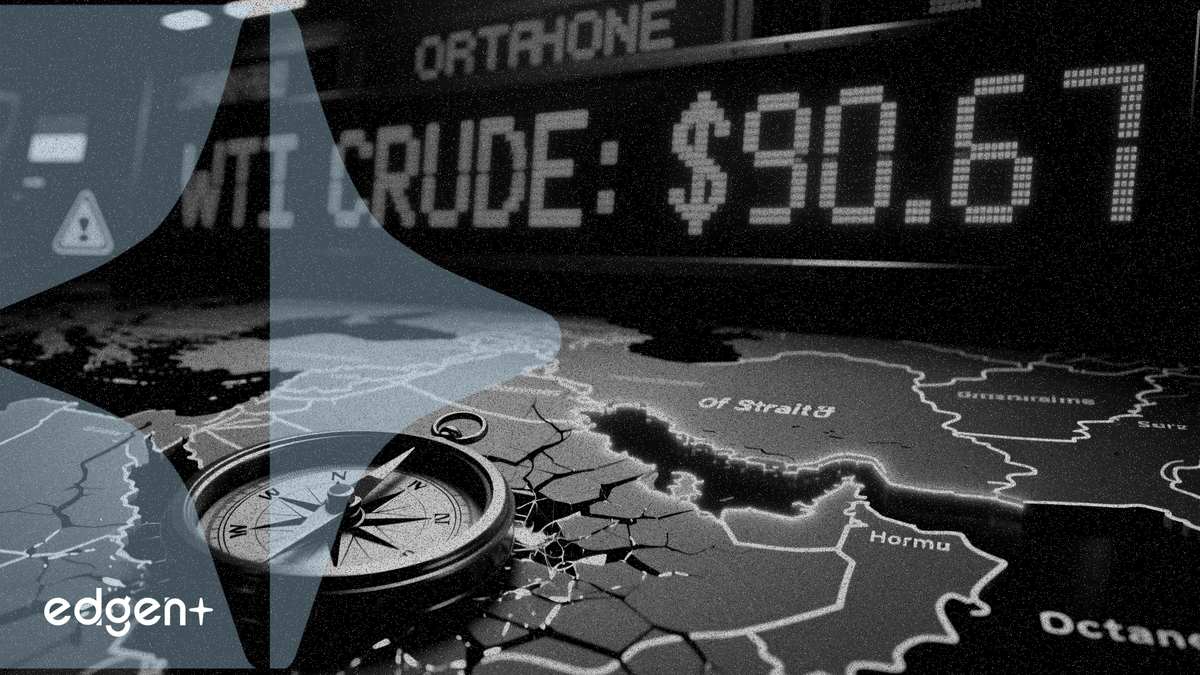
Les contrats à terme sur le pétrole brut ont reculé mardi, le WTI chutant de 1,6 % à 90,67 $ le baril et le Brent perdant 1,6 % à 93,48 $, alors que les négociations de paix en cours entre les États-Unis et l'Iran maintiennent les marchés dans l'incertitude quant à savoir si le détroit d'Ormuz sera rouvert ou restera un point chaud pour les perturbations de l'approvisionnement.
"Le marché intègre un résultat binaire — soit un accord qui libère 17 millions de barils par jour de transit par Ormuz, soit une escalade qui supprime une part importante de l'offre mondiale", a déclaré Omar Tariq, analyste matières premières spécialisé dans les marchés pétroliers et gaziers. "Tant qu'il n'y aura pas de clarté, les prix resteront piégés dans de larges fourchettes de consolidation."
Ce repli fait suite au vif rebond de lundi, lorsque le WTI a bondi de près de 5 % après que l'Iran a déclaré qu'il romprait les négociations avec les États-Unis et qu'il s'apprêtait à fermer complètement le détroit d'Ormuz — une menace qui bloquerait environ un cinquième de la consommation quotidienne mondiale de pétrole. Le président Donald Trump a ensuite déclaré qu'Israël et le Hezbollah cesseraient leurs attaques, aidant le pétrole à effacer une partie de ses plus fortes pertes journalières en un mois. Le United States Oil Fund (USO) a bondi de 4,97 % à 135,50 $ lundi, tandis que l'Energy Select Sector SPDR (XLE) a gagné 1,79 % à 57,30 $.
Le goulet d'étranglement du détroit d'Ormuz est devenu la variable centrale des marchés pétroliers depuis l'escalade du conflit entre les États-Unis et l'Iran plus tôt cette année. Avant la guerre, le brut Brent se négociait près de 70 $ le baril. La prime de risque a depuis ajouté environ 25 $ le baril, chaque nouveau cycle de négociations — ou leur rupture — faisant varier les prix de 3 à 5 $ par séance. L'Union européenne envisage également un gel temporaire de son plafonnement du prix du pétrole russe, une mesure qui pourrait resserrer davantage l'offre si elle était adoptée.
Pour l'instant, le marché est pris entre deux forces. Du côté de l'offre, la menace d'une fermeture d'Ormuz — qui affecterait les flux de brut en provenance d'Arabie saoudite, d'Irak, des Émirats arabes unis, du Koweït et de l'Iran — représente le risque géopolitique le plus important pour les marchés pétroliers depuis des décennies. Du côté de la demande, la faible consommation en Chine et en Europe a réduit les estimations de la demande mondiale d'environ 2 millions de barils par jour, limitant la hausse même si les primes géopolitiques gonflent.
La voie à suivre repose sur la diplomatie. Si les États-Unis et l'Iran parviennent à un accord pour rouvrir le détroit, le Brent pourrait rapidement perdre 10 à 15 $ de sa prime de risque, ramenant les prix vers 80 $. Si les négociations échouent et que le détroit se ferme, les analystes préviennent que le Brent pourrait bondir au-dessus de 110 $, un niveau non soutenu depuis 2022. Le prochain cycle de négociations n'a pas de date confirmée, laissant les traders dans l'expectative.
Cet article est fourni à titre informatif uniquement et ne constitue pas un conseil en investissement.