

Xiaomi Auto Technology recalled 390,435 SU7 electric vehicles across two filings, part of a record 7 million-plus vehicle recall wave over emergency door release defects that regulators say could trap occupants after crashes.
Xiaomi Auto Technology recalled 390,435 SU7 electric vehicles across two filings, part of a record 7 million-plus vehicle recall wave over emergency door release defects that regulators say could trap occupants after crashes.
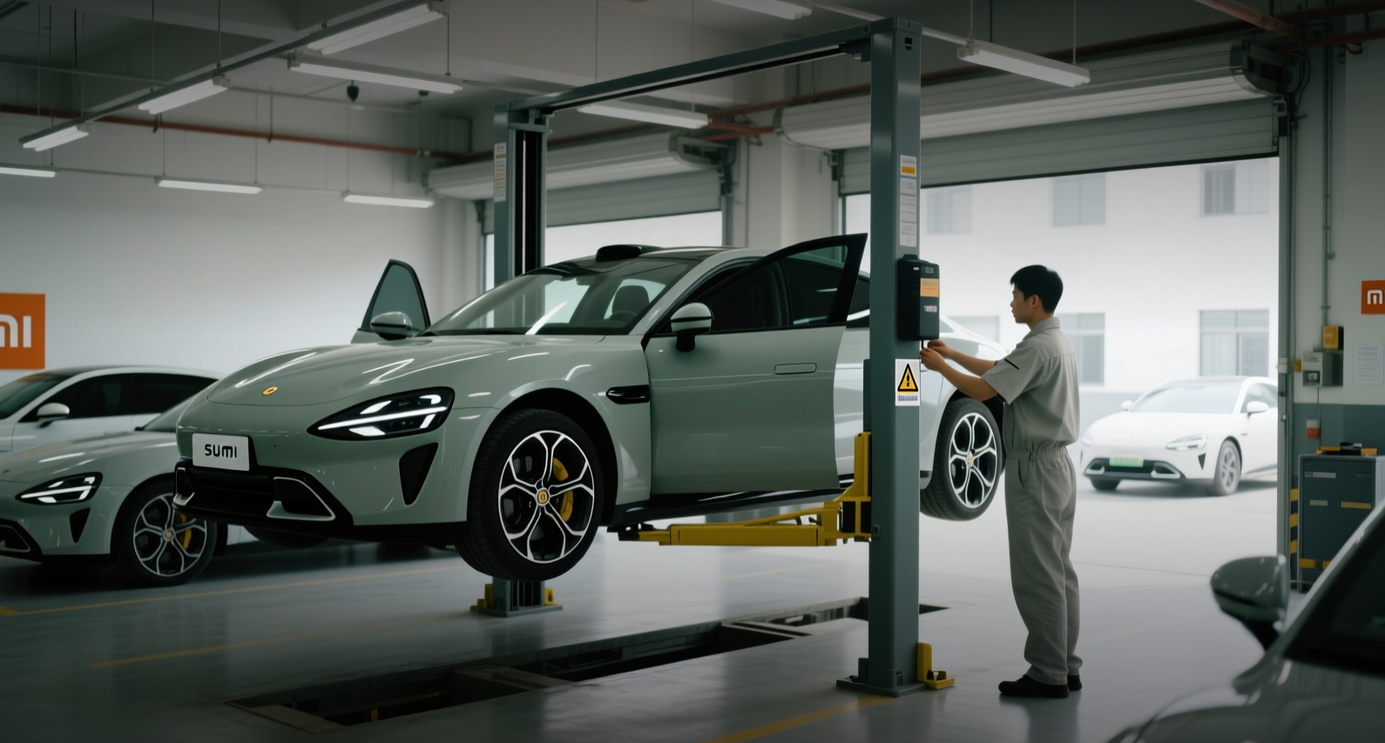
Xiaomi recalled 390,435 SU7 electric vehicles in two filings with China's State Administration for Market Regulation, part of a record 7 million-vehicle wave over emergency door release defects that could trap occupants after crashes. The recalls cover 2024 SU7 models produced between December 2023 and March 2026.
The regulator said the defects center on interior emergency mechanical door releases that are close in color to surrounding trim, making them hard to identify and operate. In extreme situations such as a severe crash that disables the vehicle's low-voltage system, this could hinder occupants from opening doors to escape and impede rescue efforts from outside, according to SAMR's announcement.
Recall S2026M0096V covers 339,069 vehicles produced between Aug. 8, 2024 and Mar. 4, 2026, while S2026M0097V covers 51,366 vehicles built between Dec. 27, 2023 and Aug. 16, 2024. Xiaomi will add warning labels free of charge and use an over-the-air update to optimize the center console unlocking logic and window-lowering strategy.
The Xiaomi filings are part of the largest single round of recalls in China's auto industry history. Ten automakers — including Tesla, Leapmotor, Xpeng, Zeekr, Chery, Dongfeng, Arcfox and FAW — filed plans on the same day covering more than 7 million vehicles. Tesla is the largest participant with two recalls covering 5.7 million vehicles combined.
Tesla's two recalls account for 5,716,552 vehicles. Of those, 2,975,910 are being recalled over the emergency mechanical door releases, effective Sept. 25, 2026, including 973,156 domestically built Model 3s and 1,956,713 domestically built Model Ys. Imported models account for 35,590 Model 3s, 8,328 Model Xs and 2,123 Model Ss. Tesla will add warning labels and update window control software via OTA to add a post-crash window-lowering strategy.
Tesla also filed a separate recall covering 2,740,642 domestically built Model 3s and Model Ys related to driver attention monitoring for its assisted driving system, effective immediately. The regulator said the existing mechanism is not sufficient to alert drivers when their eyes leave the road, which could increase the risk of a crash.
Leapmotor is recalling 371,200 vehicles (322,575 C11s and 48,625 C01s), while Xpeng is recalling 264,842 vehicles including 134,588 G6s, 94,688 P7+s and 35,566 X9s. Zeekr is recalling 92,658 units of the 007 and X models. Chery is recalling 57,688 iCar 03s and 10,800 Fulwin X3s, and will replace the covers of the emergency mechanical door releases with improved ones. Dongfeng is recalling 53,452 vehicles across the Nammi 06, Aeolus L8, eπ007 and eπ008. BAIC BluePark Magna is recalling 46,850 Arcfox Koalas, replacing covers with text-labeled ones. FAW is recalling 7,873 EH7s and 4,035 Tiangong 08s.
The recall wave follows China's release of mandatory national standard GB 48001-2026 in February, which requires all doors to be equipped with a mechanical release mechanism, effectively ending purely electronic hidden door handles. The standard takes effect for new models from Jan. 1, 2027, with a two-year transition period for existing models through January 2029.
Multiple cases in which doors could not be opened after severe crashes drove the regulatory shift. For Xiaomi, which delivered its first SU7 in March 2024, the recall touches a substantial portion of its cumulative production and raises questions about quality control as the company scales its EV business against rivals including BYD and Nio.
Xiaomi shares on the Hong Kong exchange could face pressure from remediation costs and reputational concerns. The company's EV division has been a key growth driver, with the SU7 becoming one of China's best-selling electric sedans since its launch. The recall's scope — roughly 390,000 vehicles against Xiaomi's total EV deliveries — highlights the compliance challenge facing newer entrants as China's safety standards tighten.
This article is for informational purposes only and does not constitute investment advice.
