


Key Takeaways: XPeng is betting its CEO can do for humanoid robots what he did for electric cars — but the $40 trillion physical AI race already has two very different frontrunners.
Key Takeaways: XPeng is betting its CEO can do for humanoid robots what he did for electric cars — but the $40 trillion physical AI race already has two very different frontrunners.
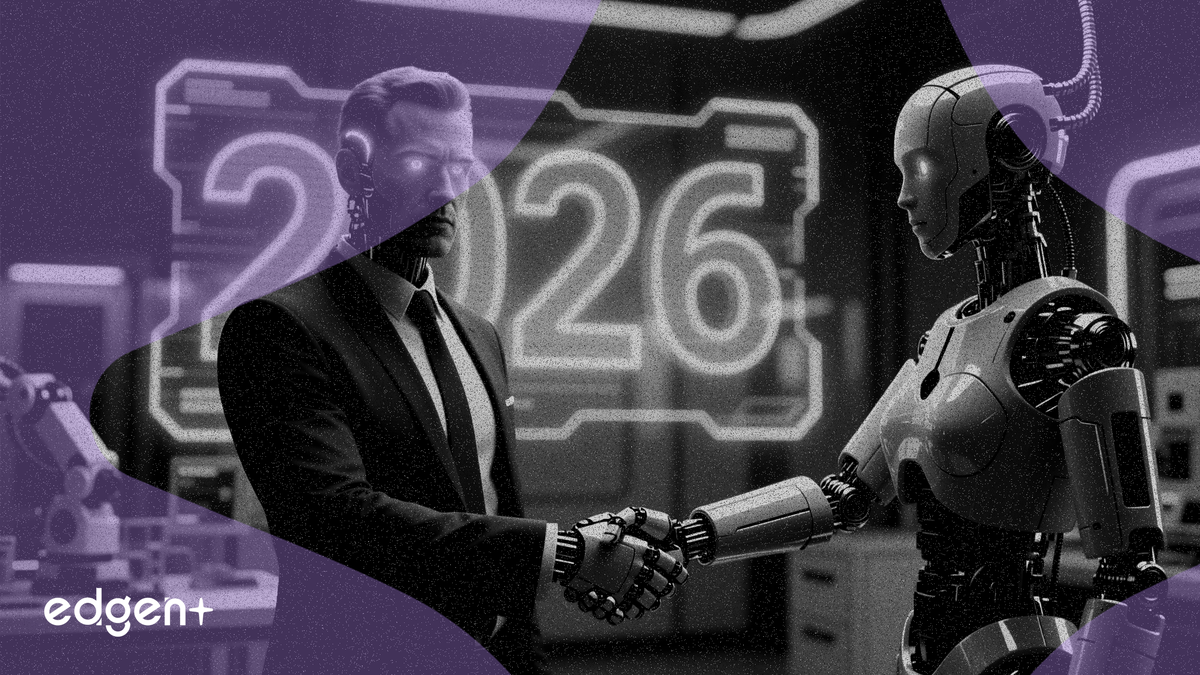
XPeng Chief Executive He Xiaopeng took direct control of the company's robotics unit on Wednesday, elevating humanoid robot IRON to the same strategic priority as its core EV business as the Chinese automaker targets mass production by year-end 2026.
"The industry is becoming increasingly hot and competitive, and we have clearly seen the direction and timing of victory, but it still requires more arduous implementation," He said in an internal letter reviewed by Reuters, comparing the moment to the eve of XPeng's first mass-produced vehicle, the G3, eight years ago.
The move comes as XPeng pivots toward "physical AI" encompassing humanoids, robotaxis and flying cars. The IRON robots are expected to begin trial use in XPeng's retail stores before being delivered to commercial customers in China and overseas from 2027, when robotics hardware and related AI models are set to become one of the main drivers of revenue and gross margins, He said on an earnings call in late May. The announcement follows the resignation of Shi Xiaoxin, a senior director of robotics product planning, earlier this month.
XPeng's push into humanoids places it at the center of a technology race that Nvidia Chief Executive Jensen Huang estimates has a $40 trillion total addressable market. But the company faces a fundamental strategic question: can it fund a capital-intensive robotics program while its core EV business remains in a competitive "survival" phase, with first-quarter revenue falling 17.6 percent year on year and net losses widening?
Two Paths to Physical AI
The humanoid robot race is shaping up as a contest between two competing strategies. Nvidia, through its Isaac GR00T platform, is pursuing an "arms dealer" model — building the AI brain and letting hardware partners supply the body. On June 1, Nvidia unveiled its first commercial humanoid robot built around a Unitree Robotics body from China and powered by its Blackwell GPU, with researchers at Stanford, ETH Zurich and UC San Diego among the first to work with it.
Tesla, by contrast, is pursuing vertical integration. The company describes itself as "a physical AI company" in its SEC filings, and its Optimus robot shares the same end-to-end perception and control architecture as its Full Self-Driving neural network, which now runs unsupervised robotaxi service in Dallas and Houston. A McKinsey analysis found that building Optimus without Chinese suppliers would cost roughly three times as much — a bill of materials rising from about $46,000 to $131,000.
XPeng's approach sits somewhere between the two. The company has integrated its in-house hardware, AI large language models, supply chain and precision manufacturing capabilities into a single robotics unit. He said the robot would feature local natural language communication and autonomous reasoning without relying on cloud computing — a design choice that tests the limits of XPeng's on-device AI platform and algorithm generalization capabilities.
China's Hardware Advantage, America's AI Edge
The competitive picture breaks down along geographic lines. China dominates the robot body: eight of every 10 humanoid robots produced worldwide come from the country, and Unitree's revenue grew 335 percent year over year in 2025. Chinese manufacturers have cut their bill-of-materials costs about 40 percent year over year, and the country installed 295,000 industrial robots in 2024 — more than the rest of the world combined. Beijing has committed a $138 billion state venture capital fund to AI and robotics.
America's advantage is in the intelligence layer. U.S. foundation models, simulation environments and reinforcement learning research remain unmatched. The Brookings Institution testified to Congress in April 2026 that China's full-stack approach to physical AI represents a strategic challenge comparable to its dominance of solar panels and EVs.
The Investor Calculus
For XPeng, the robotics bet carries significant execution risk. The company's first-quarter revenue fell to about 8.1 billion yuan ($1.1 billion), a 17.6 percent decline from a year earlier, reversing its first-ever quarterly break-even in the fourth quarter. To broaden its customer base and improve margins, XPeng has broken from its pure-battery-electric-vehicle strategy to develop range-extender models — a capital-intensive pivot that competes for resources with the robotics program.
XPeng shares trade on the New York Stock Exchange under the ticker XPEV. The company did not disclose the robotics unit's standalone budget or timeline to profitability. He said the first IRON robots entering XPeng's retail stores would determine whether the product can move from concept to a durable, mass-produced tool — a test that, as he acknowledged in his letter, will determine whether the company can "let the dream land in mass production."
This article is for informational purposes only and does not constitute investment advice.
