

XPeng has become the first automaker to deploy a prediction world model in production vehicles, giving its cars the ability to forecast traffic behavior six seconds before it occurs.
XPeng has become the first automaker to deploy a prediction world model in production vehicles, giving its cars the ability to forecast traffic behavior six seconds before it occurs.
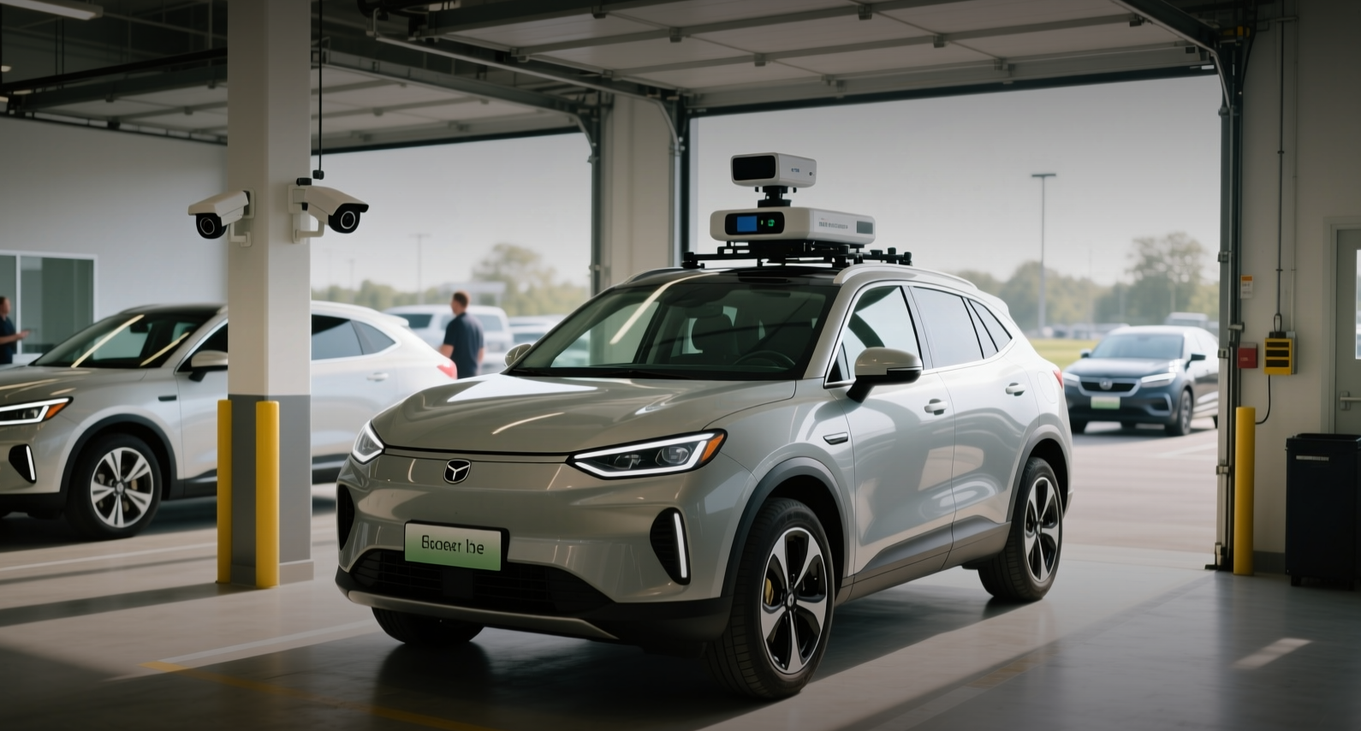
XPeng has become the first automaker to deploy a prediction world model in production vehicles, giving its cars the ability to forecast traffic behavior six seconds before it occurs.
XPeng's second-generation VLA upgrade puts the X-Foresight prediction world model into production cars, adding a time dimension that shifts AI perception from 3D space to 4D space-time forecasting. The company said the upgrade marks the first time a world model has been integrated into production vehicles, enabling the system to predict events six seconds into the future and anticipate the potential behaviors of surrounding traffic participants.
The X-Foresight model builds on XPeng's Vision-Language-Action architecture, which combines visual perception, language understanding, and action planning. By adding temporal reasoning, the system can simulate multiple possible futures for each traffic participant — a pedestrian about to cross, a vehicle changing lanes, a cyclist entering an intersection — and plan accordingly. This predictive capability is central to higher levels of autonomous driving, where the system must make decisions in fractions of a second.
The deployment positions XPeng ahead of Tesla's FSD and Huawei's ADS in world model-based prediction for production vehicles. Tesla has discussed world models for training but has not deployed them for real-time inference in customer cars. Huawei's ADS system uses a combination of rule-based prediction and neural networks but has not publicly disclosed a time-aware world model architecture in production.
XPeng's broader AI push extends beyond cars. The company recently raised a substantial funding round for its robotics unit, suggesting the same world model technology could power humanoid robots and other embodied AI applications. The X-Foresight model's ability to reason about physical space and time makes it a foundation for multiple product lines.
For investors, the key question is whether this technology translates into sales in China's hyper-competitive EV market, where XPeng competes with BYD, NIO, and Li Auto. The company has not disclosed specific safety metrics or benchmark results for the X-Foresight model, nor has it provided a timeline for expanding the feature beyond its initial deployment. The test conditions for the comparison against previous-generation systems were also not disclosed.
The competitive stakes are significant. As Chinese automakers race to differentiate on autonomous driving capabilities, the ability to predict and respond to complex traffic scenarios in real time could become a decisive factor in consumer purchasing decisions. XPeng's move to bring world model technology to production vehicles represents a bet that predictive AI, not just reactive perception, will define the next generation of autonomous driving.
World models have become one of the most closely watched areas in AI research, with companies like Google DeepMind and Meta exploring their use in robotics and simulation. XPeng's application of this technology to production vehicles is notable because it moves world models from research labs to real-world deployment, where the margin for error is measured in centimeters and milliseconds.
The six-second prediction horizon is particularly significant. At highway speeds, six seconds represents roughly 150 meters of travel distance — enough time for the system to identify a hazard, evaluate multiple response options, and execute a safe maneuver. This is a meaningful improvement over reactive systems that only respond to what they can currently see.
XPeng's approach also differs from competitors in how it handles uncertainty. Rather than predicting a single most likely outcome, the X-Foresight model generates multiple possible futures for each traffic participant and plans paths that remain safe across all scenarios.
This article is for informational purposes only and does not constitute investment advice.
