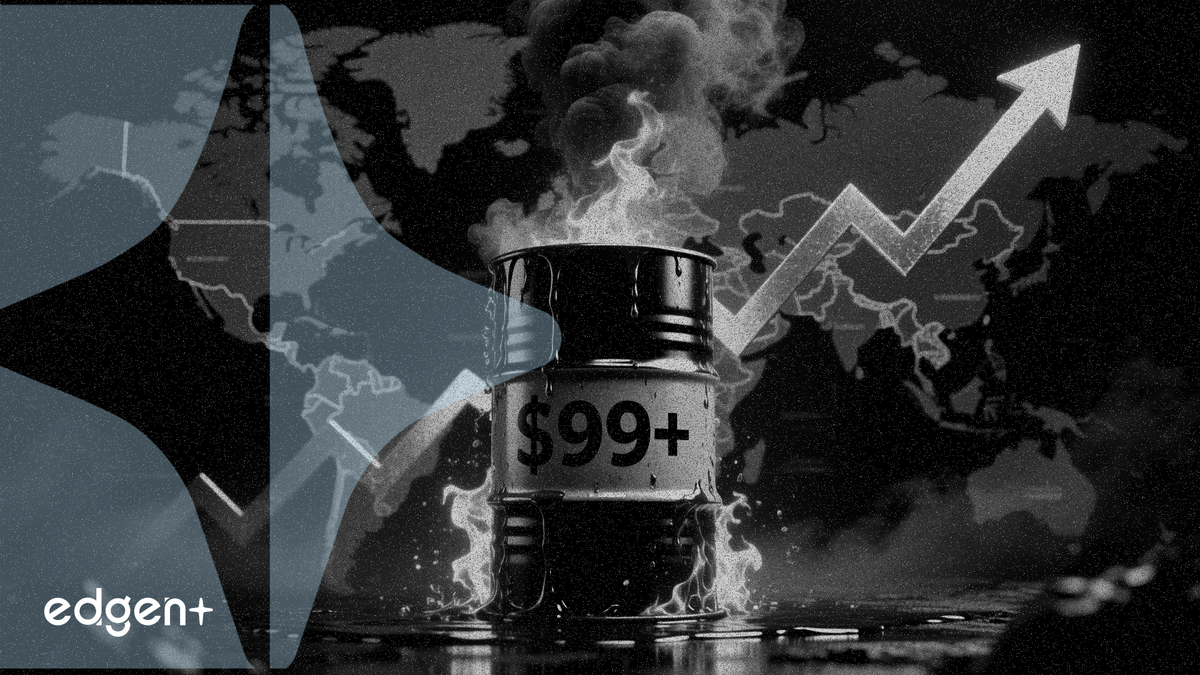
WTI Crude Spikes 49% as Iran Conflict Disrupts Supply
The conflict in the Middle East has pushed WTI crude oil prices up 49% since February 28, rising from $67 to settle at $99.64 a barrel. The international benchmark, Brent crude, has soared over 55% to $112.57. The primary driver is the disruption of shipping through the Strait of Hormuz, a critical artery for global oil exports. Energy industry executives warn that financial markets are underestimating the severity of the physical supply crunch.
At the CERAWeek energy conference, industry leaders expressed grave concerns. Chevron CEO Mike Wirth stated that the physical supply of oil is much tighter than futures market prices indicate, noting the market is reacting to perception rather than physical flows. This sentiment was echoed by Shell's CEO, Wael Sawan, who warned of a ripple effect of fuel shortages beginning with jet fuel, followed by diesel and gasoline, which will impact Asia first before reaching Europe by April.
Energy Stocks Gain 12.6% While S&P 500 Slumps
The spike in energy prices has created a stark divide in financial markets. Since the conflict began, energy stocks have climbed 12.6%, representing the only bright spot in an otherwise negative market. In contrast, the S&P 500 has fallen 7.3%, and the tech-heavy Nasdaq has dropped more than 10% from its recent peak, pushing it into correction territory. Last week alone, the S&P 500 fell 2.1%.
The sell-off has hit consumer-focused companies particularly hard, as investors anticipate that higher fuel costs will dampen spending. Shares of Norwegian Cruise Line Holdings lost 6.9% and Starbucks dropped 4.8% in recent trading. The market turbulence reflects growing fears that sustained high oil prices could trigger a recession, with prediction markets now indicating a 37% probability of a U.S. recession in 2026, up from 22% before the conflict.
Low-Cost Producers Poised for Profit at $55 Oil
While high energy costs threaten the broader economy, they create a significant opportunity for efficient oil producers. Companies with low production costs are uniquely positioned for a profit windfall. ConocoPhillips, for instance, only requires oil prices in the mid-$40s per barrel to fund its capital spending plans. Similarly, EOG Resources can generate returns exceeding 100% on new wells with oil at just $55 a barrel.
With current crude prices hovering near $100, these producers are operating far above their breakeven points. This advantage allows them to generate substantial free cash flow, which can be returned to shareholders through dividends and buybacks or reinvested into further production, solidifying their strong financial position as the geopolitical crisis continues.
 Edgen Stock·Mar 29 2026, 13:51