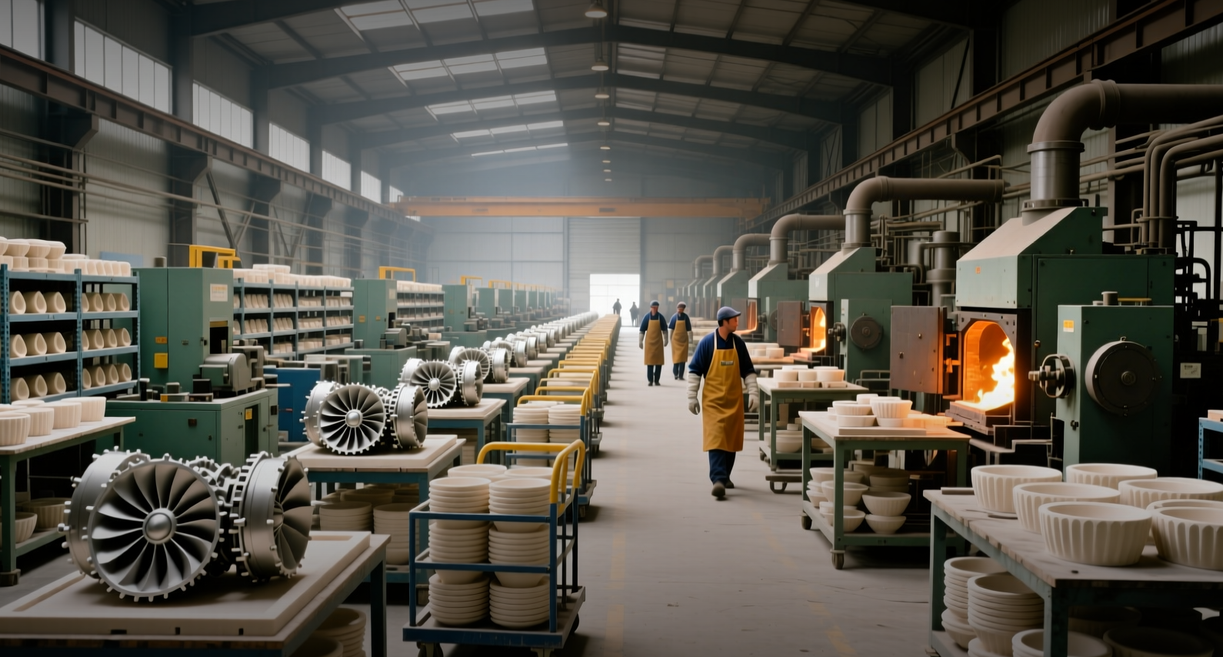
GE Aerospace agreed Tuesday to buy Consolidated Precision Products for $11.75 billion, absorbing precision investment casting capacity as commercial engine, aftermarket, and defense demand surge at the same time.
"Investing in mission-critical casting capacity is needed to support the strong simultaneous demand across commercial engines, aftermarket and defense," Larry Culp, chief executive officer of GE Aerospace, said.
CPP, owned by investment firms Warburg Pincus and Berkshire Partners, produces specialized castings used in commercial aircraft engines, military equipment, and industrial gas turbines. The transaction, expected to close in the second half of 2027, is projected to boost GE Aerospace's adjusted profit per share and free cash flow in the first year after completion.
The acquisition extends GE Aerospace's push to control critical inputs since it became an independent company in April 2024, following the conglomerate's three-way split. Precision investment castings — high-temperature alloy components formed through wax-pattern molding — have been a recurring bottleneck in engine production, with lead times stretching for months as suppliers allocate capacity across competing OEM programs. Bringing that capability in-house gives GE Aerospace direct control over a component category that sits at the center of its engine manufacturing process.
The deal also reflects a broader consolidation pattern across the aerospace supply chain. Engine makers including RTX's Pratt & Whitney and Rolls-Royce face similar constraints in sourcing castings for next-generation programs, while independent suppliers such as Howmet Aerospace and Berkshire Hathaway's Precision Castparts dominate the market. By absorbing CPP, GE Aerospace reduces its exposure to third-party allocation decisions and gains more direct control over production scheduling for its commercial and defense engine lines. The move could also pressure independent casting suppliers as OEMs reassess whether to build or buy critical manufacturing capacity.
The strategic rationale extends beyond supply security. In-house casting capacity could shorten lead times on GE Aerospace's LEAP engine program, developed with Safran through CFM International, and improve cost predictability across the engine portfolio. The LEAP family powers the Airbus A320neo and Boeing 737 MAX narrowbody fleets, two of the highest-volume commercial aircraft programs in production. Any reduction in casting lead times translates directly into faster engine deliveries and stronger aftermarket revenue, which has become GE Aerospace's primary profit driver since the spinoff.
The company has not disclosed the payment structure or which regulatory approvals the deal requires, though the extended timeline to the second half of 2027 suggests a lengthy antitrust review process. The deal's size — among the largest aerospace M&A transactions since the pandemic — will likely draw scrutiny from competition authorities in the United States and Europe, given CPP's role as a critical supplier to multiple engine programs.
For Warburg Pincus and Berkshire Partners, the exit marks a substantial monetization of their investment in CPP. The $11.75 billion price tag reflects how much strategic value OEMs now assign to precision manufacturing capacity in a supply-constrained market. The deal is expected to be accretive to GE Aerospace's adjusted earnings per share and free cash flow in its first full year, according to the company.
This article is for informational purposes only and does not constitute investment advice.