
Host Digital locked in 43 megawatts of contracted AI capacity worth $1.25 billion before its public market debut.
Host Digital locked in 43 megawatts of contracted AI capacity worth $1.25 billion before its public market debut.
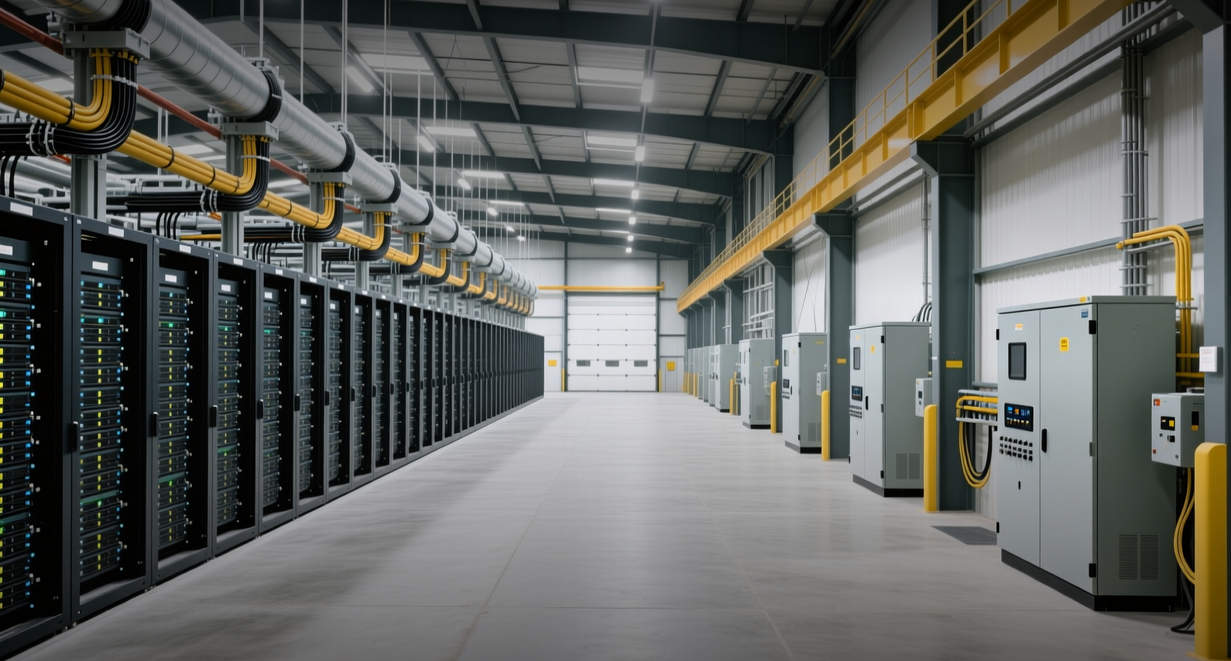
Host Digital secured a 15-year, take-or-pay lease worth $1.25 billion for 43 megawatts of AI data center capacity, building a contracted revenue base ahead of its public market debut through a merger with Healthy Choice Wellness Corp.
"Power-ready sites capable of meeting AI deployment timelines are increasingly scarce," Harmol Samra, chief executive officer of Host Digital and expected CEO of the combined company, said.
The lease, with one of the world's largest privately held cloud infrastructure companies, includes annual rent escalators and renewal options that could lift total contracted revenue to about $3.2 billion over a 30-year term. Delivery to the tenant is expected in the first half of 2027. The agreement is expected to be supported by a backstop from a U.S.-based, investment grade global technology company.
The deal gives the combined company, expected to trade on the NYSE American under the ticker HOST, a contracted foundation as it scales. HCWC stockholders approved the merger on Aug. 27, clearing a key condition, and the companies expect to close in September, with former Host Digital members set to own about 96 percent of the combined company's Class A common stock.
The lease supports the power-site-to-AI conversion thesis that has drawn capital into a wave of former bitcoin miners and infrastructure developers. Host Digital's model centers on securing near-term energized power, targeting right-sized sites of roughly 20 to 100 megawatts, and contracting with strong or credit-enhanced counterparties before deploying significant capital. The company aims to own and control each facility's core infrastructure — land, buildings, interconnection rights, utility agreements, electrical systems and cooling — while tenants control the compute and model layers.
The northeast Oklahoma facility is already energized, a key advantage as AI deployment timelines compress. Samra said the company is focused on delivering this capacity in the first half of 2027 and scaling a repeatable model for leading AI and high-performance computing customers.
The AI infrastructure race has exposed a hard physical limit: advanced chips can be manufactured and shipped far faster than new electrical capacity can be brought online. Dense compute clusters draw power at levels that strain local grids, making energized, interconnected sites among the most valuable assets in the AI value chain. Companies that secured power and land early — including a wave of former bitcoin miners that already operated power-hungry facilities — have found themselves holding exactly what AI tenants are seeking.
The lease's structure matters as much as its size. The take-or-pay agreement means the tenant must pay whether or not it uses the full capacity, providing predictable revenue for Host Digital. Annual rent escalators protect against inflation, while customary rent abatement terms for outages align with standard data center leases. The expected backstop from a U.S.-based, investment grade global technology company strengthens the credit quality of the contracted revenue stream.
Following closing, Host Digital's leadership brings deep digital infrastructure and capital-markets experience. Samra previously held roles at ICONIQ Capital and Starwood Capital and helped build IPI Partners, which had a portfolio of 82 data centers comprising more than 2.2 gigawatts of leased capacity globally at the time of its sale to Blue Owl in 2024. Shawn Matthews, expected to serve as chairman, was chief executive officer of Cantor Fitzgerald & Co. from 2009 to 2018.
The combined company will be a small, newly public name in a sector crowded with far larger players following the same power-site-to-AI logic. Nebius Group, TeraWulf, Cipher Mining and Core Scientific have all pivoted power-rich infrastructure toward AI and high-performance computing hosting, though they operate at materially different scale. Contracted revenue is not delivered revenue: the Oklahoma capacity is not expected to come online until 2027, leaving financing, execution and delivery risks ahead, and the merger still faces remaining closing conditions.
For investors, the deal answers a central question about the AI buildout: what is energized, contracted capacity worth? The $1.25 billion base-term figure, and the potential $3.2 billion over a full 30-year term, provide a reference point as the sector's bottleneck shifts from chips to power.
This article is for informational purposes only and does not constitute investment advice.
