
Huawei launched the Kirin 9050 Pro processor on Monday, its first flagship chip debut since the Mate 40, using stacked logic layers to shorten signal paths and power the Mate XT 2 tri-fold phone.
Huawei launched the Kirin 9050 Pro processor on Monday, its first flagship chip debut since the Mate 40, using stacked logic layers to shorten signal paths and power the Mate XT 2 tri-fold phone.
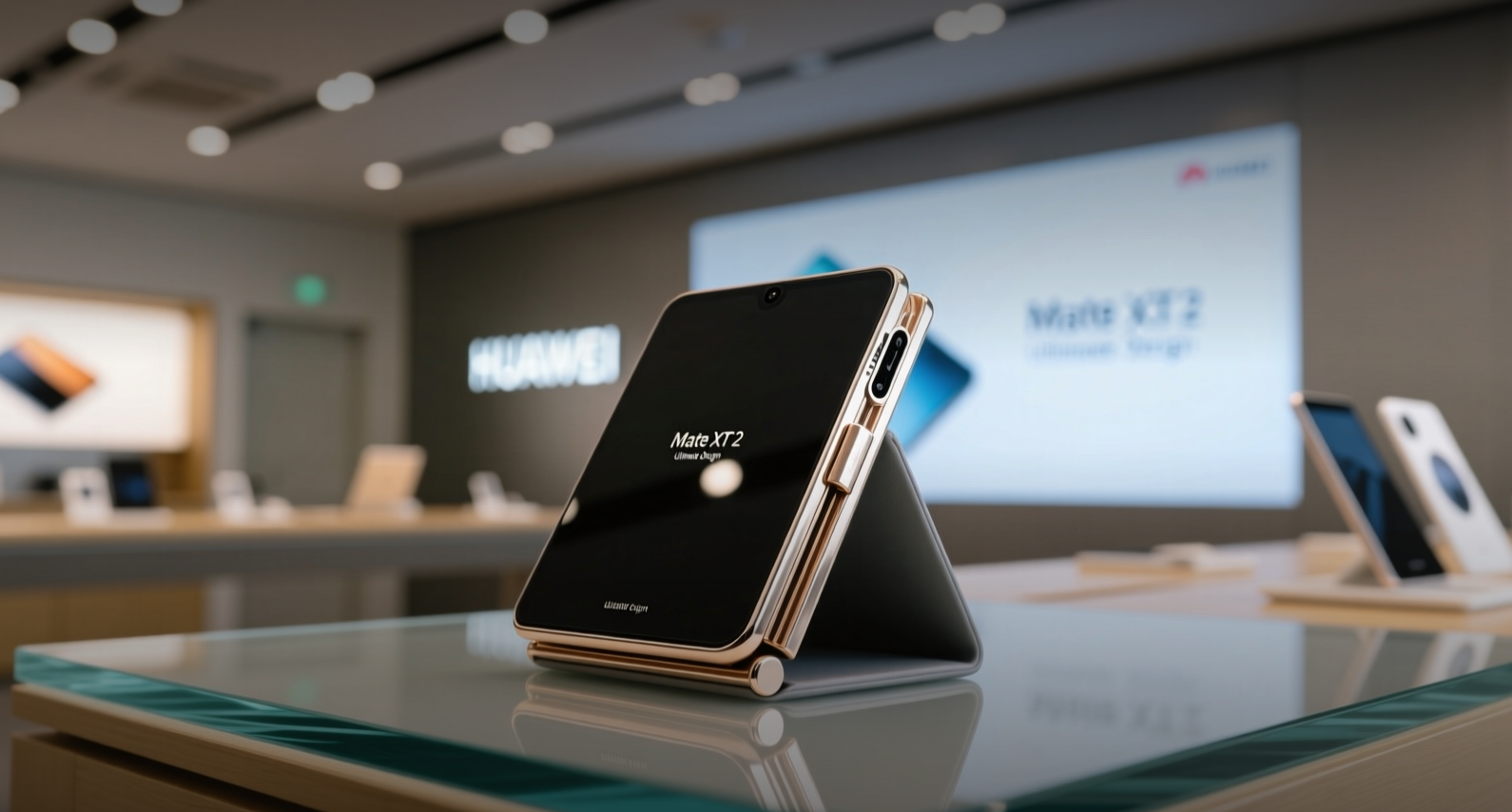
Huawei's first new flagship chip in six years uses logic folding to stack processing layers vertically, cutting signal latency — a design breakthrough that arrives days before Apple's expected entry into the foldable phone market.
"Apple's arrival could quickly translate into meaningful foldable market share," Ivan Lam, an analyst at Counterpoint Research, said. Huawei and Xiaomi both unveiled flagship foldables Monday, two days before Apple is expected to introduce its first foldable iPhone.
The Kirin 9050 Pro arranges logic units in stacked layers within a single chip — what Huawei describes as moving from a single-story layout to a duplex — with vertical interconnect channels acting as elevators between floors. The approach shortens signal transmission paths, reduces latency and improves overall performance compared with conventional planar designs, according to the launch event in Guangzhou. Huawei did not disclose the manufacturing process node or specific benchmark figures.
The chip powers the Mate XT 2 Ultimate Design, Huawei's second-generation tri-fold phone, which features a new inward-folding mechanism, 16 GB of RAM, up to 2 TB of storage and a roughly 6,000 mAh battery with 100-watt fast charging. The device runs HarmonyOS 7, which includes optimizations for large-screen multitasking across the phone's three display configurations.
The launch comes as Huawei's research and development spending accelerated to 121.38 billion yuan ($17.9 billion) in the first half of 2026, a record for the period and more than a quarter of revenue. The investment has helped Huawei's smartphone shipments grow 19.4 percent year on year in the second quarter, pushing its China market share to 22.6 percent — the top position, according to IDC data.
The competitive stakes extend beyond the foldable form factor. Apple's first foldable iPhone could capture roughly 25 percent of the global foldable market in its first year and 41 percent in the second, according to Smart Analytics Global estimates. That would pressure Huawei, Xiaomi and Samsung, which have dominated the category since its inception.
Huawei's chip strategy also carries geopolitical weight. The Kirin 9050 Pro represents continued progress in China's domestic semiconductor push following US export controls that restricted Huawei's access to advanced foundry services from TSMC and other foreign suppliers. The company has not disclosed which foundry produces the chip.
The broader smartphone market is contracting — global shipments are expected to drop 14 percent this year, according to Counterpoint — while rising component costs have pushed Huawei, Xiaomi and Honor to raise prices in China this month. Premium foldables offer higher margins than budget devices, making the category increasingly central to profitability as volume declines.
Huawei's R&D intensity — spending more than a quarter of revenue on research — supports continued advancement across AI, chips, operating systems and smart vehicles, according to the company. The Mate XT 2 launch also demonstrates Huawei's intent to defend its premium position as Apple enters the foldable market and Xiaomi pushes its own high-end devices with domestically sourced components, including memory from CXMT and its Xring O3 processor.
For investors, the competitive dynamics are shifting: Apple faces a more entrenched Huawei in China's premium segment, while Xiaomi is diversifying its supply chain with domestic components. Huawei's chip progress, if sustained, could also affect sentiment around Chinese semiconductor supply chain names. The Mate XT 2's official pricing and global availability have not yet been disclosed.
This article is for informational purposes only and does not constitute investment advice.
