
South Korea's benchmark index has slid into a bear market as a retail leverage boom in its two biggest chipmakers unwinds.
South Korea's benchmark index has slid into a bear market as a retail leverage boom in its two biggest chipmakers unwinds.
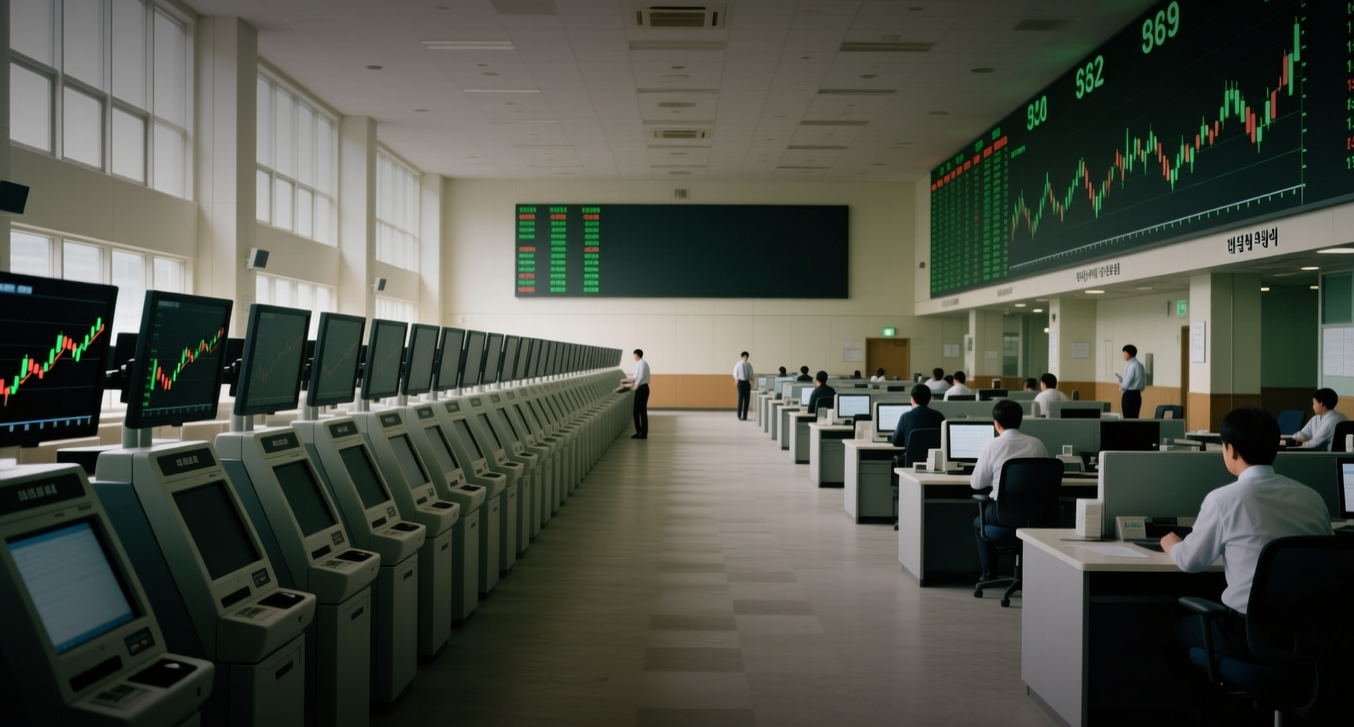
The Kospi Index fell 27% from its 2026 peak to 6,788 on Friday as South Korean retail investors unwound leveraged bets on Samsung Electronics and SK Hynix, the benchmark's two heaviest weights.
"ETF outflows could persist in the near term as South Korean regulators continue tightening restrictions," said Rebecca Sin, an analyst at Bloomberg Intelligence.
Trading in leveraged exchange-traded funds tied to the two chipmakers has collapsed to 4% of its June peak, with combined assets shrinking to about $5 billion from an $11.4 billion high in late June. Samsung has dropped 32% and SK Hynix 44% from their 2026 highs even after the companies unveiled $80 billion and nearly $30 billion in buybacks, respectively.
The unwind follows a regulatory crackdown that on Aug. 19 required investors to complete a five-day simulated trading course before accessing the products, and comes as the Bank of Korea raised rates for a second straight meeting on inflation stoked by the US-Iran war and rising chip-sector wages.
The leveraged ETFs, which debuted in May to double the daily returns of Samsung and SK Hynix, initially drew a frenzy of retail money. At one point trading in the products and their underlying chip stocks accounted for more than 80% of total market turnover. The reversal has been abrupt: August is on track for the first monthly net outflow, roughly $1 billion, since the products were approved.
The pullback has coincided with a sharp drop in market volatility. The Kospi volatility index has fallen to a four-month low near 50, down from 97 in late June, as forced selling from leveraged positions subsides. The benchmark remains up about 61% in 2026 despite the retreat, though it now sits roughly 25% below the record high it reached two months ago.
The Bank of Korea's decision to raise rates for a second consecutive meeting last week added pressure, with officials citing elevated inflation driven by the US-Iran war and soaring wages at Samsung, SK Hynix, and their suppliers. Investors now look to Wednesday's consumer inflation report to gauge whether another hike is coming.
Before that, Monday brings retail sales and industrial production figures, followed by August trade data. Economists expect exports to have jumped 62.6% in August and imports 24.7%, yielding a trade surplus of more than $30.7 billion. A strong export print would support the chip-driven earnings outlook even as the leverage unwind continues to weigh on the index.
The Kospi's slide has broader implications for global semiconductor stocks, given Samsung and SK Hynix are bellwethers for memory-chip demand tied to artificial-intelligence data-center spending. A stabilization in the two names, which have announced record capital returns, could help stem the index's decline — but only if the leverage unwind runs its course and inflation data gives the central bank room to pause.
This article is for informational purposes only and does not constitute investment advice.
