

Key Takeaways:
- MDA Space awarded $474 million for 27 additional MDA AURORA satellites
- Telesat expands Lightspeed constellation from 156 to 225 spacecraft
- Military Ka-band added to all satellites for Canadian Arctic defense
Key Takeaways:
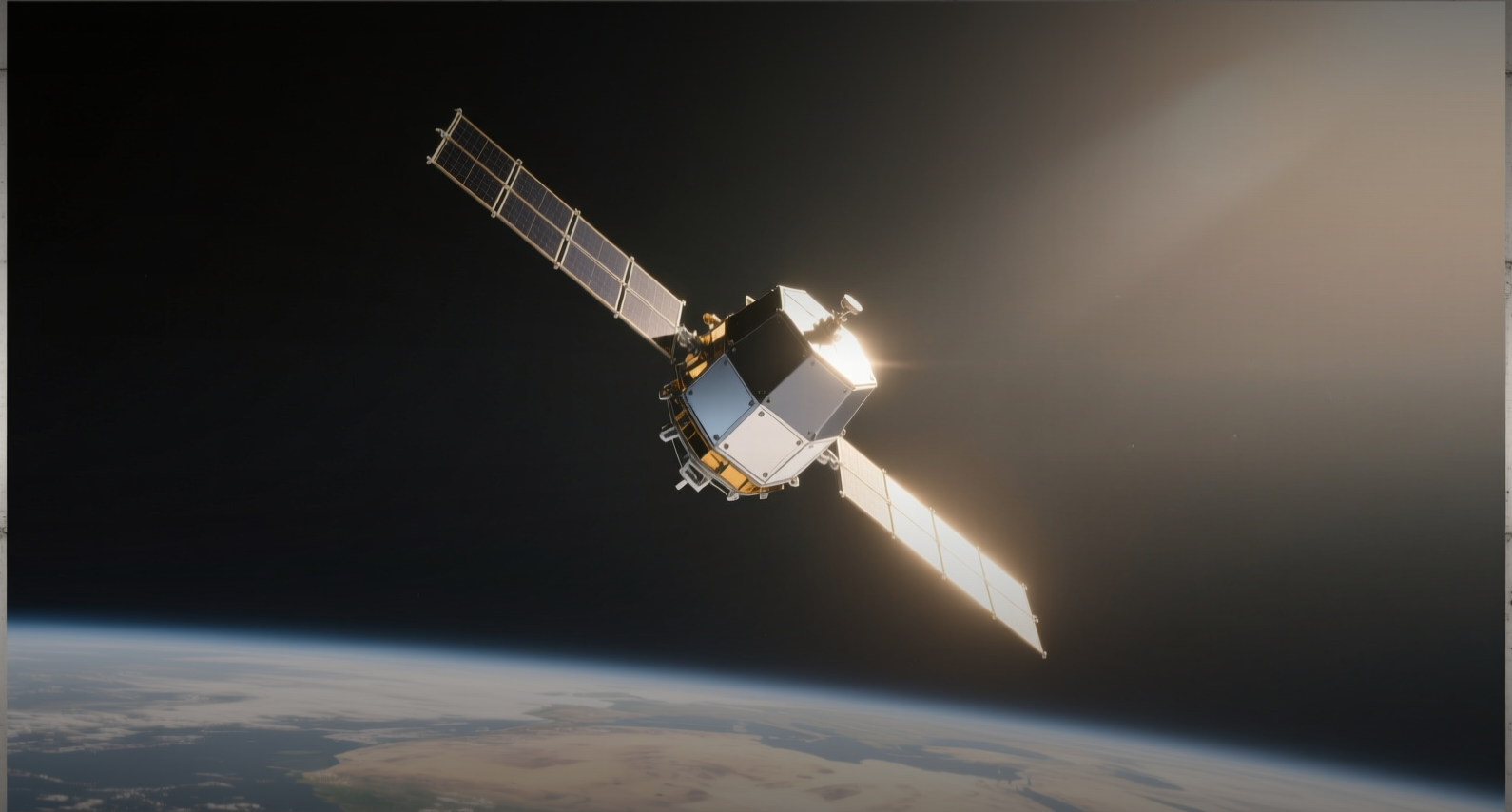
MDA Space received a $474 million follow-on order from Telesat for 27 additional MDA AURORA satellites, expanding the Lightspeed LEO constellation to 225 spacecraft as Canada's Arctic defense communications program takes shape.
"Reliable military communication in the Arctic is a necessity for protecting Canadian sovereignty, maintaining situational awareness, coordinating joint operations with allies, and responding quickly to emergencies in a region where every minute counts," Mike Greenley, CEO of MDA Space, said.
The expansion brings Telesat's fully funded constellation from 156 to 225 satellites, with MDA Space manufacturing all 225. The contract increase includes 500 MHz of military Ka-band spectrum added to satellites currently being built, replacing an equal amount of commercial Ka-band. Telesat separately signed a $2.3 billion services contract with Canada's Defence Investment Agency for secure Mil-Ka Arctic connectivity under the Enhanced Satellite Communications Project-Polar program, with two five-year option periods valued at approximately $200 million each, bringing the total to $2.7 billion.
The 15-year service contract, beginning in 2028, is the largest in Telesat's history and brings its total expected investment in the 225-satellite network to approximately $7 billion. The expansion will be funded through milestone-based payments from the Government of Canada starting in Q3 2026, with the majority of MDA Space's $474 million contract increase added to its backlog in the third quarter.
Arctic Defense Architecture Takes Shape
The ESCP-P program also includes a secure Ultra-High Frequency and X-band constellation in Medium Earth Orbit, for which MDA Space will serve as prime contractor responsible for end-to-end mission delivery. Telesat will act as a subcontractor to MDA Space on this component, including serving as overall systems integrator for the Mil-Ka, UHF, and X-band networks. Contract details for the UHF and X-band portion will be disclosed once finalized.
All MDA AURORA satellites will feature 500 MHz of military Ka-band spectrum alongside commercial Ka-band, fulfilling Canada's continental-security objectives and obligations to allied partners. The satellites will be built at MDA Space's high-volume manufacturing facility in Montreal and launched by SpaceX on already-secured Falcon 9 rockets, with one additional Falcon 9 launch subject to a pending launch services agreement.
The Mil-Ka portion of the program will deliver connectivity across Canada's Arctic region spanning 65 to 90 degrees North latitude, with end-to-end network integration services — including user terminals, ground and control infrastructure, training, and support — covered under a separate agreement between the DIA and Telesat. With secure Mil-Ka capabilities integrated into the constellation, Telesat Lightspeed is designed to meet not only Canada's Arctic requirements but also the broader needs of NATO members and allied partners.
Market Reaction and Forward Outlook
Telesat shares rose 7.84 percent to $40.18 on the Nasdaq following the announcement, while MDA Space shares gained 0.12 percent. The program is expected to create and sustain thousands of high-quality jobs in Canada and support domestic exports in the New Space Economy.
The contract follows the Strategic Partnership Agreement announced last year between MDA Space, the Department of National Defence, and Telesat. The expansion enables Telesat to accelerate growth in the defense satellite communications segment, where demand for secure, low-latency connectivity has intensified as NATO members modernize their military communications infrastructure. For MDA Space, the order strengthens its backlog and extends its manufacturing runway at the Montreal facility, with global service delivery for Telesat Lightspeed expected to begin in Q1 2028.
The defense-focused expansion of Telesat Lightspeed comes as the broader LEO broadband market faces intensifying competition from SpaceX's Starlink and Amazon's Project Kuiper. Telesat's dual-use architecture — combining commercial and military Ka-band on the same spacecraft — differentiates it from pure commercial LEO operators and gives it a path to government contracts beyond Canada, including potential NATO procurement. The milestone-based payment structure from the Canadian government reduces Telesat's near-term funding burden, with $2.7 billion already invested toward the $7 billion total network cost.
The ESCP-P program represents one of the largest defense satellite communications procurements in Canadian history, with the government leveraging a dual-track approach: the Mil-Ka capability through Telesat Lightspeed in LEO and the UHF/X-band constellation in MEO. This layered architecture provides redundancy across orbital regimes, a critical requirement for Arctic operations where weather and atmospheric conditions can degrade single-orbit solutions.
This article is for informational purposes only and does not constitute investment advice.
