
The Treasury's September 9 buyback size announcement will reveal how far Scott Bessent will go to support long-dated debt, with the figure set to move long-end yields and swap spreads.
The Treasury's September 9 buyback size announcement will reveal how far Scott Bessent will go to support long-dated debt, with the figure set to move long-end yields and swap spreads.
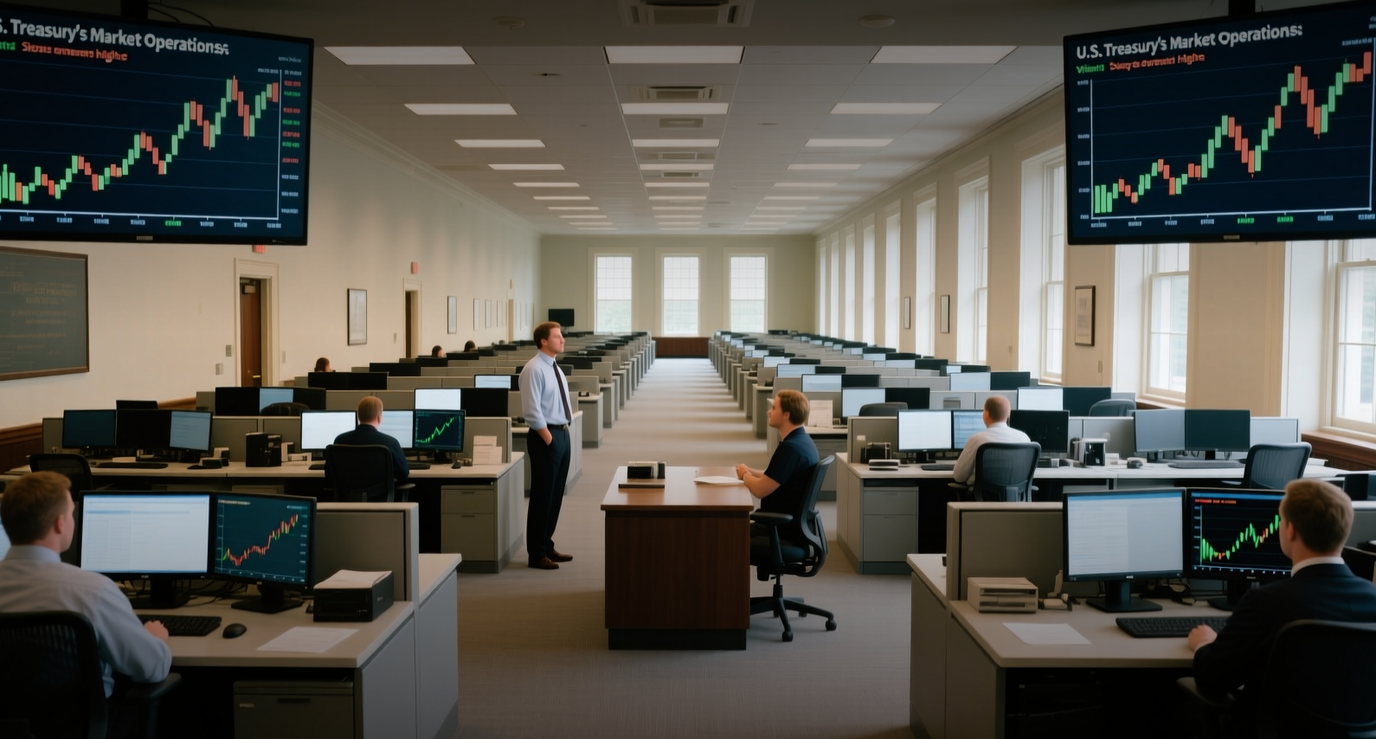
The Treasury's buyback size call Wednesday will show whether Scott Bessent is willing to lean on the rates market, with the figure set to swing long-end yields and swap spreads.
"The market has a fever, and I don't want the market to be narrative-driven," Bessent said Tuesday at Southern Methodist University in Texas, where he called the claim that the U.S. would default "absurd."
The department will disclose the size of its buyback of 10- to 20-year bonds at 11 a.m. Washington time Wednesday, hours before a 10-year auction, with the operation executed Thursday. Morgan Stanley puts the practical ceiling near $10 billion per session, above which funding from the Treasury General Account becomes a constraint, while Wrightson ICAP's Lou Crandall sees $5 billion to $6 billion as a reasonable starting point.
The stakes are high because the 10-year yield sits above last month's level near 2023 highs and the 30-year trades above 5 percent, keeping 30-year mortgage rates near 7 percent. A figure that disappoints the market's expectation of more than $4 billion could deepen the selloff, while a larger number would be read as a stronger commitment to support long-dated debt.
The August 19 announcement that the Treasury would at least double its weekly buyback to $4 billion came outside the regular quarterly refunding cycle, breaking the department's long-held "regular and predictable" issuance principle and catching markets off guard. The program, restarted in May 2024, buys older, less liquid "off-the-run" bonds to support liquidity, funded through the Treasury General Account, which the department targets at roughly $750 billion to $850 billion.
The operation more closely resembles the Federal Reserve's 2011-2012 "Operation Twist" than quantitative easing, because the Treasury funds repurchases indirectly through short-term bill issuance rather than newly created reserves. The Fed added $4.9 trillion to its balance sheet between March 2020 and March 2022 under QE, dwarfing the roughly $120 billion a year a doubled buyback program would represent, or about 0.4 percent of outstanding marketable U.S. debt.
Markets reacted sharply to the August announcement, with long-end yields falling temporarily, the dollar weakening 1 percent to 2 percent against major currencies, and precious metals and cryptocurrencies rallying as short positions unwound. The reaction showed how sensitive investors have become to Treasury policy moves with core inflation above target and federal debt at $40 trillion, a backdrop that has also pushed Japanese and European government yields higher as governments compete for capital.
Barclays strategists Anshul Pradhan and Demi Hu flagged another possibility: that the Treasury sets an open-ended floor of "at least $4 billion" per operation to preserve flexibility, leaving markets without a clear roadmap. Crandall cautioned that a large increase would amount to an admission the department did not think through its hasty August 19 statement. The Treasury has yet to publish the updated tentative buyback schedule it promised, or clarify whether it will fund repurchases with additional short-term bills or by drawing down the general account, and it plans to re-evaluate overall program parameters at the November 4 quarterly refunding announcement.
If the Treasury lands near the top of the range, traders expect the 30-year swap spread to tighten first, since spreads respond more quickly to supply shifts than outright yields, which remain hostage to global macro forces. "Swap spreads will provide the clearer market feedback," said Brendan Fagan, macro strategist at Bloomberg. A smaller figure risks rekindling the selloff that pushed long-end yields to multi-decade highs, testing whether Bessent's intervention can hold without the Fed's backing.
This article is for informational purposes only and does not constitute investment advice.
